Colorado Creates First-in-the-Nation Extended Producer Responsibility Law for EV Batteries
Colorado became the first state in the U.S. to establish specific battery recovery targets for electric vehicle batteries through an extended producer responsibility (EPR) framework. On May 14, the Colorado General Assembly passed Senate Bill 26-003, legislation that expands the state’s Battery Stewardship Act to include electric, plug-in hybrid, and hybrid vehicle propulsion batteries.
The bill builds upon Senate Bill 25-163, which created an EPR system for portable and medium-format batteries. SB 26-003 addresses the largest and most complex battery category by making automakers and propulsion battery manufacturers responsible for managing batteries at the end of their useful lives.
Under the legislation, manufacturers are required to collect unwanted propulsion batteries from secondary handlers, such as automotive dismantlers and solid waste facilities, at no cost to those organizations. The measure is intended to create a structured pathway for battery reuse, recycling, and responsible disposal while reducing risks associated with improperly managed EV batteries.
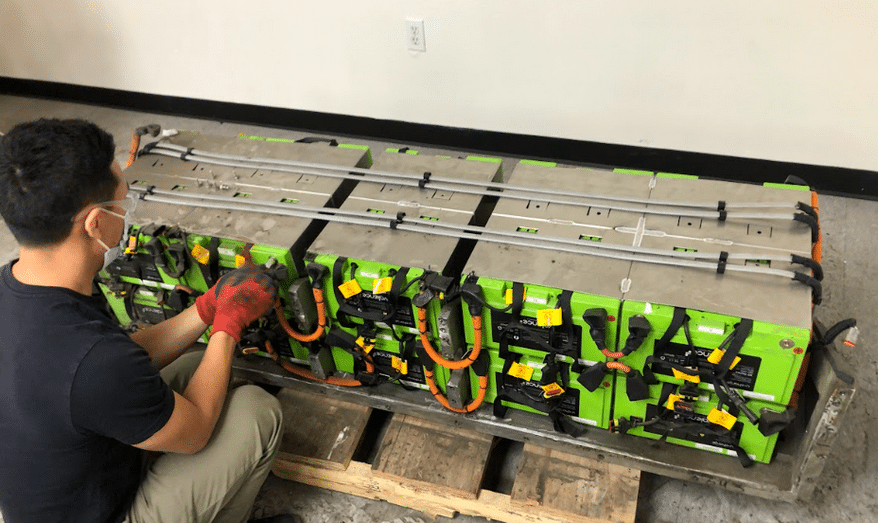
Beginning July 1, 2029, disposal of EV propulsion batteries in landfills are prohibited. The same date would also mark the start of battery labeling requirements and compliance obligations for secondary handlers.
The legislation also establishes critical mineral recovery standards for battery recyclers. Starting in 2031, recyclers would be required to recover at least 90% of cobalt and nickel and 50% of lithium from processed batteries. The lithium recovery requirement will increase to 80% by 2035. Recovery rates would be measured using a mass-balance approach at the facility level.
On June 4, 2026, Aaron Kressig, Manager of Transportation Electrification Program at Western Resource Advocates, reported that Governor Polis signed the bill into law.
Kressig said: “This represents a huge milestone towards a circular economy for EV batteries and a more sustainable, safe and resilient EV industry. There is still much work to be done but we hope the Colorado bill becomes the model for the nation going forward.”
The Automotive Recyclers Association (ARA) welcomed the legislation, describing it as a long-term framework for managing the growing number of electric and hybrid vehicle batteries entering reuse and recycling channels. The organization noted that Colorado sees approximately 330,000 vehicles reach end-of-life each year, with automotive recyclers handling the majority of them.
According to Emil Nusbaum, ARA Vice President of Strategy, Government and Regulatory Affairs, the legislation addresses battery management challenges that are already placing increasing pressure on vehicle recycling infrastructure. He said the bill provides a practical, market-based solution built on the state’s existing recycling network.
The legislation was developed through collaboration among a wide range of stakeholders, including automakers, vehicle recyclers, waste management companies, battery recyclers, Western Resource Advocates, and the Union of Concerned Scientists.
Supporters say the measure will help create a more circular battery economy by ensuring valuable materials such as lithium, nickel, and cobalt are recovered and reused in future battery production rather than being discarded. As Western Resource Advocates noted, the batteries and critical minerals powering tomorrow’s electric vehicles can increasingly come from the batteries being used today.
EVinfo.net’s Take: EV Battery Recycling and Repurposing Are Just Getting Started
EVinfo.net believes the CO law is important, and we hope other states follow this excellent example.
Electric vehicle battery recycling and repurposing remain in their infancy in North America. The first large wave of EV batteries reaching the end of their automotive life is only beginning to emerge, creating a major opportunity for a new industry to develop.
As battery recycling capacity expands, valuable materials such as lithium, nickel, cobalt, and graphite can be recovered and reused in new batteries, reducing the need for new mining and making EVs even more environmentally sustainable. Many batteries can also be repurposed for stationary energy storage before being recycled, extending their useful life by years.
The growth of this industry is expected to create thousands of jobs in manufacturing, logistics, battery processing, engineering, and materials recovery. It also has the potential to strengthen domestic supply chains and generate significant economic activity across North America.
EVs already offer substantial environmental benefits. As battery repurposing and recycling scale up over the coming decade, those benefits will grow even further while creating new business opportunities and supporting long-term economic growth.

Electric Vehicle Marketing Consultant, Writer and Editor. Publisher EVinfo.net.
Services