Florida Considers Redirecting Nearly $200 Million in NEVI EV Charging Funds Toward eVTOLs
Florida is considering a controversial shift in how it uses nearly $200 million in federal electric vehicle infrastructure funding, with state transportation officials proposing to redirect the money toward infrastructure for electric vertical take-off and landing (eVTOL) aircraft rather than traditional EV chargers.
While many states have used their share of the National Electric Vehicle Infrastructure (NEVI) Program funding to install charging stations along highways, at truck stops, and near commercial areas, Florida delayed deploying its funds for years. State officials argued that the private sector had already done enough to support conventional electric vehicles and that public funding should instead focus on emerging transportation technologies.
According to state documents obtained by the Miami Herald, the Florida Department of Transportation (FDOT) wants to use the funding to develop an “Aerial Highway Network” designed to support electric vertical takeoff and landing aircraft, commonly known as flying taxis or eVTOLs. The proposed network would include charging locations, takeoff areas, and landing pads for aircraft that operate using battery-electric propulsion.
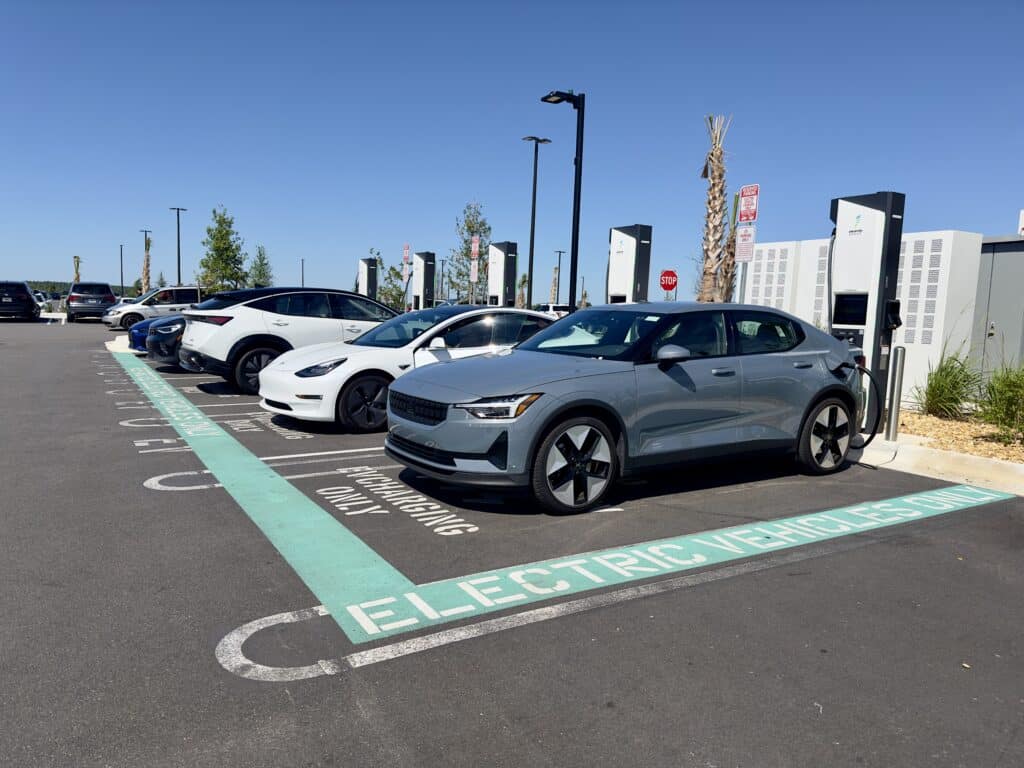

FDOT stated that the agency does not want to use taxpayer funding for “everyday passenger vehicles” and believes supporting emerging aviation technology could provide greater benefits for Floridians. The state argues that flying electric aircraft could help reduce highway congestion and create a new transportation option for urban areas.
Critics of the plan argue that the funding was intended to address immediate EV charging needs, including gaps in public charging availability for drivers who cannot charge at home. Stephen Smith of the Southern Alliance for Clean Energy said public money should not subsidize technology that remains in testing when existing EV infrastructure needs remain unresolved.
Ryan McKinnon, spokesperson for the Charge Ahead Partnership, said the funding was designed to support charging infrastructure at gas stations, small businesses, and convenience stores that serve everyday drivers. He argued that public investment should help businesses expanding accessible charging rather than supporting aircraft intended primarily for wealthy consumers.
Florida’s proposed aerial infrastructure program would support 32 charging, takeoff, and landing facilities, with the state estimating each location could cost approximately $5.6 million. Potential locations include airports, luxury apartment developments, golf courses, and military bases. Unlike traditional NEVI projects, where private companies typically provide a 20% cost match, Florida appears prepared to potentially cover the matching funds itself.
The state has already invested in electric aircraft testing through FDOT’s SunTrax facility in Central Florida, a 475-acre transportation testing site used for autonomous vehicle research. Companies including Archer Aviation, BETA Technologies, Electra, and Joby Aviation have been selected to participate in Florida’s pilot program.
The nearly $197 million originally came through the NEVI program created by Congress to address EV charging gaps, including long charging lines, missing highway charging locations, and concerns about electric vehicle range. The program was designed to accelerate the construction of a reliable national charging network.
Although Florida says its public charging network has expanded significantly, EV advocates argue that charging access remains insufficient. The state reported more than 450 public DC fast chargers and more than 1,700 Level 2 charging stations as of January 2025. However, Florida has one of the largest EV populations in the country and still ranks below the national average for chargers per electric vehicle.
While highway charging coverage has improved, a major challenge remains for residents of apartments and condominiums who lack access to home charging. Other states have used NEVI flexibility to address these needs by supporting charging installations at multi-unit housing developments and community locations.
The Federal Highway Administration has reviewed Florida’s highway charging corridor and determined that the state has met the requirements for interstate coverage. FDOT is now seeking approval to redirect remaining NEVI funds toward flying vehicle infrastructure, a decision that has sparked debate over whether public transportation funding should prioritize future technologies or current EV charging needs.
EVinfo.net’s Take: Don’t Let Florida Do This
This funding needs to stick with electric car charging as it was intended. At EVinfo.net, we are big supporters of eVTOL also, but believe that industry is getting plenty of private funding. Federal funding should go mostly to those who need it most, middle class and low income people struggling with skyrocketing gas prices and inflation, due to current federal administration mistakes.

Electric Vehicle Marketing Consultant, Writer and Editor. Publisher EVinfo.net.
Services