Zoox BEV Robotaxis to Begin Paid Rides, Beginning in Las Vegas
Zoox has reached a major milestone in the evolution of autonomous fully electric transportation, receiving a federal commercial exemption that allows the company to begin charging passengers for rides in its purpose-built robotaxis. The approval marks a significant step forward for both Zoox and the broader autonomous vehicle industry.
In 2025, the National Highway Traffic Safety Administration (NHTSA) created a new exemption pathway for domestic manufacturers developing autonomous vehicles without traditional manual controls such as steering wheels and pedals. Zoox became the first autonomous vehicle company to receive a demonstration exemption under this process in August 2025.
The latest commercial exemption paves the way for Zoox to transition from testing and demonstration programs to paid passenger service. The company has been working closely with regulators in Nevada and California, where it currently operates, to satisfy the requirements needed for commercial deployment.
Zoox first launched a free public service in Las Vegas and introduced its Zoox Explorers Program in San Francisco. Since then, more than 500,000 riders have experienced the service, while another 500,000 people have joined the company’s waitlist. The strong public response highlights growing interest in autonomous transportation and the distinctive experience offered by Zoox’s purpose-built vehicles.
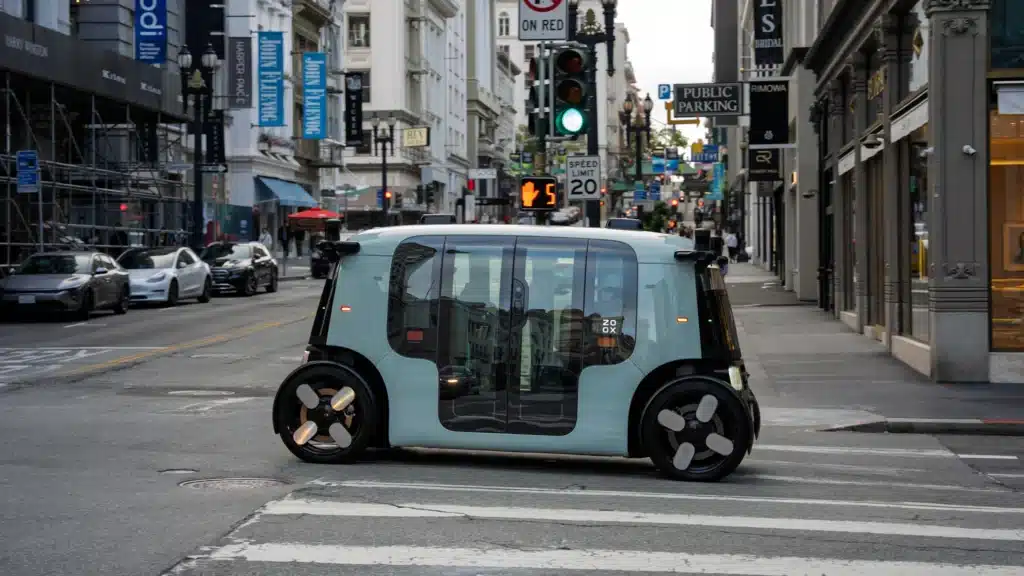
Zoox is fully electric. It is a purpose-built, all-electric autonomous robotaxi with no steering wheel or pedals.
Zoox vehicles recharge at centralized company depots using overhead-suspended charging cables. Because Zoox robotaxis are fully battery-electric and operate for up to 16 hours on a single charge, they return to a home base or operations facility when power is low, where charging lines drop down from the roof structure to plug into the vehicles.
Paid rides are scheduled to begin in Las Vegas next month, marking the first commercial deployment of Zoox’s autonomous robotaxi service. The company views the launch as an important step toward expanding access to autonomous mobility and scaling operations in additional markets.
Unlike many competitors that retrofit existing vehicles with autonomous technology, Zoox designed its vehicle from the ground up specifically for self-driving operation. The battery-electric robotaxi features a symmetrical, bi-directional design that allows it to travel efficiently in either direction without requiring a traditional front or rear end. This unique architecture is intended to maximize passenger space, safety, and operational efficiency.
Backed by Amazon, Zoox is positioning itself as one of the leading players in the emerging robotaxi market as autonomous mobility moves closer to mainstream adoption.
EVinfo.net’s Take: The Robotaxi Revolution is Part of the Fast Growing, Exciting EV Revolution
Robotaxi services such as Zoox are introducing millions of people to electric vehicles in a way that traditional dealerships and advertising cannot. By giving riders a firsthand experience in a quiet, smooth, and emissions-free vehicle, robotaxis help remove many of the misconceptions that still surround EVs.
For many people, a ride in a Zoox robotaxi may be their first experience in an electric vehicle. Riders can see how comfortable, responsive, and convenient EV technology has become without the pressure of making a purchase decision. This hands-on exposure can build confidence and spark interest in owning an EV.
Robotaxis also highlight the lower operating costs and environmental benefits of electric transportation. As more autonomous fleets are deployed, the public will become increasingly familiar with charging infrastructure and battery-electric technology, helping normalize EVs as part of everyday life.
Robotaxis and EVs Bring Economic Growth and Create Jobs
The growth of robotaxis and electric vehicles is about more than cleaner transportation. It is also creating new economic opportunities and supporting job growth across multiple industries.
As companies like Zoox expand autonomous electric vehicle fleets, they drive demand for vehicle manufacturing, battery production, software development, charging infrastructure, fleet operations, maintenance, and energy services. These investments create skilled jobs in engineering, construction, technology, and manufacturing while supporting local businesses and suppliers.
The expansion of EV charging networks also generates economic activity. New charging stations require electricians, contractors, utility upgrades, and ongoing maintenance. Communities that embrace EV infrastructure can attract additional investment and position themselves as leaders in the growing clean transportation economy.

Electric Vehicle Marketing Consultant, Writer and Editor. Publisher EVinfo.net.
Services