Replacing a Gas Car With an EV as Soon as Possible Creates Greatest Possible Climate Benefits, Says New Study
On August 6, 2026, the University of California Santa Cruz reported that replacing a gas-powered car with an EV as soon as possible creates the greatest possible climate benefits.
In recent months, American drivers have felt the impact of higher gasoline prices at the pump. There is some evidence that rising fuel costs may be encouraging consumers to consider cleaner transportation options. Battery electric vehicles, commonly called EVs, can be less expensive to own and operate than gasoline-powered internal combustion engine vehicles while also offering significant environmental benefits. But exactly how much better are EVs for the planet?
A new study led by researchers at the University of California, Santa Cruz, offers a surprising answer. From a carbon emissions perspective, the research found that even sending a brand-new internal combustion engine vehicle to the scrap heap and replacing it with a battery electric vehicle can result in lower overall emissions.
The researchers are not suggesting that consumers should immediately scrap newly purchased vehicles, particularly during a nationwide cost-of-living crisis caused by a rapidly deteriorating economy. On August 7, 2026, ABC News reported that Americans are deeply negative on the economy with nearly 8 in 10 Americans rating the economy poorly.
Instead, the UC Santa Cruz study provides important guidance for people already considering their next vehicle. Published in the journal Science, the research makes a strong case that switching from a gasoline vehicle to an EV can deliver substantial climate benefits, even when the emissions associated with manufacturing the replacement vehicle are taken into account.
“In some ways, I think this is really a definitive study about the carbon emissions benefits of EVs, because it shows that even in such an extreme scenario, the EV is still the obvious winner,” said UC Santa Cruz Environmental Studies Professor Elliott Campbell, the study’s lead author. “So if you’re someone who’s trying to decide whether or not to put money into keeping your gas car going, switching to an EV as soon as a financially viable opportunity comes up is absolutely the right thing to do for the environment.”

High Environmental Stakes
The research arrives as transportation has become the largest source of carbon emissions in the United States. Personal vehicles account for a particularly large portion of those emissions, exceeding the contribution from all other forms of transportation combined.
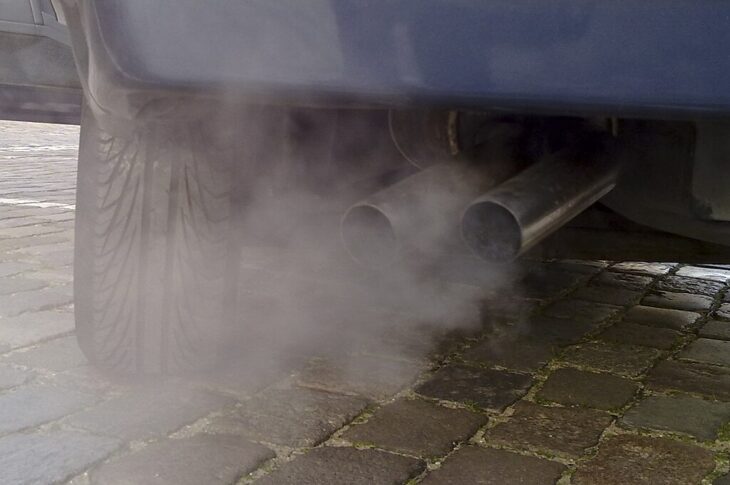
Traditional vehicles use internal combustion engines that burn gasoline to create the energy needed to turn the wheels. Burning gasoline and other fossil fuels releases large quantities of carbon emissions into the atmosphere. These gases trap heat around the planet and contribute to climate change.
Because personal internal combustion engine vehicles produce so much carbon pollution, moving drivers toward battery electric vehicles is one of the most important strategies for reducing transportation emissions. EVs use electricity stored in batteries and recharge from the local electric grid. The electricity used to charge them varies depending on where a vehicle is located. Some grids rely heavily on fossil fuels, while others include substantial amounts of renewable energy and cleaner-burning sources such as natural gas.
Previous research has consistently found that manufacturing and operating battery electric vehicles produces substantially fewer carbon emissions than manufacturing and operating internal combustion engine vehicles. For consumers purchasing a new vehicle, the climate case for choosing an EV has therefore been relatively clear. The more complicated question has been determining when an existing gasoline vehicle should be retired to maximize the environmental benefits.
A Question of Timing
Campbell developed the idea for the study while working on another research project involving interviews with people about their perceptions of electric vehicles.
“The question of when to retire your current vehicle kept coming up,” Campbell said. Some people believed the most sustainable option was to keep driving their existing vehicle until it could no longer operate, while others were uncertain about the best time to make the switch.
Surprisingly, Campbell found that there was little research-based guidance available to answer the question.
“Personally, I’m someone who repairs and reuses just about everything,” Campbell said. “Keeping gear going makes sense in so many contexts, but not in every context. Sometimes it’s better to just make a shift to a newer, more efficient option, and it wasn’t clear yet which was the case with transitioning to an EV.”
Replacing a functioning gasoline vehicle with a new EV can initially appear wasteful from an emissions standpoint. Manufacturing a new electric vehicle requires energy and produces carbon emissions that could potentially have been avoided by continuing to drive the existing vehicle. However, retiring the gasoline vehicle earlier also means more future miles can be driven using a vehicle that produces substantially fewer emissions.
The researchers therefore wanted to determine when the emissions reductions from operating an EV become large enough to offset the carbon emissions associated with producing it.
Comparing Carbon Emissions
Campbell and coauthor Roland Geyer, a professor at UC Santa Barbara, specialize in analyzing complex sustainability questions. Campbell is an environmental engineer with experience in large-scale computer modeling of ecological impacts, while Geyer is an industrial ecologist with extensive experience studying manufacturing and consumption systems.
The researchers compared multiple scenarios for replacing internal combustion engine vehicles with EVs. They calculated the difference in emissions when a gasoline vehicle was driven throughout its full useful life, estimated at approximately 16 years, versus retiring it and replacing it with an EV at various points earlier in its life.
Their analysis included more than 400 internal combustion engine and battery electric vehicle models. The researchers considered differences in vehicle efficiency, electricity sources, annual mileage, EV manufacturing emissions and battery size.
The results showed that the climate benefits were generally greatest when gasoline vehicles were retired very early. Retiring a gas-powered vehicle after one year and replacing it with an EV resulted in a 58% reduction in carbon emissions over a 16-year period.
The researchers found that it typically took approximately three years of EV operation for the vehicle’s lower operating emissions to offset the emissions associated with manufacturing it. After that point, the climate benefits continued to increase.
“What it comes down to is just that gas vehicles require so much more energy to operate,” Campbell explained. “Only 20% of the energy in the gasoline that most of our cars burn actually goes toward moving the vehicle. The rest is just lost as heat.”
That fundamental efficiency difference puts internal combustion engines in a substantially different category from EVs, Campbell said, creating a situation where retiring a gasoline vehicle sooner can provide greater emissions benefits.
The Details Matter
The environmental benefit of replacing a particular gasoline vehicle depends on several factors, including the vehicle itself, how much it is driven and where it is charged. Nevertheless, the study found that 92% of the scenarios modeled for replacing gasoline-powered or hybrid vehicles with battery electric vehicles before the end of their useful lives produced at least some overall reduction in carbon emissions.
Plug-in hybrid electric vehicles were an important exception. Conventional hybrid vehicles use electric motors to capture and reuse energy that would otherwise be lost when the vehicle slows down, but plug-in hybrids have relatively small batteries that can be charged from the electric grid and provide a limited amount of all-electric driving.
Because some plug-in hybrids are already highly efficient, replacing them prematurely with a battery electric vehicle can actually increase emissions in certain circumstances.
The researchers also found that extremely low-mileage gasoline vehicles may not be worth replacing early from a carbon emissions perspective. For cars driven fewer than 7,054 kilometers per year, SUVs driven fewer than 6,837 kilometers annually, and trucks driven fewer than 10,794 kilometers per year, the emissions savings from an early replacement may not justify the emissions associated with manufacturing the new EV.
The electricity grid is another major factor. In regions that depend heavily on coal or other high-polluting fossil fuels, charging an EV produces fewer emissions benefits than it would on a cleaner grid. That can make it more difficult for an EV to offset the carbon emissions generated during manufacturing.
For example, someone driving a highly efficient conventional hybrid may want to think twice before replacing it early if the local electricity grid falls within the least-efficient 33% of U.S. electricity generation. The researchers identified a threshold of more than 970 pounds of CO2 emissions per megawatt-hour as an indicator of a particularly carbon-intensive grid.
For most of the United States, however, the research found consistent benefits from retiring gasoline vehicles early, including highly fuel-efficient models. For many of the most common internal combustion engine vehicles sold in the United States, replacing them early still produces carbon reductions even when the electricity grid is relatively emissions-intensive.
Implications for Policymakers
The study’s findings suggest that helping consumers transition from internal combustion engine vehicles to battery electric vehicles more quickly can play an important role in reducing transportation emissions and combating climate change.
Several states, including California, already operate vehicle scrap-and-replace programs that provide financial incentives for consumers to retire older vehicles and purchase cleaner alternatives. Increasing funding for these programs could make EV ownership financially accessible to more households, particularly when scrap-and-replace incentives can be combined with EV purchase rebates.
The research also suggests that policymakers could consider expanding eligibility for scrap-and-replace programs beyond only the highest-emitting vehicles. A broader approach could become increasingly effective as the U.S. electricity system continues to become cleaner.
As renewable energy provides a larger share of electricity generation, the emissions advantage of driving an EV will increase. A stronger EV battery recycling industry could also reduce some of the initial carbon emissions associated with manufacturing new batteries and vehicles.
The researchers argue that accelerating these transitions is important because the effects of climate change are already intensifying.
“The rate of climate change is accelerating, so the rate of climate action needs to accelerate too,” Campbell said. “If states want to put more money into programs that encourage people who are on the fence about EVs to make that leap toward a newer, cleaner, more cost efficient car to own and operate, our results show that certainly makes sense from an emissions reduction point of view.”

Electric Vehicle Marketing Consultant, Writer and Editor. Publisher EVinfo.net.
Services