IONNA Ranks Highest in JD Power 2026 U.S. Electric Vehicle Experience Public Charging Study
The public electric vehicle charging experience is improving, particularly at DC fast-charging stations, as newer OEM-backed networks enter the market and established networks improve reliability. According to the 2026 U.S. Electric Vehicle Experience (EVX) Public Charging Study from JD Power, satisfaction with DC fast charging increased significantly over the past year, while the rate of charging failures fell to its lowest level since the study began.
Satisfaction with DC fast chargers increased 12 points to 666 on a 1,000-point scale, with improvements across all 10 factors measured by the study. The largest gains involved charger availability, which increased 27 points, and how safe customers feel at charging locations and the cost of charging, both of which increased 18 points. Slow charging speed remains the most common complaint for both DC fast and Level 2 charging, although the problem has improved substantially for DC fast chargers in recent quarters.
The results were less positive for public Level 2 charging. Satisfaction declined 12 points from the same period a year earlier to 595, primarily because of lower scores for ease of payment and ease of charging.
JD Power said newer DC fast-charging networks are helping raise expectations for public charging. Three OEM-backed networks became eligible for awards for the first time this year and performed strongly, particularly in ease of charging, charging speed and charger availability. In some areas, their advantages over the segment average exceeded 100 index points.
“New OEM-backed fast-charging networks are raising expectations with high-performing equipment, strong locations and smooth sessions,” said Brent Gruber, executive director of EV solutions at JD Power. He added that reliability, convenience and a more seamless charging experience can help address major barriers to EV adoption.
Reliability has also improved across the industry. The public charging non-charge visit rate fell to 12% during the most recent quarter, down from 14% during the same period a year earlier and the lowest rate recorded in the study. Newer OEM-backed networks posted the lowest failure rates, while legacy networks also showed improvement.
The location of a charging station also has a major impact on customer satisfaction. DC fast chargers located at hotels had the highest satisfaction score at 692, followed by gas stations and convenience stores at 689 and restaurants at 688. Dealership locations scored 570, while stand-alone parking lots and garages scored 606.
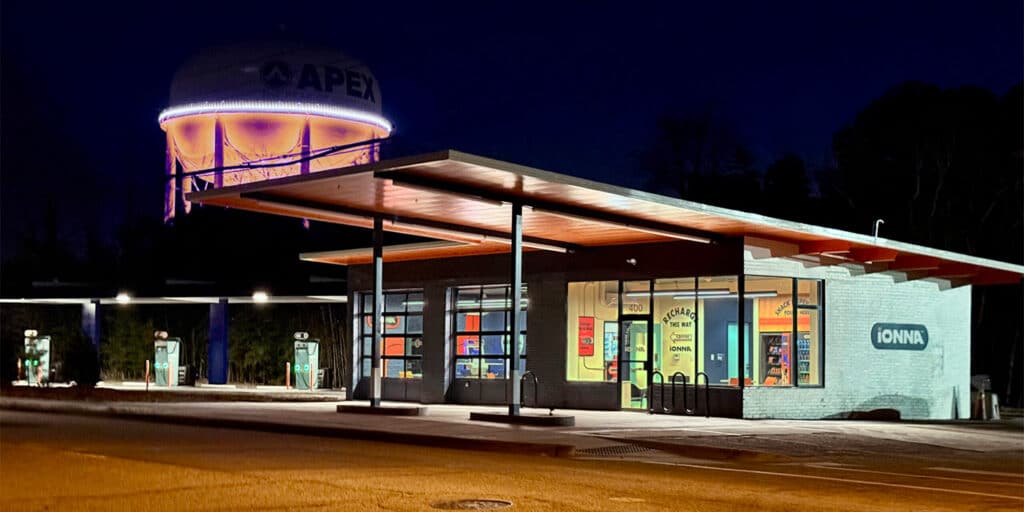
IONNA ranked highest among DC fast-charging networks in this year’s study with a score of 807. Mercedes-Benz Charging Network ranked second at 797, followed by Rivian Adventure Network at 755.
The sixth annual U.S. Electric Vehicle Experience Public Charging Study measures EV owner satisfaction with Level 2 and DC fast-charging stations across 10 factors, including charging speed, availability, convenience, safety, cost, payment and ease of charging. The 2026 study included responses from 6,594 owners of battery electric and plug-in hybrid vehicles and was conducted from January through June 2026 in collaboration with PlugShare.
The findings indicate that public charging is becoming more reliable and convenient, particularly as newer high-speed networks combine better equipment with strategic locations and simpler payment experiences. However, the decline in Level 2 satisfaction shows that significant improvements are still needed before public charging consistently meets the expectations of mainstream EV drivers.
EVinfo.net’s Take: There’s Still Room for Improvement, WattsUp Has an Answer
Although fast charging is improving, theres still room for improvement. Every failed charging session reduces the chance of more EV adoption. WattsUp’s AI-enhanced platform is one answer.
WattsUp Uses AI to Improve EV Charger Reliability
WattsUp is developing an AI-enhanced platform designed to improve the reliability of electric vehicle charging infrastructure. The company uses machine learning for real-time monitoring, anomaly detection and predictive maintenance, allowing charging point operators to identify potential equipment failures before they disrupt service. Its system is designed to reduce cascading failures, provide automated diagnostics and alerts, and shorten the time and labor required to identify and address problems.
The platform also automates parts procurement and maintenance scheduling. Based on diagnostic results and predicted failure events, WattsUp can identify required components and coordinate their delivery with scheduled maintenance work. Labor scheduling can likewise be aligned with component availability and predicted failures, helping reduce charger downtime and maintenance costs. The company says its technology provides charging point operators with an unbiased view of charger health while helping them allocate maintenance resources more efficiently and keep EV charging operations running reliably.

Electric Vehicle Marketing Consultant, Writer and Editor. Publisher EVinfo.net.
Services