New York Makes $35 Million Available for Public EV Charging
On August 14, 2026, NY Governor Kathy Hochul announced that $35 million is now available through New York’s new Charge Ready NY Large Public Sector Project program to help public sector entities install and operate Level 2 electric vehicle chargers. The initiative is designed to reduce charger purchase and installation costs, expand public access to EV charging and reduce air pollution in communities across the state.
Administered by the New York State Energy Research and Development Authority (NYSERDA), the competitive program is open to New York State agencies and authorities, local governments, and state or city university systems. Funding will support Level 2 charging stations installed on publicly owned land for use by the general public. Selected projects will receive between $1 million and $15 million and can cover one or more locations.
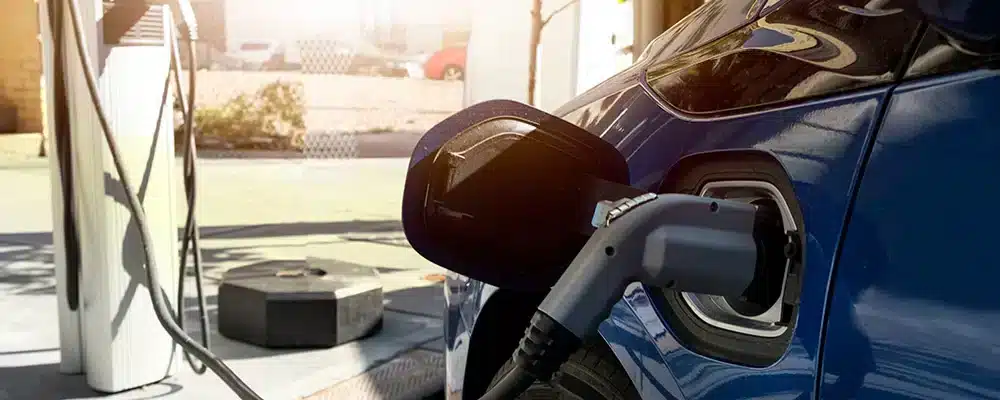
Applicants can request up to 80% of eligible documented costs for purchasing and installing electric vehicle supply equipment. To qualify for funding, projects must use equipment and network service providers approved by NYSERDA through its Charge Ready NY 2.0 Equipment and Network Qualification Process.
Proposals are due October 20, 2026, at 3:00 p.m. ET. NYSERDA will hold a webinar on September 15 at 3:00 p.m. ET to provide additional information about the solicitation, project requirements and application process.
The new funding builds on more than 21,000 Level 2 and DC fast-charging ports installed across New York, along with more than 331,000 electric vehicles on the state’s roads as of July 2026. NYSERDA’s existing Charge Ready NY 2.0 program continues to support public, private and nonprofit organizations installing Level 2 chargers at multifamily properties, hotels and workplaces. In February 2026, NYSERDA added $15 million to that program, with $3,000 to $4,000 available per charging plug on a first-come, first-served basis.
New York is investing nearly $3 billion in zero-emission vehicles and clean transportation, with additional programs supporting EV adoption and infrastructure, including the Drive Clean Rebate Program, EV Make Ready, EVolve NY, the New York Truck Voucher Incentive Program, the New York School Bus Incentive Program, the National Electric Vehicle Infrastructure program and the Direct Current Fast Charger Program.
The Charge Ready NY Large Public Sector Project program is funded through Governor Hochul’s $2 billion Sustainable Future Program, described by the state as the largest climate investment in New York’s history. The state’s climate agenda calls for an affordable and equitable transition to a clean energy economy, including green investments, family-sustaining jobs and a commitment to directing at least 40% of the benefits toward disadvantaged communities. New York is also pursuing emissions reductions across the energy, buildings, transportation and waste sectors while using the Sustainable Future Program to lower emissions, reduce household energy costs and support green job growth.
EVinfo.net’s Take: New York Wisely Invests in EV Charging as Federal Government Foolishly Rolls Back Support
New York is wisely moving in the opposite direction from Washington when it comes to electric vehicle charging infrastructure.
This is exactly the kind of long-term infrastructure investment that makes sense for a state preparing for continued EV adoption. Charging infrastructure is not simply an environmental project. It is transportation infrastructure, much like roads, bridges and gas stations, and its availability can directly affect whether consumers feel comfortable choosing an electric vehicle.
The contrast with federal policy is striking. The current federal administration has attempted to scale back federal support for EVs and charging infrastructure, including proposing the elimination of $4.2 billion for the National Electric Vehicle Infrastructure and Charging and Fueling Infrastructure programs. The administration previously froze NEVI funding, forcing states and other parties to fight in court to restore money that Congress had already authorized. A federal judge ruled in January that the administration’s abrupt suspension of NEVI funding was unlawful.
The federal retreat is particularly shortsighted because charging infrastructure has benefits that extend beyond EV sales. More chargers can support domestic electricity demand, create construction and maintenance jobs, provide new business opportunities and make communities more attractive to residents and visitors. Public charging also becomes increasingly important as more Americans drive EVs and as automakers introduce vehicles with longer ranges and faster charging capabilities.
The federal government can choose to step away from EV infrastructure, but that does not eliminate the need for charging. It simply leaves states, utilities, businesses and consumers to shoulder more of the cost. New York’s $35 million investment sends a different message: if EVs are going to become an increasingly important part of transportation, building the infrastructure to support them is a practical investment rather than something to be abandoned for foolish and misguided political reasons.

Electric Vehicle Marketing Consultant, Writer and Editor. Publisher EVinfo.net.
Services