Porsche 975 RSE Brings 816 HP and 335 km/h to the Next Generation of Formula E
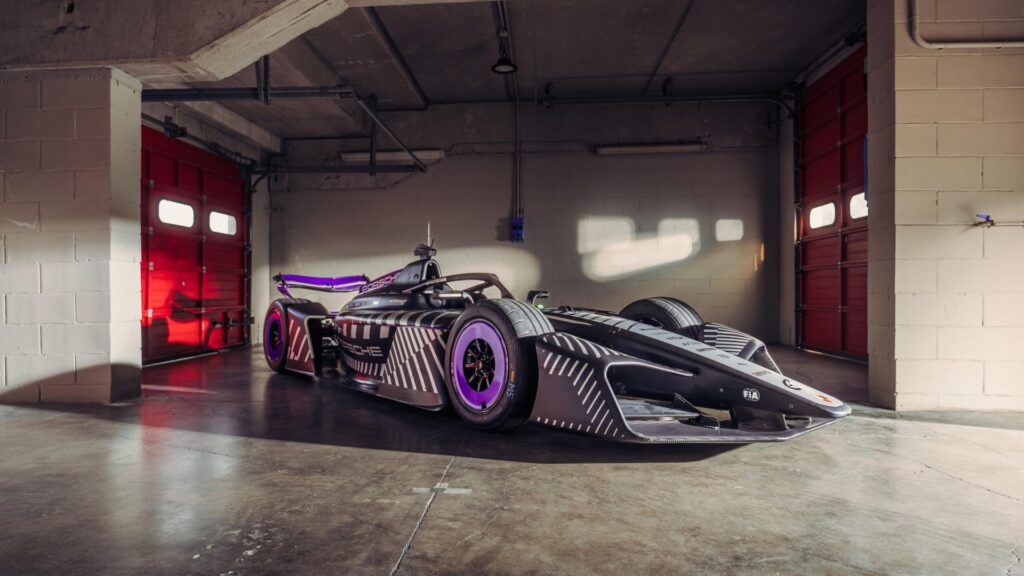
Porsche is preparing to enter the next era of electric motorsport with the new 975 RSE, a fourth-generation Formula E race car that combines substantially greater power, improved aerodynamics and advanced energy recovery. The new electric race car will compete during the 2026/2027 Formula E season, following the highly successful 99X Electric.
Porsche Formula E factory driver Nico Müller has nicknamed the 975 RSE “the Beast,” an appropriate description for a car capable of producing up to 600 kW, equivalent to 816 PS. The electric race car can accelerate from 0 to 100 km/h in just 1.8 seconds and reach a top speed of 335 km/h.
The 975 RSE name also recognizes Porsche Motorsport’s 75th anniversary. Porsche enters the new Formula E generation following a highly successful period in electric racing. Pascal Wehrlein secured Porsche’s first Formula E Drivers’ World Championship during the 2023/2024 season. Porsche then captured the manufacturers’ and teams’ championships one year later. During the 2025/2026 season, the manufacturer again claimed both the Drivers’ and Manufacturers’ World Championship titles.
More Power and Greater Aerodynamic Performance
The GEN4 regulations represent a major performance evolution for Formula E. The new cars feature larger wings and significantly greater aerodynamic downforce, giving them a visual appearance that is increasingly similar to Formula 1 cars while providing substantially more grip through corners.
Porsche engineers developed two aerodynamic configurations for the 975 RSE. A low-downforce configuration reduces aerodynamic drag and energy consumption during races, while a high-downforce configuration provides additional grip during qualifying, when energy consumption is less critical.
The high-downforce configuration can generate as much as 150% more downforce than the previous generation. However, additional aerodynamic performance also creates additional drag, making efficiency and energy management critical considerations for the engineers.
The 975 RSE produces 71% more peak power than its predecessor. Despite the enormous increase in performance, Formula E continues to place a major emphasis on energy efficiency.
The current 99X Electric already achieves more than 97% powertrain efficiency, compared with less than 55% for previous-generation Formula 1 race cars. Formula E achieves this efficiency partly through aggressive regenerative braking, which converts kinetic energy generated during deceleration back into electrical energy stored in the battery.
700 kW of Regenerative Braking
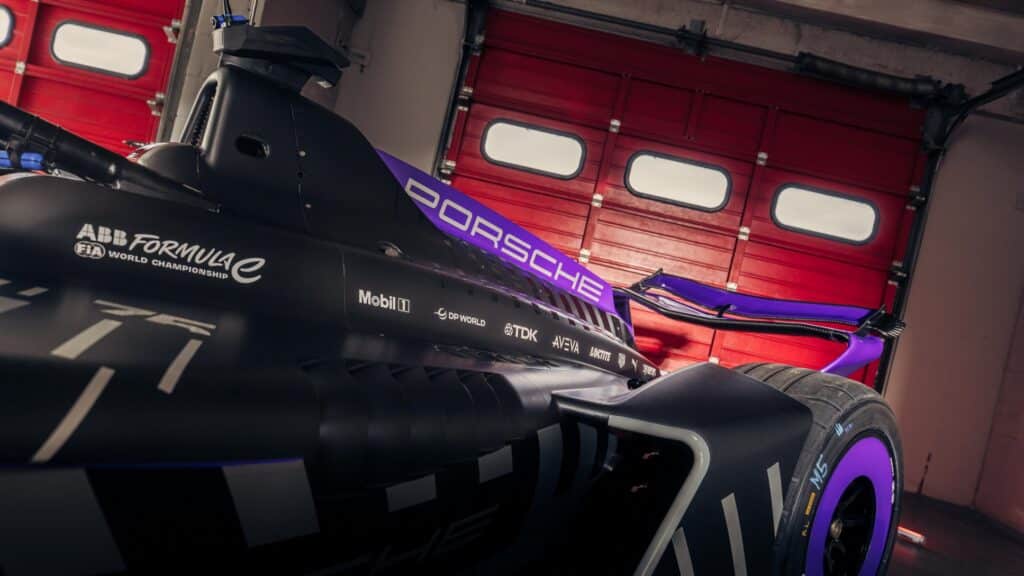
Energy recovery becomes even more important with the 975 RSE. Its permanent all-wheel-drive system can recover energy at up to 700 kW, allowing approximately 50% of the energy used during a race to come from regenerative braking.
The car uses a 51.25 kWh usable battery, yet that relatively small battery is capable of supporting a race lasting more than 45 minutes. The battery contains only about half of the energy required to complete the race at the starting line, demonstrating the extraordinary efficiency of Formula E’s electric powertrain.
At the rear axle, an oil-cooled permanent-magnet synchronous motor can independently recover energy at up to 350 kW. Porsche uses direct oil cooling to control temperatures by circulating nonconductive oil directly around the stator windings where heat is generated.
According to Porsche, a water-jacket-cooled electric motor capable of delivering the same performance would need to be approximately 1.5 times larger.
The technology also demonstrates the connection between Porsche’s racing and production vehicle development. A similar direct oil-cooling approach is used in the Cayenne Turbo Electric, allowing technology developed across motorsport and road-car programs to benefit both applications.
Porsche Focuses on Weight, Durability and Cost
With electric powertrain efficiency approaching its practical limits, Porsche engineers shifted additional development attention toward reducing weight, improving durability and controlling costs.
Formula E regulations standardize many major components. The chassis, battery, tires and aerodynamic systems are shared across teams, limiting the areas where manufacturers can gain performance through proprietary hardware.
The transition from GEN3 to GEN4 maintains many of those standardized components. However, Porsche was able to develop additional components internally while keeping the overall weight of its parts package within the regulations.
Although Porsche developed more components in-house, the company’s parts package could increase in weight by no more than 5 kilograms. Engineers instead worked to make numerous components lighter while improving their performance and durability.
Development of the 975 RSE began in 2024, when Porsche started the initial concept work and simulator development. At the same time, the company continued developing and racing its GEN3 cars and worked on the GEN3 Evo upgrade.
Porsche received the first official technical information for the new generation of Formula E cars during the summer of 2024. Engineers initially worked entirely in the digital environment, performing calculations and simulations before beginning physical testing.
The development process began with the powertrain architecture from the final version of Porsche’s GEN3 Evo car. Porsche incorporated internally developed components including the rear electric motor, transmission, differential, driveshafts and additional rear powertrain, cooling and chassis components.
Software also plays a critical role in the 975 RSE. The car’s control units contain more than 1.5 million lines of code organized into more than 100 individual software modules.
Porsche develops the software internally because it allows engineers to respond more quickly to changing conditions and technical challenges. The company considers this internal software expertise one of the major performance advantages available to manufacturers competing in Formula E.
Testing the 975 RSE
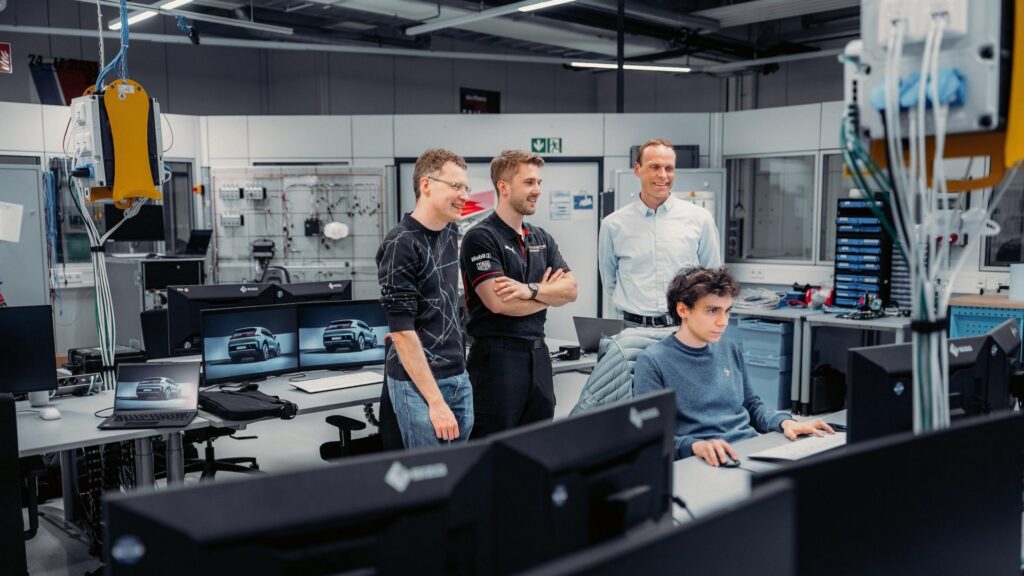
Before a new race car reaches the track, Porsche engineers test its individual components using sophisticated test benches and digitally simulated environments.
Components including control units, steering systems, chassis systems and drive sensors can be connected to simulated vehicle environments. This in-the-loop testing allows engineers to evaluate individual components before the complete vehicle is physically assembled.
The testing process has become even more complex with GEN4 because the new cars provide engineers with additional control over systems such as the axle differentials.
Digital simulation can reduce development costs by allowing engineers to identify and correct problems before conducting physical testing. Porsche also uses digital twins of drive components to analyze and modify individual systems in a virtual environment.
However, simulation cannot completely reproduce the conditions encountered on a race track. Porsche estimates that its test-bench simulations can still differ from real-world conditions by approximately 2% to 3%.
That makes physical track testing essential.
Nico Müller and Pascal Wehrlein began testing the 975 RSE on race tracks in November 2025. The testing program focused on final calibration of the car’s systems and determining how the various components perform under actual racing conditions.
Porsche expects the 975 RSE to deliver lap times comparable to Formula 2 cars. The combination of substantially greater power, improved aerodynamics, higher levels of grip and more aggressive acceleration is expected to produce another significant performance increase for Formula E.
The new GEN4 cars are scheduled to make their competitive debut in December 2026. Porsche will enter the new era of electric racing with the 975 RSE and drivers Nico Müller and Pascal Wehrlein, continuing the company’s push to demonstrate how rapidly electric vehicle technology can advance under the extreme demands of motorsport.

Electric Vehicle Marketing Consultant, Writer and Editor. Publisher EVinfo.net.
Services