TENIX Battery Additive Could Extend EV Battery Life by More Than 75%
A new battery additive designed to slow battery degradation could help electric vehicle batteries last significantly longer while reducing heat generation and improving charging performance.
Oklahoma-based Ten-Nine Technologies is scaling production of TENIX, a patented cathode additive designed to address battery aging at the source. The company says third-party testing found that batteries using TENIX delivered more than 75% additional charge-discharge cycles.
Batteries naturally degrade as they are repeatedly charged and discharged. Chemical by-products accumulate inside the cells during use, gradually reducing performance and usable lifetime.
TENIX is designed to interrupt that aging process. Rather than requiring manufacturers to redesign batteries or install new production equipment, the additive is blended directly into cathode material during manufacturing.
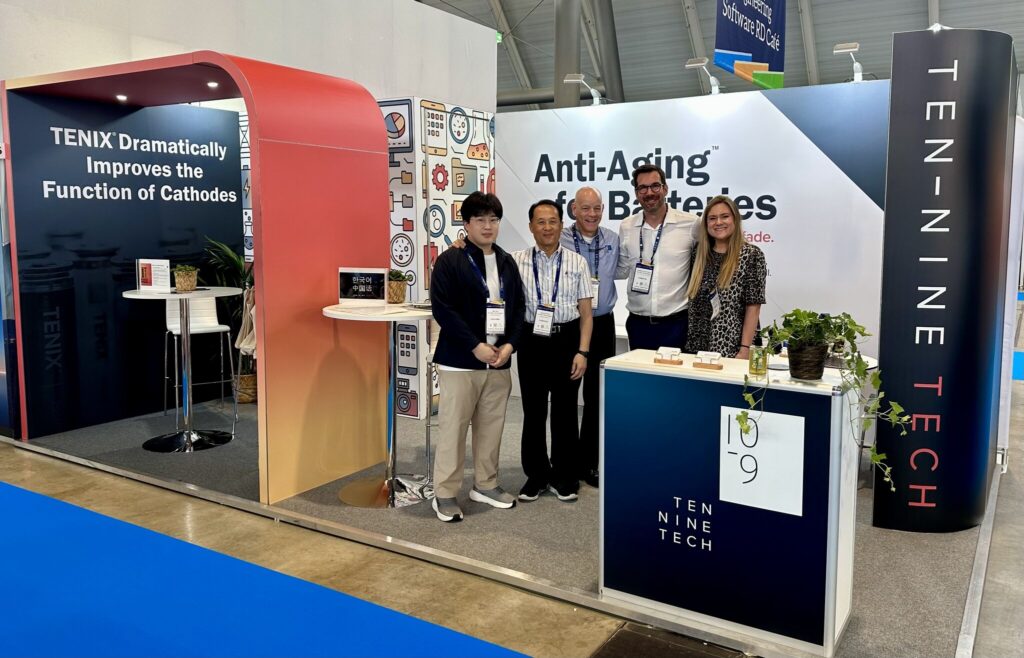
TENIX represents only 0.5% to 2% of the cathode’s weight. That equates to approximately 0.5 to 2 kilograms of additive for every 100 kilograms of cathode material, according to Ten-Nine Technologies.
The company said its existing production capacity of 100 tons of TENIX is enough to treat between 50,000 and 200,000 typical EV battery packs.
Ten-Nine Technologies founder and CEO Paige Johnson said battery aging has traditionally been treated as an unavoidable consequence of battery operation. As a chemist, Johnson said she wanted to address the chemical process responsible for degradation rather than develop an entirely new battery chemistry.
Third-party testing found that TENIX increased charge-discharge cycle life by more than 75%. According to the company, that could extend a typical EV battery’s life from a 150,000-mile warranty baseline to more than 265,000 miles.
The longer operating life could also reduce the cost of energy delivered over a battery’s lifetime. Ten-Nine Technologies says TENIX can reduce the lifetime cost per kilowatt-hour by approximately 40%.
The additive also reportedly reduces internal resistance by 10%, which could allow batteries to charge faster while wasting less energy as heat.
TENIX can provide another benefit as well. The company says batteries using the additive can produce approximately 40% less heat over their lifetime. Thermal management is increasingly important as batteries are pushed to deliver higher charging and power levels.
Ten-Nine Technologies is also targeting the growing use of manganese-rich cathode materials. Manganese is more abundant and geographically diverse than nickel and cobalt, which are used extensively in many conventional high-energy battery chemistries.
The company says manganese is mined across regions including Africa, South America and Southeast Asia, creating a potentially more diversified supply chain. By comparison, nickel- and cobalt-dependent battery supply chains can be exposed to geopolitical and resource constraints.
Manganese-rich cathodes have faced a significant limitation: relatively poor cycle life. TENIX is specifically intended to address that weakness by slowing the degradation mechanisms that reduce battery longevity.
Ten-Nine Technologies believes improving the durability of manganese-rich cathodes could accelerate their adoption and potentially reshape the global cathode supply chain, similar to the way lithium iron phosphate batteries changed the battery industry.
For EV manufacturers, a battery additive that can be incorporated into existing cathode production without requiring a fundamental battery redesign could provide a relatively straightforward way to improve battery longevity, charging performance, thermal efficiency and lifetime economics.

Electric Vehicle Marketing Consultant, Writer and Editor. Publisher EVinfo.net.
Services