Ford Lightning EV Owner Uses Truck’s Power During Outage From Powerful Nor’easter
CBS news reported on September 27, 2026, that a powerful, slow-moving nor’easter is battering the U.S. Northeast with heavy rain, strong winds, dangerous surf and widespread coastal flooding. The storm has affected areas from the Mid-Atlantic through New England, with tens of thousands of residents losing power. At least one person has died in Brooklyn after being struck by a falling tree.
Coastal communities in New York and New Jersey have experienced severe flooding, with some streets becoming impassable and residents using kayaks to navigate flooded neighborhoods. Nine adults and a dog were rescued from flooded motel rooms in New Jersey. Strong winds have approached hurricane strength in some locations, including gusts of 81 mph at Montauk Point.
The storm has also caused power outages, flight cancellations, travel disruptions, beach erosion and property damage. The National Weather Service warned that additional flooding could occur as the storm continues, particularly during high tides. The system is expected to linger near the coast through Monday before weakening and departing Tuesday.
Electric Vehicles Can Keep House Power on During Outages
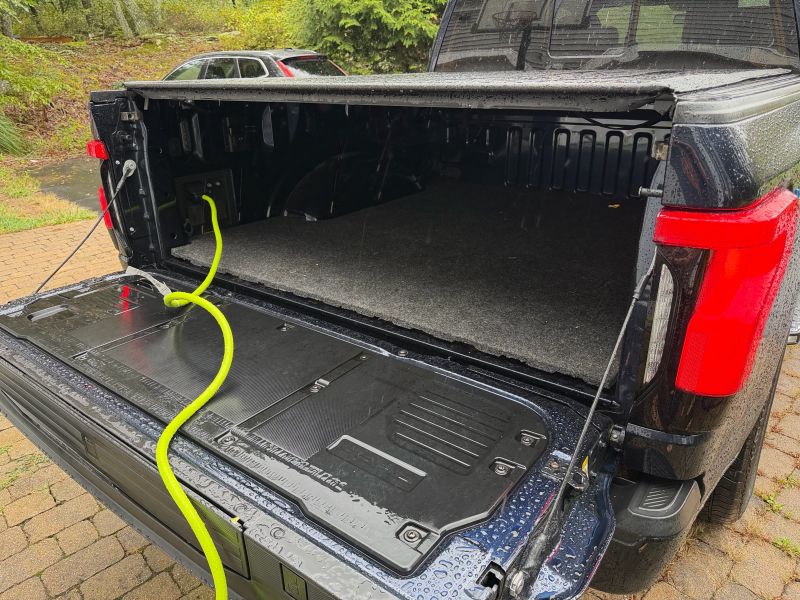
Tom W., apparently a Connecticut resident, reported on his LinkedIn account that his grid power is out because of this storm. He said that he plugged his house into his Ford F-150 Lightning electric truck, so everything is working just fine, even wifi.
Electric vehicles can be more than transportation. Models such as the Ford F-150 Lightning can provide backup power during outages, helping keep homes operating when the grid goes down. With bidirectional charging, energy stored in an EV battery can be sent back to a home, powering essential appliances, lights and other equipment.
The benefits extend beyond emergency backup. Vehicle-to-grid (V2G) programs can allow EV owners to send electricity back to the grid when demand is high and recharge when electricity is cheaper or renewable generation is abundant. Depending on the program and utility, participating drivers can receive financial compensation or reduce their electricity costs.
At the grid level, millions of EV batteries represent a potentially enormous distributed energy resource. Instead of relying entirely on large centralized power plants and stationary storage, utilities could coordinate participating vehicles to help balance supply and demand, reduce peak loads and provide additional grid flexibility.
As more EVs enter the market, their batteries could become an increasingly valuable part of America’s energy infrastructure. An EV can transport people, provide backup electricity during an outage, potentially lower household energy costs and support grid stability. V2G turns parked electric vehicles into flexible energy resources, creating another reason to accelerate the transition to electric transportation.

Electric Vehicle Marketing Consultant, Writer and Editor. Publisher EVinfo.net.
Services