EVgo Announces Next-Generation 750kW Charging System
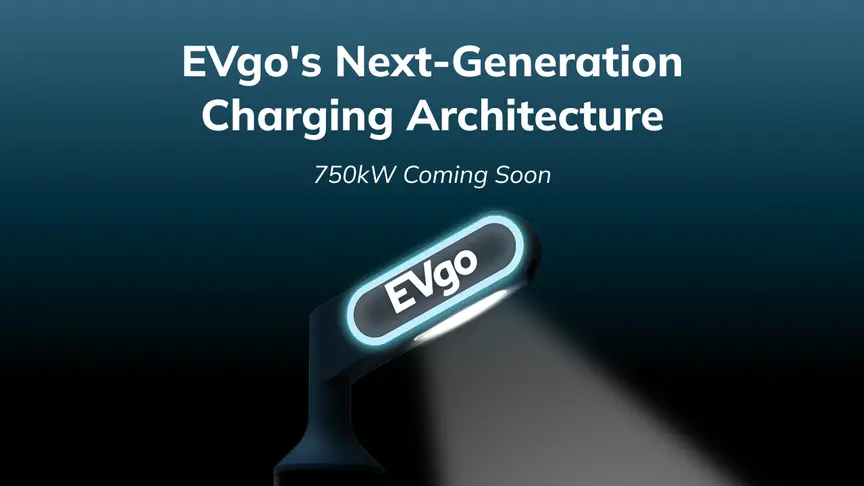
EVgo previewed a next-generation charging system capable of delivering up to 750kW, designed to prepare its fast-charging network for increasingly capable EV batteries and higher charging rates. The company announced the news on Sep 29, 2026.
Design, development and testing of the new charger are taking place at EVgo’s Innovation Lab in El Segundo, California, with co-development support from longtime partner Delta Electronics. The architecture makes EVgo one of the few U.S. charging networks designing its own charging hardware.
“EVgo has served EV drivers for over 15 years, and our investment in our 750kW next-generation architecture future-proofs our network for current and future vehicles,” said Badar Khan, CEO of EVgo. “Charge rates seen on the EVgo network are increasing, up nearly 20% in the last two years. We expect that to continue, and our new architecture will help meet growing demand for high-power charging while delivering an industry-leading customer experience for EV drivers.”
EVgo is designing the system around the charging experience, drawing on data from 1.8 million customer accounts and more than 10 million charging sessions annually. The new chargers will feature improved cable maneuverability, a touchless payment interface, and updated hardware and firmware intended to improve reliability and simplify charging. Every station will include NACS connectors as EVgo works to expand access to more drivers. The system is expected to charge the fastest-charging EVs available in the U.S. market in approximately 10 minutes, although actual charging times will vary depending on the vehicle, battery condition, temperature and starting state of charge.
The system will also use dynamic power sharing, allowing the charging network to automatically distribute available power among dispensers based on each vehicle’s needs. Instead of drivers having to select a charger with a specific power rating, every stall can provide the appropriate output for the vehicle. Power distribution can adjust continuously during a charging session as charging requirements change.
Dynamic power sharing can also help manage electricity demand by allocating available energy where it is needed and smoothing demand spikes. The approach becomes increasingly important as EV battery technology advances and charging capabilities vary more widely between vehicle models.
EVgo expects to unveil the final charger design in 2027 as it begins deploying the new architecture.
EVgo is one of the largest public fast-charging networks in the United States, with more than 1,200 fast-charging locations across 47 states. The company operates charging sites at locations including retailers, grocery stores and other businesses, making EV charging more accessible for everyday drivers. EVgo is also expanding its high-power charging infrastructure as EV adoption grows and newer electric vehicles support increasingly faster charging rates.
Beyond deploying charging stations, EVgo is investing in charging technology designed to improve reliability and the driver experience.
EVinfo.net’s Take: The USA Needs Faster Charging, EVgo on the Right Track
China is leading the world in the race to make EV charging as fast and convenient as filling a gasoline car. Chinese automakers including Geely, BYD and Li Auto are developing charging systems capable of delivering hundreds of miles of range in minutes. Geely’s latest system reaches 2.25 MW and can charge an EV from 10% to 70% in just 4.5 minutes, while BYD has developed its own megawatt-level charging technology.
Ultra-fast charging could eliminate one of the biggest barriers to EV adoption: long charging times. Battery and charging technology must also address heat, battery degradation and enormous demands on the electric grid. Chinese companies are responding with liquid cooling, advanced battery designs, AI-powered thermal management, battery storage and solar power.
The United States is also making commendable progress. EVgo’s recently announced 750-kW charging system is an important step toward closing the charging-speed gap with China. The industry needs this kind of innovation because faster charging can make EVs far more convenient for road trips, fleets and drivers without home charging.
China’s rapid development shows what is possible. The next phase of the global EV competition will not just be about building more vehicles. It will be about making charging so fast that waiting becomes almost irrelevant.

Electric Vehicle Marketing Consultant, Writer and Editor. Publisher EVinfo.net.
Services