Citroën Unveils 2 CV Concept, Reimagining an Icon for Electric Mobility
Citroën unveiled the 2 CV Concept at the 2026 Paris Motor Show, reviving the spirit of its iconic 2 CV with a modern interpretation designed to address tomorrow’s mobility challenges. Electric, minimalist, compact and affordable, the concept previews a production model expected to join the Citroën lineup by 2028. Manufactured in Europe, the future vehicle is targeting a starting price of approximately €15,000 and is intended to comply with upcoming European E-Car regulations.
The original 2 CV, introduced at the Paris Motor Show in 1948, became an automotive icon by making transportation accessible and practical. Citroën says the new concept is not intended to replicate the historic vehicle, but to reinvent its underlying philosophy: simplicity, affordability, versatility and freedom of movement.
Citroën CEO Xavier Chardon said: “Reinventing the 2 CV isn’t about replicating a car from the past; it’s about reinventing what made it unique: its simplicity, its accessibility and the freedom it offered. With the 2 CV Concept, we’re bringing that spirit into today’s world to make electric mobility simpler, more human and more desirable.”
Affordable, Lightweight Electric Mobility
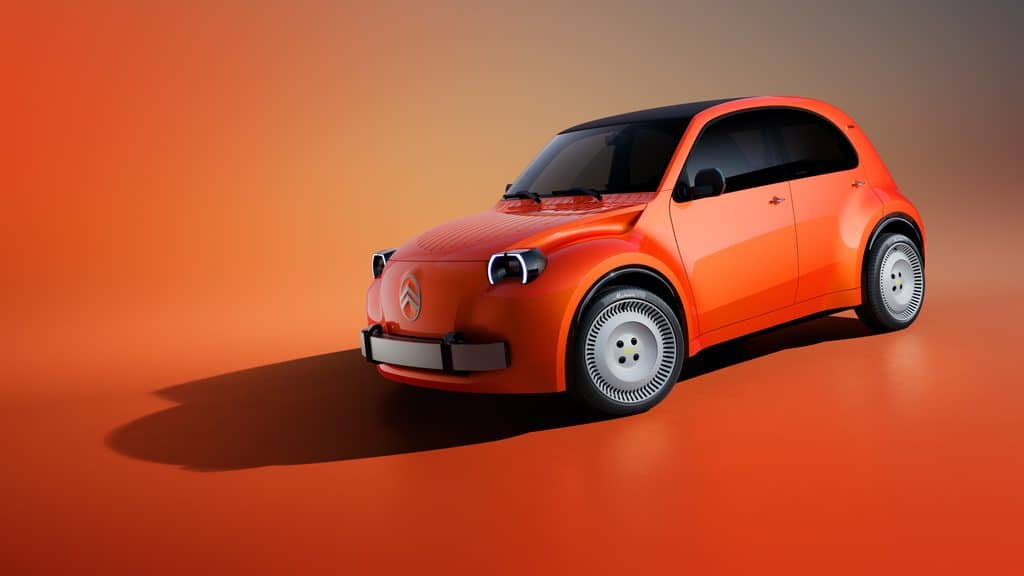
At 3.76 meters (12.3 feet) long, the concept is even shorter than the original 2 CV. Its compact dimensions are intended to make city driving and parking easier while retaining versatility for different uses.
Citroën targets a weight of approximately one metric ton. Reducing vehicle mass could allow a smaller, less expensive battery, helping control purchase prices and running costs while providing range suited to everyday journeys.
The concept challenges a market trend toward increasingly large, heavy, sophisticated and expensive vehicles. Its design emphasizes practical features, simplified construction and repairability, including flat body surfaces, direct air intakes beneath the windshield and bumpers that can be replaced independently of the bodywork.
Citroën also worked with Michelin, which developed a universal digital twin of the tire. The technology is designed to let the vehicle adapt its behavior to its environment while continuously monitoring tire condition.
Exterior Design Blends Heritage and Modernity
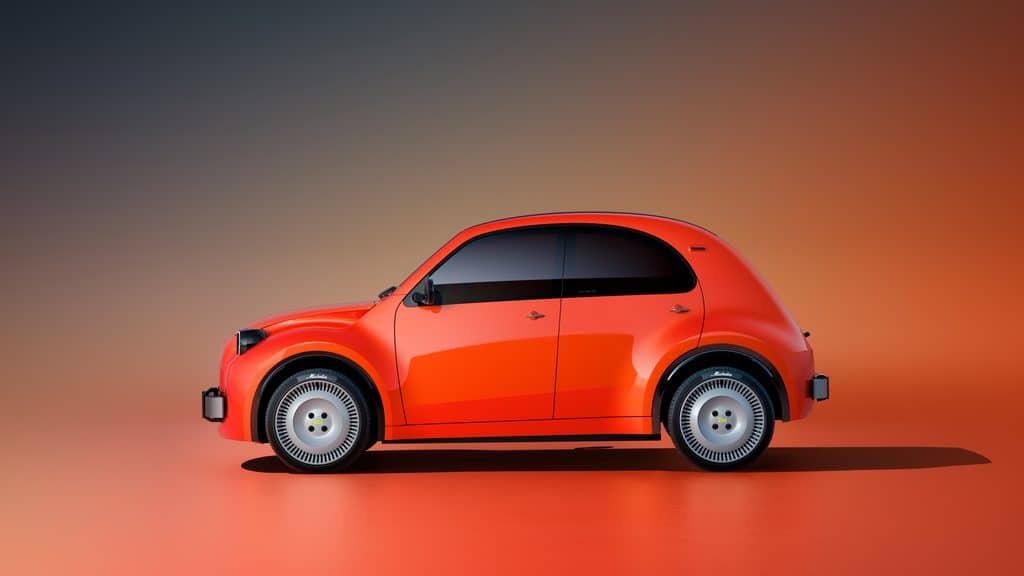
The 2 CV Concept retains the original’s recognizable silhouette, distinctive proportions and rounded forms, reinterpreted with tighter lines and more substantial volumes.
At the front, round headlights sit separately from the bodywork, accompanied by an expressive LED lighting signature, a sculpted hood, creases inspired by the original thermoplastic material and exposed windshield wipers.
The sides feature a vertical windshield, flowing roof, rounded fenders, sculpted door handles and tapered indicators on the C-pillars. The 18-inch steel wheels draw inspiration from the original 2 CV, while Michelin tires carry the Heritage logo and Citroën chevrons.
At the rear, a distinctive roofline leads into a black tailgate extending toward the bumper, recalling the first-generation model. LED lights flank the tailgate, which also features three horizontal stripes, a visible handle and a license plate displaying international nicknames for the 2 CV.
A Spacious, Practical and Connected Interior
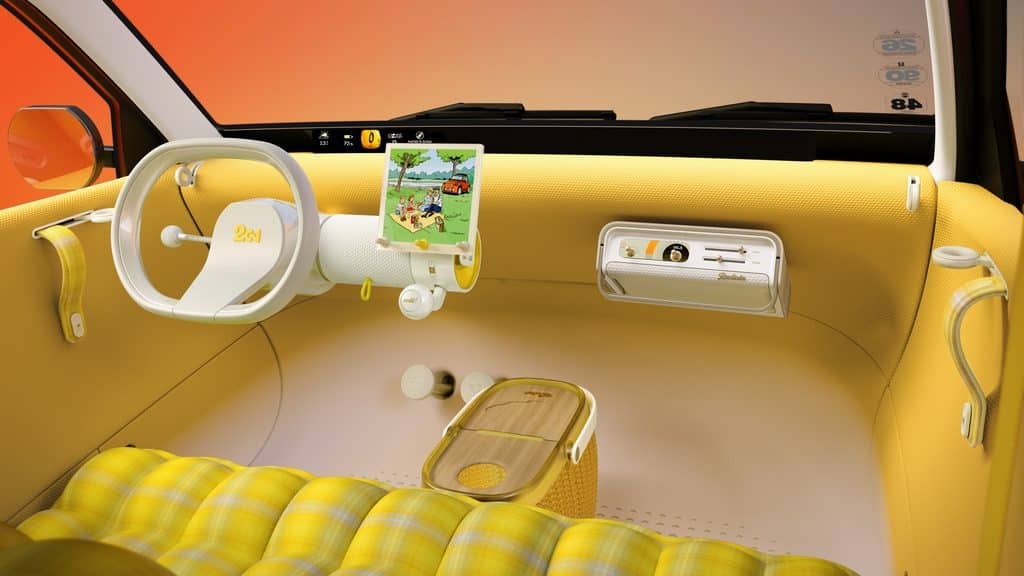
Inside, Citroën prioritizes comfort, natural light and usable space. The cabin eliminates a conventional dashboard and uses recessed door panels and wide seats featuring Citroën Advanced Comfort technology. A pull-out front seat is designed to provide a more relaxing place to rest during a break.
Practical storage solutions include a removable basket in place of a center console, soft-strap door handles and door compartments designed to hold eggs, referencing the original 2 CV’s practical specifications.
A central cylindrical structure supports a single-spoke steering wheel, a single control lever, a paddle-shift gear selector and a Citroën Smart Vision display that places essential information within the driver’s field of vision. An eight-inch square touchscreen features graphics inspired by comic books.
The detachable Radioën functions as both a radio and a portable speaker that occupants can use inside or outside the vehicle. A fabric sunroof brings additional light into the cabin and creates an open-air feeling.
Bright Colors and Distinctive Materials
The exterior uses an Infra Red finish based on orange, enhanced with yellow and red highlights. Inside, tartan upholstery inspired by the original 2 CV is reinterpreted in energetic shades of yellow. Beige details reminiscent of Bakelite appear on the steering wheel, controls, instrument panel and seat piping.
Textured materials inspired by cane and basket weaving cover the floor, dashboard and door panels. A storage basket combines wood and bio-based plastic produced through 3D printing, while wood accents surround the Radioën unit. Light gray steel wheels receive yellow decorative clips bearing the 2 CV name.
Additional heritage details include a horn and electric motor startup sound echoing the original car, heart-shaped stickers referencing its popularity, and the numbers 48, 90 and 26 on the windshield, representing the original’s launch in 1948, the end of production in 1990 and the concept’s unveiling in 2026.
The pedals feature a tortoise symbol for the brake and a rabbit for the accelerator, playfully representing the choice to slow down or speed up.
A New Chapter for the 2 CV
Citroën says the concept represents an effort to bring freedom, practicality and driving enjoyment back to affordable mobility. Rather than simply looking to the past, the company aims to reinterpret the original 2 CV’s defining qualities for a new generation of electric vehicles.
The production model, expected by 2028, is intended to offer a more accessible entry point into electric mobility while preserving the distinctive personality and ingenuity that made the original a lasting automotive icon.

Electric Vehicle Marketing Consultant, Writer and Editor. Publisher EVinfo.net.
Services