Rheinmetall’s Curb Charger Integrates EV Charging Directly Into Sidewalks
Rheinmetall developed an electric vehicle charging solution that replaces conventional concrete curbs with compact Level 2 chargers, providing curbside charging without taking up additional sidewalk space. The German company’s Curb Charger integrates charging hardware directly into the curb, allowing pedestrians to use the full width of the sidewalk while electric vehicle drivers charge parked vehicles.
Curbside charging offers a convenient option for EV drivers who park on public streets and need to charge while shopping, working or spending several hours away from home. Traditional curbside chargers are typically mounted on poles, posts or streetlights, which can obstruct pedestrian pathways. Rheinmetall’s design addresses that challenge by placing the charging equipment within the curb itself.
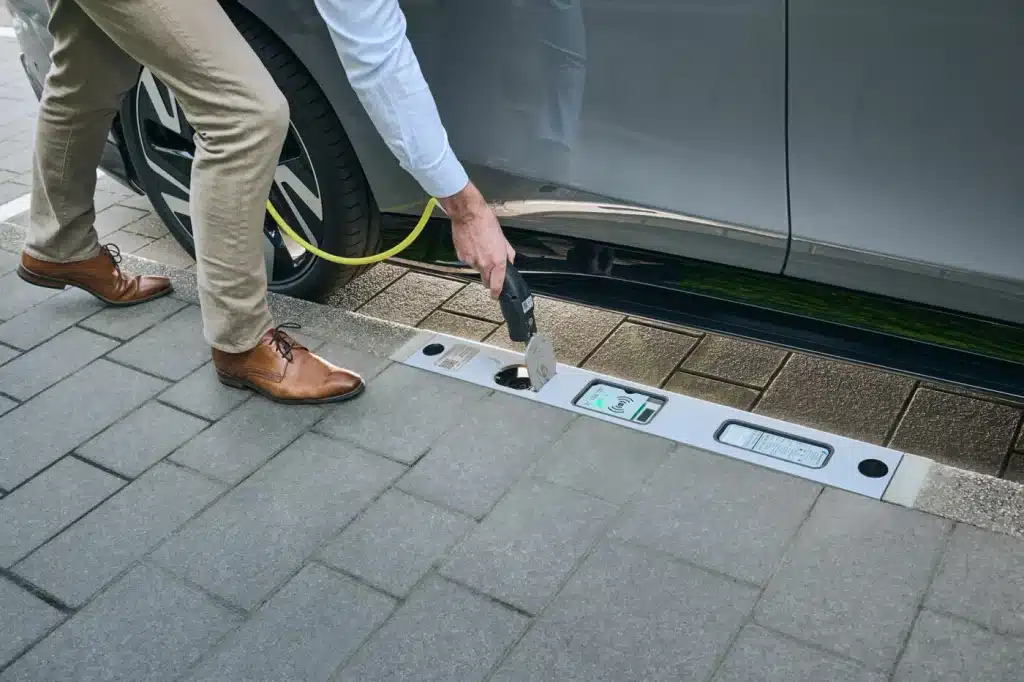
The modular unit weighs approximately 176 pounds (80 kilograms) and is constructed from stainless steel and aluminum. It delivers up to 22 kilowatts of AC charging power through a 400-volt, three-phase electrical connection, making it suitable for Level 2 charging applications.
The Curb Charger includes an integrated 4G modem, an Ethernet port, an RFID reader and a display. Drivers can authorize charging through a smartphone app, an RFID card or a QR code. Its IP68 protection rating indicates a high level of protection against dust and water immersion under specified test conditions.
Rheinmetall has designed the system to withstand demanding outdoor environments. The enclosure incorporates drainage channels to manage water, while encapsulated electronics protect the internal components against weather exposure. A water-level sensor automatically cuts power if flooding raises the surrounding water level. An integrated heating system helps prevent snow and ice accumulation during cold weather.
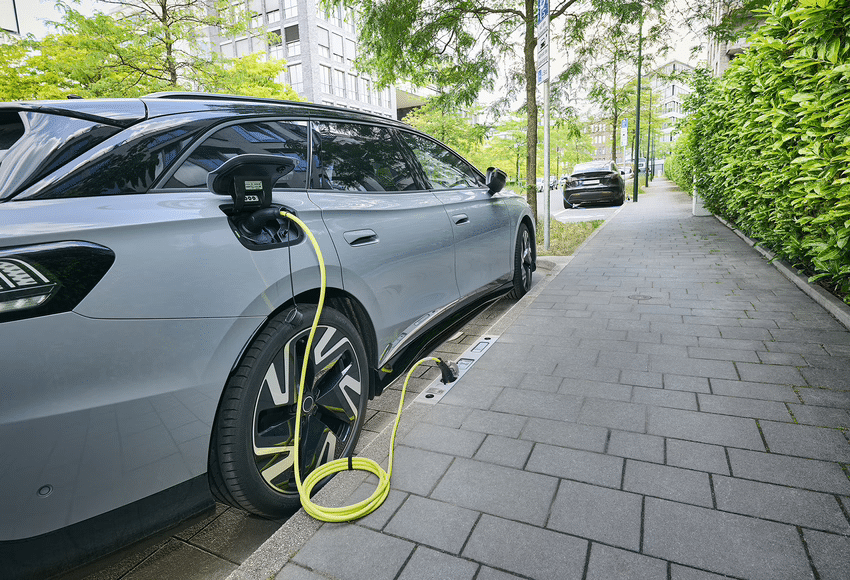
The charger does not include a permanently attached charging cable. Because the unit sits flush with the sidewalk, drivers must bring their own Type 2 charging cable, a common arrangement for curbside charging in Europe.
Charging operators also benefit from the charger’s modular construction. A quick-release mechanism separates the metal enclosure from the electronic module, allowing a faulty unit to be replaced without requiring the entire installation to be rebuilt. This design can simplify maintenance and help reduce service interruptions.
Rheinmetall tested the technology in a year-long field trial in Germany involving four charging curbs. The units achieved more than 99% uptime and delivered over 2,800 charging sessions during the 12-month period, operating under a variety of weather conditions.
The results demonstrate the potential for curb-integrated charging to provide reliable infrastructure while preserving pedestrian space. The technology could be particularly useful in dense urban neighborhoods where many residents lack private driveways or garages and depend on public charging near their homes.
Rheinmetall, best known as a major European defense manufacturer, is also expanding its activities in mobility and energy-related technologies. Its Curb Charger offers an alternative approach to urban EV infrastructure by integrating charging equipment into existing streetscape elements rather than adding separate structures.
If adopted more widely, curb-integrated chargers could help cities expand access to EV charging without unnecessarily narrowing sidewalks or cluttering streets with additional equipment.

Electric Vehicle Marketing Consultant, Writer and Editor. Publisher EVinfo.net.
Services