Autel Energy, Phoenix Contact Integrate High-Current CCS2 Technology into New Megawatt-Class Charging System
Autel Energy has announced a collaboration with Phoenix Contact to integrate Phoenix Contact’s new 1,000-amp liquid-cooled CCS2 cable and connector system into Autel’s MaxiCharger DT1000 series. The partnership was revealed during Autel’s global product launch event “Infinite Power – Starting from Zero,” where the enhanced DT1000 system was showcased.
The CCS2 technology features a liquid cooling loop with a water-glycol mixture for thermal stability, optimized conductors, Pt1000 temperature sensors, insulation monitoring, and IP67 protection. It supports 800 amps continuously and up to 1,000 amps in boost mode, enabling the DT1000 to reach nearly one megawatt of charging power. This performance is aimed at heavy-duty vehicles, commercial fleets, logistics hubs, high-throughput depots, and potentially high-performance passenger EVs.
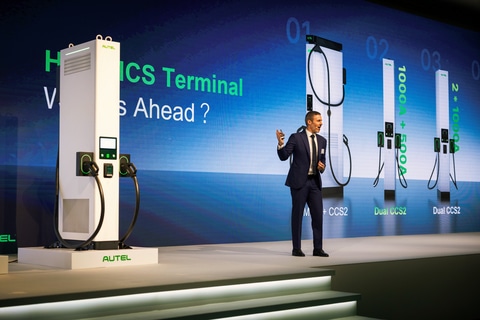
“By integrating Phoenix Contact’s new CCS2 connector into our MaxiCharger DT1000, we can bring this technology into a complete system — from modular cabinets to dispensers — enabling the highest charging performance on CCS where it’s needed today.” said Andreas Lastei, Vice President of Autel Energy Europe. “At the same time, this partnership shows how essential strong collaboration is in our industry. Only by working together can we bring the best solutions to market and make e-mobility truly mass market.”
The modular design of the DT1000 allows it to scale from mid-range to megawatt-class deployments, and it works in combination with Autel’s other liquid-cooled modules such as the MaxiCharger DS600L and DS600/480. By integrating Phoenix Contact’s high-current CCS2 solution, Autel is pushing CCS2 charging technology into higher power territory, narrowing the gap with the Megawatt Charging System standard while improving infrastructure readiness for long-haul transport and other demanding applications. The collaboration highlights how partnerships in the EV charging sector are accelerating both technological advancement and deployment.
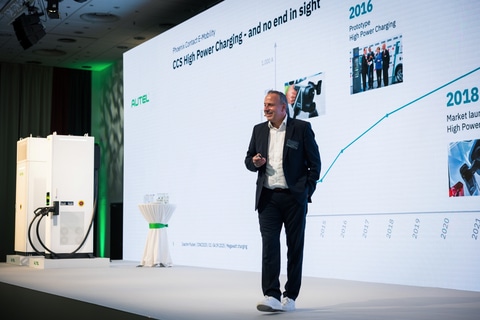
“With the new generation of the cooled CCS HPC connector, Phoenix Contact delivers a charging power of up to 1 MW in boost mode, significantly narrowing the performance gap between CCS and MCS charging stations,” said Joachim Pucker, Senior Director E-Mobility Sales Network at Phoenix Contact. “While this does not make the MCS standard obsolete, it broadens the application range of CCS-based charging solutions and helps reduce the costs of infrastructure expansion, particularly for long-haul transportation. Together with Autel, we have integrated this technology into the highly efficient MaxiChargers to ensure an optimal charging experience for customers.”
Autel Energy Expands Turnkey Design Services, Completes First U.S. EV Charging & Battery Storage Project
Autel Energy has completed its first EV charging and battery storage project in the U.S., installing it at its manufacturing facility in Greensboro, North Carolina. The project includes a 250 kWh battery cabinet paired with a 125 kW power conversion system, supporting one Autel MaxiCharger DC Fast charger and two DC Compact units.
The installation is fully permitted and approved by Duke Energy, demonstrating Autel’s ability to deliver utility-compliant turnkey solutions that combine high-power charging and advanced storage. The company notes that its designs are standardized and scalable, starting from 250 kWh and extending to multi-megawatt systems, allowing flexible deployment for fleets, commercial sites, municipalities, utilities, and projects funded under the NEVI program.
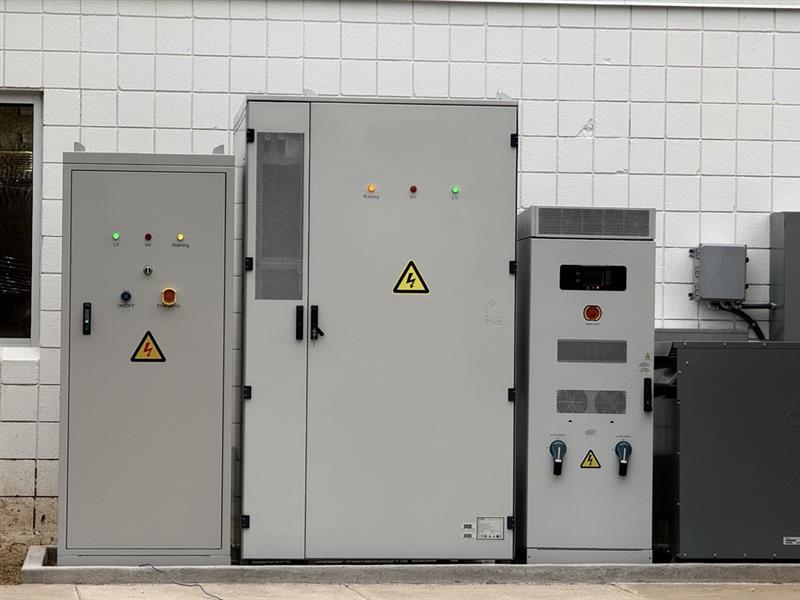
The systems are UL 9540A certified and offer capabilities such as peak shaving, load shifting, and demand charge management while also supporting grid stability. Autel is now offering these integrated EV and storage solutions for quoting, with potential installations possible before the end of 2025, depending on permitting and site readiness.