EV Charging One of Key Factors Shaping U.S. Convenience Store Trends in 2026, Says New Report
The U.S. convenience store industry is rapidly evolving beyond its traditional role as a place to buy fuel and snacks. Today’s consumers increasingly visit convenience stores for fresh meals, specialty beverages, wellness products, electric vehicle (EV) charging, and everyday essentials. As customer expectations become more diverse, operators are turning to advanced analytics and artificial intelligence tools to better anticipate demand, personalize experiences, improve execution, and identify opportunities across their store networks.
Intouch Insight’s 2026 C-store Trends Report, titled The New Convenience Battleground: C-store Trends Shaping 2026, listed EV charging as one of six key trends shaping management decisions and planning at convenience stores across America.
The c-store industry remains a significant economic force, generating $817.5 billion in sales across nearly 152,000 locations nationwide in 2025. In-store sales reached $341.2 billion, marking the 23rd consecutive year of growth.
EV charging is transforming the traditional convenience store forecourt and creating a major opportunity for operators to rethink the customer experience. Success will depend on more than simply installing chargers. The businesses that benefit most will be those that create an entire charging experience that encourages drivers to plug in, enter the store, spend time, and return in the future.
Electric vehicle charging represents a fundamental shift in the customer journey. Unlike traditional gasoline stops that often last only a few minutes, EV charging creates longer dwell times and changes what customers expect from a convenience stop. As charging becomes more common, stores must evolve into destinations that provide quality food, clean restrooms, comfortable seating, reliable Wi-Fi, and other amenities.
27% Said They Would Be More Likely to Choose One Retail Location Over Another if It Offered EV Charging
EV charging adoption is accelerating, but convenience stores still have significant room for growth. A recent Intouch Insight audit found that only 6% of convenience store locations had EV charging stations. With drivers identifying c-stores as a top choice for charging, operators have a clear opportunity to establish themselves in the growing EV market. In fact, 27% of surveyed customers said they would be more likely to choose one retail location over another if it offered EV charging. Twenty-seven percent is impressive, considering 1.9% is the approximate share of all registered light-duty vehicles on U.S. roads that are currently fully electric.
DC fast charging sessions typically require 20 to 40 minutes, creating a valuable opportunity for additional purchases. EV drivers are more likely to enter stores and spend money on prepared meals, beverages, and impulse items when the overall experience is welcoming and relevant. However, the success of this model depends on charger reliability and uptime.
Artificial intelligence can help operators maximize the value of EV charging by connecting charging performance with the in-store experience. AI-powered systems can support predictive maintenance, forecast customer traffic, align food and beverage promotions with charging windows, and optimize restroom, lounge, and facility management in real time.
For convenience stores, EV charging is not simply an infrastructure investment. It is a customer acquisition and revenue opportunity that can redefine the role of the forecourt. As transportation shifts from gasoline to electricity, operators that successfully combine reliable charging with a high-quality retail experience will be positioned to lead the future of convenience.
Intouch Insight is a CX (Customer Experience) solutions company, helping multi-location businesses achieve operational excellence through mystery shopping, operational audits, and a suite of proprietary tools including checklists and inspection software, surveys, and a robust CX platform.
EVinfo.net’s Take: Convenience Stores Win With EV Charging
Convenience stores that invest in EV charging infrastructure today have a strong opportunity to position themselves for long-term success as transportation continues to electrify. As more drivers switch to electric vehicles, charging locations will increasingly influence where customers stop, shop, and spend money. Unlike traditional fuel stops that focus on quick transactions, EV charging creates longer customer dwell times, giving stores more opportunities to increase sales through foodservice, beverages, and other retail offerings.
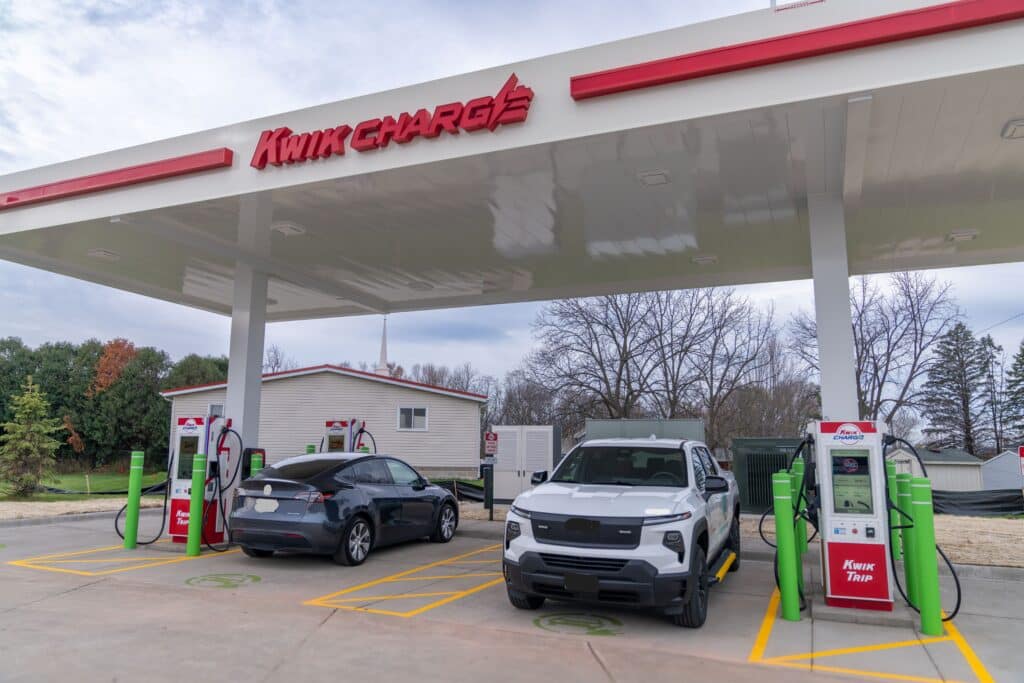
Operators that combine reliable charging with clean facilities, quality products, and a positive customer experience can become preferred destinations for EV drivers. By adapting early to changing mobility patterns, convenience stores can strengthen customer loyalty, attract new traffic, and remain competitive in the next generation of transportation. EVinfo.net reported on Kwik Trip’s stores installing EV charging, one of many convenience store chains that are going all-in on charging.
7-Eleven operates its own dedicated 7Charge fast-charging network at growing numbers of stores across select states including California, Florida, and Texas. Wawa offers charging at a substantial number of its mid-Atlantic and east coast store locations. Sheetz equips many of its larger travel-center style convenience stores with high-speed charging options. Pilot & Flying J partnered with EVgo and GM to deploy reliable DC fast chargers across major highway travel center properties.
Reliability Important
Regardless of where the charging exists, whether at a convenience store or elsewhere, EV charging reliability is essential because drivers depend on chargers being available when and where they need them. Unlike traditional gas stations, where a driver can quickly move to another pump, EV drivers often plan their trips around charging locations and may have limited alternatives if a charger is offline. Poor charger uptime can create range anxiety, reduce consumer confidence, and discourage drivers from returning to a specific location. For businesses, reliable charging is also critical because an unavailable charger means lost customer traffic and missed revenue opportunities from in-store purchases. By maintaining high uptime through proactive monitoring, predictive maintenance, and responsive service, charging operators can build customer trust while ensuring EV charging becomes a dependable part of the transportation experience.

Electric Vehicle Marketing Consultant, Writer and Editor. Publisher EVinfo.net.
Services