GM Says August Best Month Ever for its EV Sales, Amid ‘Irrational’ Competitor Discounts
U.S. electric vehicle sales likely hit an all-time monthly record in August as customers rushed to make purchases ahead of the expiration of Federal EV (electric vehicle) tax credits. For General Motors, that surge translated into more than 21,000 EVs sold across Chevrolet, Cadillac, and GMC. The automaker continues to hold the #2 spot in EV sales, driven by strong demand for models like the Chevrolet Equinox EV, Cadillac LYRIQ, and GMC Sierra EV.
Executives at GM credited the milestone to a combination of customer loyalty, strong dealer performance, and an expanding EV portfolio. “August was our best month ever for EV sales,” GM’s Duncan Aldred, Senior Vice President and President, North America noted, adding that the momentum should pay long-term dividends despite upcoming market challenges.
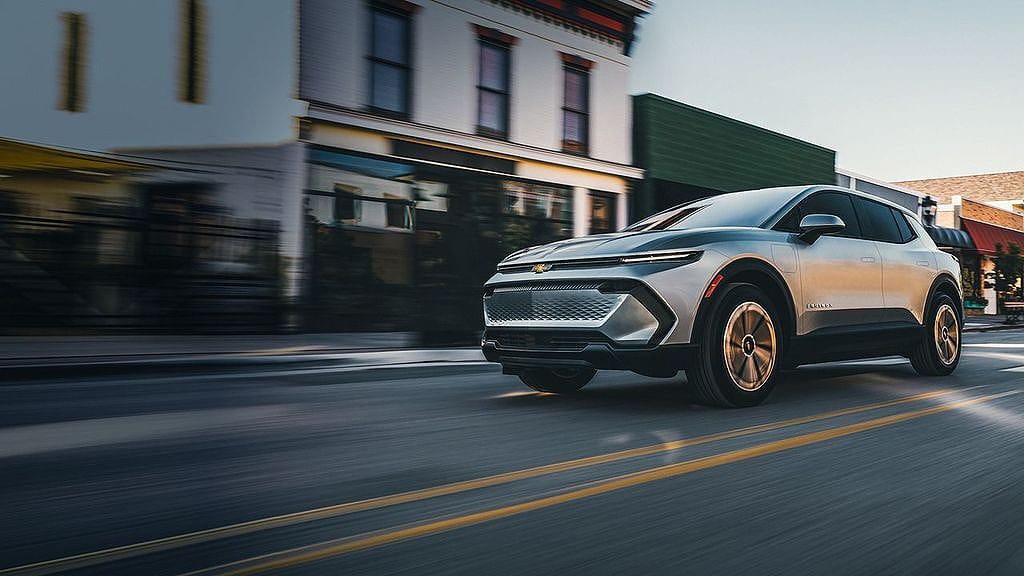
With tax credits expiring at the end of September, GM expects EV sales to dip temporarily in the coming quarter before stabilizing. Still, the company is confident in its ability to grow EV market share. That confidence stems from its diverse portfolio, which spans both affordable and luxury EVs, including Cadillac’s luxury lineup, the Chevrolet Equinox EV, and the forthcoming Chevrolet Bolt.
Some competitors have begun scaling back their EV plans due to the tax credit cut, which GM believes will ease industry-wide overproduction and unsustainable discounting.
“We are seeing marginal competitors dramatically scale back their products and plans, which should end much of the overproduction and irrational discounts we’ve seen in the marketplace,” said Aldred.
On the performance side, GM’s Chevrolet, GMC, and HUMMER pickups and SUVs are designed to stand out with industry-leading range and capability.
In July, GM teased the 2027 Bolt, officially confirming the return of one of its most beloved electric vehicles. Once a cornerstone of affordable EV adoption in the U.S., the Chevy Bolt dominated the entry-level EV market for years before its discontinuation in 2023, a move that drew sharp criticism from loyal customers and industry watchers alike.
Now, GM is bringing the Bolt back for the 2027 model year, teasing the announcement through social media. The next-generation Bolt is set to reemerge not only as a more advanced and capable EV but also as a profitable one, according to the company. Details were few, but the company said the Bolt would feature NACS charging and a lithium-iron-phosphate (LFP) battery pack, chosen for its lower cost and longer life span.
General Motors Hit Another Monthly Record for US Electric Vehicle Sales in July
General Motors set another monthly record for U.S. electric vehicle sales in July, fueled by strong demand for the Chevrolet Equinox EV.
GM sold more than 19,000 EVs during the month, marking a year-over-year increase of over 115%. The Equinox EV led the charge with more than 8,500 units sold, not only the best month ever for the model, but also the highest monthly sales ever for a non-Tesla EV in the U.S.
Industry-wide EV sales are on the rise, with demand climbing ahead of the upcoming expiration of the federal consumer tax credit program. Within this momentum, GM’s EV portfolio continues to expand market share, with the company’s U.S. EV sales more than doubling in the second quarter.
The Equinox EV is proving to be a standout, attracting new buyers drawn to its sleek design, accessible price point, and more than 315 miles of range.
Isidro Bomnin, vice president of operations at Bomnin Automotive, one of Chevrolet’s top EV-selling dealer groups in South Florida, says the model’s appeal is undeniable.
“The first thing for Equinox is the look and design. And once they get behind the wheel, they fall in love,” Bomnin said in GM’s article. “We’re seeing a lot of conquest buyers from other brands, and younger buyers.”
GM became the No. 2 EV seller in the U.S. last year and continues to outpace overall industry growth. The company will report third-quarter U.S. sales results on October 1.
EVinfo.net’s Take
Electric car sales in 2025 are expected to exceed 20 million worldwide to represent more than one-quarter of cars sold, says IEA’s Global EV Outlook 2025. In the first three months of 2025, sales were up 35% year-on-year, with record first-quarter sales in all major markets.
China is the undisputed leader in EV adoption, Visual Capitalist reported, with data from JATO. In Q1 2025, China accounted for 57% of global BEV registrations. Europe follows China with 22% of BEV sales, while the U.S. brings up the rear, making up 12%.
Outside of the US, the world’s drivers are quickly going electric. This means that America can’t afford to stay in last place for long.
The cutting of the federal EV tax credit was a big mistake, that we hope will get corrected soon. This will hurt the ability of our car companies to compete with China, lose jobs, drag down the economy, and increase costs for drivers.
Even without the credit, EV adoption will continue to grow in the US. The most compelling reasons are long-term cost savings and environmental benefits.
Electric vehicles are emerging as one of the most eco-friendly and cost-effective options on the road today. Unlike gasoline-powered cars, they produce no tailpipe emissions, helping to reduce both air pollution and greenhouse gases. Even when the electricity used to charge them comes partly from fossil fuels, EVs generally emit far less carbon dioxide over their lifetime than traditional vehicles, and their environmental benefits will only increase as more renewable energy is added to the grid. A new cradle-to-grave analysis from the University of Michigan confirms that battery electric vehicles (BEVs) have the lowest lifetime emissions of any vehicle type.
From a financial perspective, EVs offer meaningful savings as well. Charging costs are usually the equivalent of paying just a fraction of what gasoline costs per mile, and the simpler mechanics of EVs mean fewer repairs and less routine maintenance, lowering ownership expenses over time.

Electric Vehicle Marketing Consultant, Writer and Editor. Publisher EVinfo.net.
Services