IEA Says ‘War in Iran Is Causing Biggest Energy Crisis in History,’ Strengthening Long-Term EV Economics
On April 20, 2026, Reuters reported that Faith Birol, the head of the International Energy Agency (IEA), said the conflict between Iran and the United States and Israel is creating the worst energy crisis ever faced by the world.
“This is indeed the biggest crisis in history,” Birol told France Inter radio in an interview broadcast on Tuesday.
“The crisis is already huge, if you combine the effects of the petrol crisis and the gas crisis with Russia,” he added.
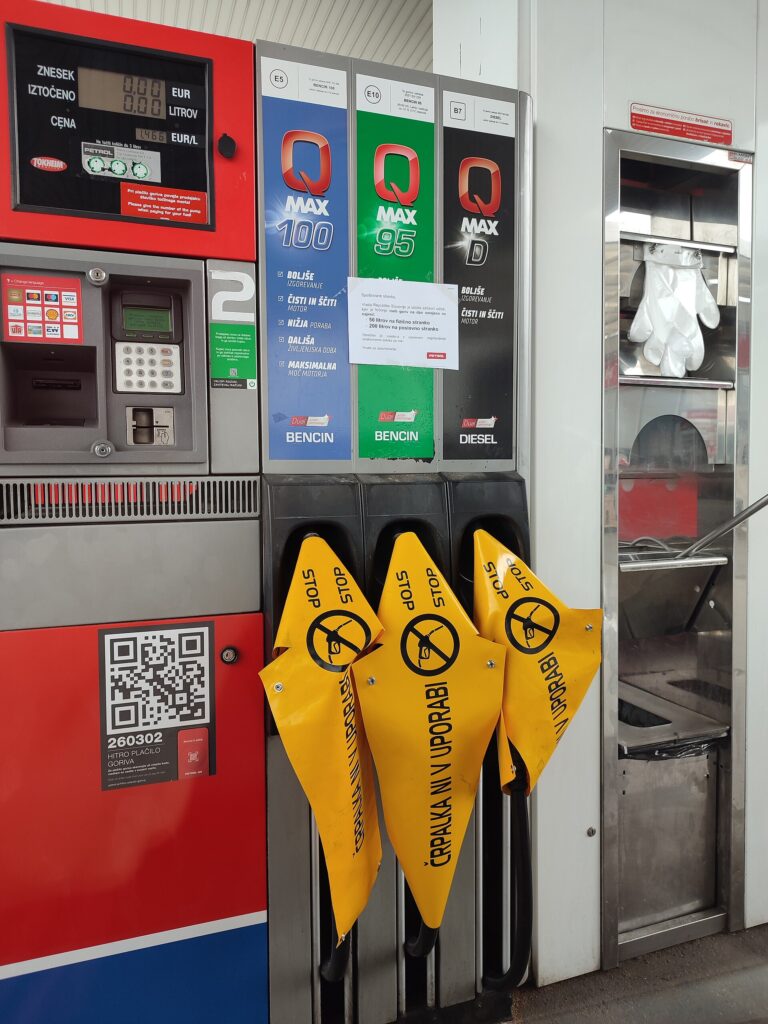
The conflict in the Middle East has disrupted maritime traffic through the Strait of Hormuz, a critical passage that carries roughly one-fifth of the world’s oil and liquefied natural gas supplies. This disruption compounds the lingering impact of Russia’s war in Ukraine, which had already cut off a significant portion of Russian gas deliveries to Europe.
Earlier this month, Birol warned that current conditions in global energy markets are more severe than the combined crises of 1973, 1979, and 2022. In response to escalating oil prices tied to the U.S.-Israeli conflict with Iran, the IEA agreed in March to release a record 400 million barrels of oil from strategic reserves.

Long-Term Global EV Adoption Fundamentals Remain Strong, Says Counterpoint Research
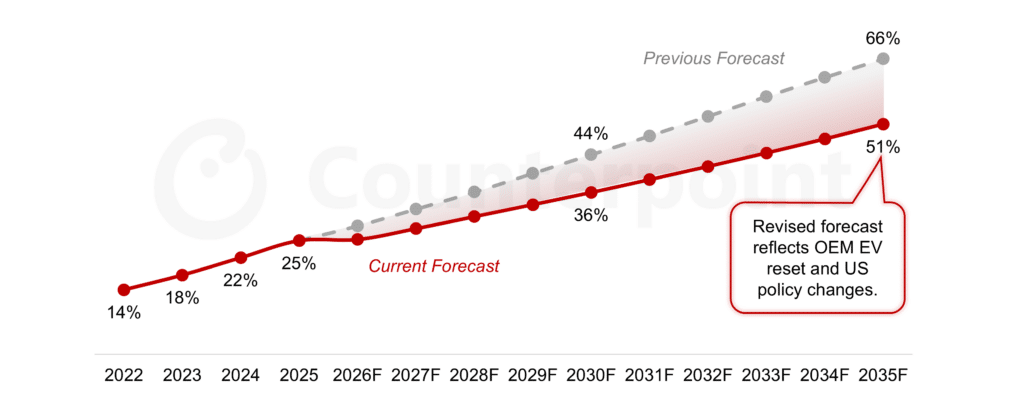
Released on April 20, 2026, Counterpoint Research’s latest Global Passenger Vehicle Forecast projects that EVs, defined by the company as battery electric vehicles (BEVs), plug-in hybrid electric vehicles (PHEVs), and extended-range electric vehicles (EREVs), will make up 36% of global passenger vehicle sales by 2030, growing at a 10% compound annual rate between 2025 and 2030. After 2030, growth is expected to slow as key markets mature, though EVs are still forecast to reach a 50% share of global sales by 2035, maintaining a similar growth rate through that period.
This outlook represents a downward revision from Counterpoint’s earlier forecast of 44% EV share by 2030 and 65% by 2035, reflecting recent moves by automakers to scale back production targets and delay more aggressive electrification plans.
Counterpoint Associate Director Greg Basich said the automotive sector is at a turning point, balancing short-term strategy resets with rising global energy uncertainty. While some automakers are easing EV commitments, geopolitical tensions and ongoing conflicts continue to strengthen the long-term case for electrification. Short-term adoption challenges are being offset by structural factors such as declining battery costs and concerns over fuel supply stability.
The industry is also adjusting to changing regulatory conditions, including the rollback of EV mandates and the reduction or elimination of subsidies.
Two opposing dynamics are shaping the market. Automakers are reassessing EV strategies due to mounting losses and slower-than-expected adoption, while disruptions in global energy markets, driven in part by conflict involving the United States, Israel, and Iran, are expected to support EV demand over the longer term.
Companies such as Ford, General Motors, Honda, Porsche, Maserati, and Stellantis have collectively reported more than $70 billion in EV-related losses and write-downs. As a result, several OEMs are delaying or scaling back electrification plans, while others, including Volvo Cars, are revising long-term EV targets.
Basich noted that the industry is entering a period of realignment, with companies refining their EV strategies to match market realities. Western automakers are continuing EV development but with a more disciplined approach. Ford is introducing a new universal EV platform, General Motors is revisiting the Chevrolet Bolt EUV, and Stellantis is expanding its Leapmotor joint venture in Europe. Volkswagen and Audi are advancing EV platforms through partnerships with Chinese firms and Rivian, while Volvo has postponed its goal of becoming fully zero-emission beyond 2030. Mercedes-Benz has also increased investment in internal combustion engine development, underscoring a broader shift toward more measured electrification strategies.
At the same time, instability in Middle East oil supply is expected to reinforce long-term EV adoption as countries look to reduce reliance on imported fuels. Battery prices are projected to fall below $70 per kWh by 2030 and reach $55 per kWh by 2035, significantly lowering EV costs given that batteries account for about 40% of total vehicle cost.
Under current conditions, BEVs are expected to account for roughly 25% of global passenger vehicle sales by 2030, while PHEVs reach about 8%. EREVs are also gaining traction and are likely to expand beyond China into Southeast Asia and Europe.
Research Director Peter Richardson said electrification will become more diversified by 2030, with BEVs leading and PHEVs and EREVs playing complementary roles. He noted that EREVs are emerging as a transitional solution, helping bridge the gap between conventional hybrids and fully electric vehicles as the market evolves.
EVinfo.net’s Take: The War Must End, EVs and Renewables Must Be Supported
The ongoing war involving Iran must come to an end. The human toll alone is devastating, with lives lost and communities disrupted in ways that cannot be justified. Beyond the immediate humanitarian crisis, the conflict is also triggering widespread economic damage, particularly across global energy markets that millions of people depend on for stability and affordability.
Spikes in oil prices, supply chain disruptions, and heightened geopolitical risk are once again exposing how vulnerable the global economy remains to fossil fuel dependence. These recurring shocks are not new, but they are becoming more frequent and more severe. Every escalation reinforces the same reality: reliance on oil, especially from geopolitically sensitive regions, carries unavoidable risks.
At the same time, there is a clear and important signal emerging from this instability. The transition to electric vehicles is not just an environmental goal, it is an economic and strategic imperative. EV adoption reduces dependence on volatile oil markets, helping shield consumers and economies from sudden price swings and supply disruptions.
Electric vehicles also deliver immediate and tangible benefits. They improve air quality, reducing harmful emissions in cities and communities. They play a critical role in addressing human-driven climate change by cutting greenhouse gas emissions from transportation, one of the largest contributing sectors. And for drivers, they offer long-term cost savings through lower fuel and maintenance expenses.
When paired with battery storage and renewable energy sources like solar and wind, EVs become even more powerful. They help create a more resilient and decentralized energy system, one that strengthens national security by reducing reliance on imported fuels. This is not just about sustainability, it is about stability, independence, and long-term economic strength.
In this context, the current conflict underscores the urgency of accelerating electrification rather than slowing it down. Policies that discourage EV adoption or delay infrastructure development move in the wrong direction at a time when the need for energy independence has never been clearer.
There is an opportunity here for U.S. federal policymakers to reassess and realign. Supporting EV adoption and renewable energy, investing in charging infrastructure, and advancing clean energy integration are not fringe initiatives, they are central to building a more secure and resilient future.
Ending the conflict must be the immediate priority. But as the world looks ahead, the lessons from this moment should not be ignored. A faster transition to electric transportation is not only better for the planet, it is essential for economic stability and national security.

Electric Vehicle Marketing Consultant, Writer and Editor. Publisher EVinfo.net.
Services