DDOT Launches MicroFreight DC Pilot Program With Amazon E-Cargo Bike Deliveries
On Monday, May 11, 2026, the Washington, D.C. District Department of Transportation (DDOT) announced that the DDOT and Amazon have launched a new pilot program in Washington, D.C., aimed at testing electric cargo bikes as a cleaner and quieter alternative for urban package deliveries.
Called the MicroFreight DC Pilot Program, the ten-month initiative will deploy up to 15 battery-powered e-cargo bikes operated by Amazon Delivery Service Partners for last-mile deliveries throughout nearby District neighborhoods. The program is designed to help reduce congestion, noise, and emissions associated with traditional delivery vans as e-commerce demand continues to grow.
The four-wheel e-cargo bikes feature enclosed seating, windshields, windshield wipers, and secure rear cargo compartments designed to improve driver comfort and safety in varying weather conditions. DDOT said the pilot will help evaluate how e-cargo bikes can support more efficient urban freight operations while shaping future regulations and operational guidelines.
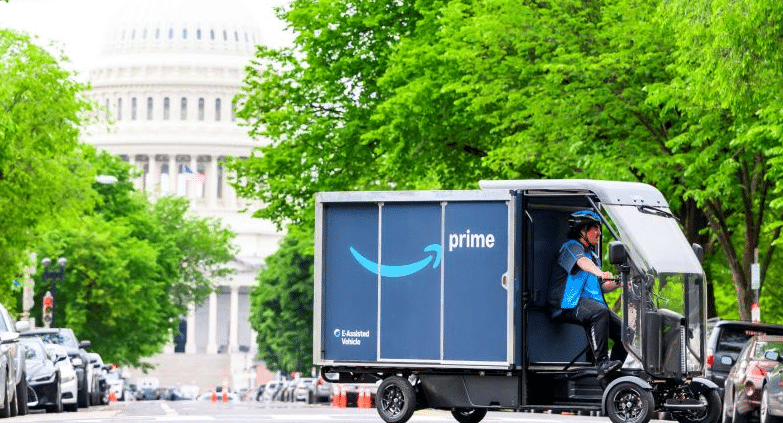
Amazon’s delivery operations will be supported by a dedicated microhub located on a secure parking lot in Southwest Washington, D.C. The facility will serve as a staging and package loading area for local deliveries.
Officials say e-cargo bikes are particularly well-suited for dense urban neighborhoods where delivery stops are located close together. Unlike large delivery trucks, the bikes can utilize commercial loading zones, daylighting areas, and bike lanes, helping reduce traffic impacts while improving delivery efficiency.
All bikes participating in the pilot will be limited to a maximum speed of 15 mph and prohibited from operating on sidewalks.
The pilot builds on previous transportation and sustainability initiatives supported by the Transportation Planning Board and the Carbon Neutral Cities Alliance. DDOT’s earlier 2023 Delivery Microhub Feasibility Report explored how smaller-scale logistics hubs and cargo bikes could improve urban freight systems.
Throughout the pilot, DDOT and consulting firm Nelson/Nygaard will collect monthly operational data, including route distances, package volumes, and trips to the microhub. The findings will be used to evaluate the effectiveness of e-cargo bike deliveries and identify opportunities for broader adoption across the District.
EVinfo.net’s Take: The Many Benefits of e-Cargo Bikes for Urban Delivery
As cities become more crowded and e-commerce continues to grow, urban delivery systems are facing increasing pressure. Delivery vans contribute to traffic congestion, parking conflicts, emissions, and noise pollution, especially in dense downtown areas where curb space is already limited. To address these challenges, many cities and logistics companies are turning to electric cargo bikes, also known as e-cargo bikes, as a smarter solution for last-mile delivery.
E-cargo bikes combine the flexibility of bicycles with electric power assistance and secure cargo storage, allowing businesses to move packages efficiently through urban environments without relying on large delivery trucks. What was once considered a niche transportation option is rapidly becoming a mainstream logistics tool in cities around the world.
One of the biggest advantages of e-cargo bikes is their ability to reduce traffic congestion. Traditional delivery vans often double park, block bike lanes, and occupy valuable curb space while making frequent stops. E-cargo bikes can navigate narrow streets, use bike infrastructure, and park in much smaller spaces, helping deliveries move faster while reducing disruptions for other road users.
E-cargo bikes also offer major environmental benefits. Since they are battery-powered and produce zero tailpipe emissions, they help cities reduce air pollution and greenhouse gas emissions. This makes them particularly attractive for municipalities pursuing climate goals and low-emission transportation policies.
Another important benefit is noise reduction. Compared to diesel delivery trucks, e-cargo bikes operate quietly, improving quality of life in residential neighborhoods and busy commercial districts. As cities continue expanding around-the-clock delivery services, quieter transportation options become increasingly valuable.
For delivery companies, e-cargo bikes can lower operating costs significantly. They require less maintenance than vans, vastly reduce fuel expenses, and avoid many parking fines or congestion charges associated with urban driving. In dense city centers where deliveries are concentrated within small geographic areas, e-cargo bikes can often complete routes more efficiently than larger vehicles.
Technology is also making e-cargo bikes more capable than ever. Modern models feature weather protection, secure cargo compartments, GPS tracking, advanced safety systems, and larger battery capacities that support full-day delivery operations. Some are even designed with four wheels for added stability and larger payloads.
Cities including Washington, New York City, Paris, and London are increasingly exploring e-cargo bike delivery programs as part of broader transportation modernization efforts. Major logistics companies including Amazon, UPS, and DHL have also expanded cargo bike operations in urban markets.
As urban populations grow and delivery demand continues rising, e-cargo bikes are emerging as one of the most practical tools for building cleaner, safer, and more efficient city logistics networks.

Electric Vehicle Marketing Consultant, Writer and Editor. Publisher EVinfo.net.
Services