More Than 8,500 Electric School Buses Are Now Operating Nationwide Across the United States
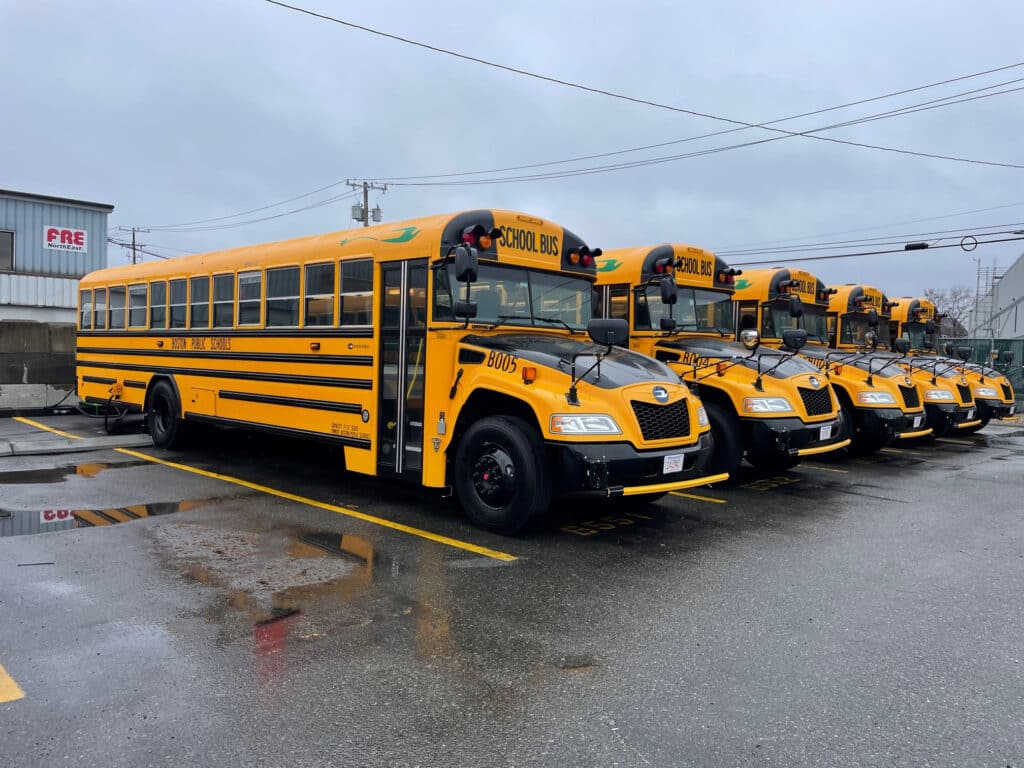
Electric school bus adoption in the United States continued to expand rapidly through the first half of 2026, with more than 8,500 buses now operating nationwide. That represents a substantial increase from just over 5,100 buses at the same point a year earlier. Nearly one in four school districts that already operates electric buses has purchased additional vehicles, indicating that early deployments are increasingly developing into larger fleet transitions.
Deliveries from the second and third rounds of the U.S. Environmental Protection Agency’s Clean School Bus Program accelerated throughout 2025 and the first half of 2026. Approximately 60% of all committed electric school buses are now in service, transporting more than 380,000 students each day, nearly twice the number served in 2023.
The World Resources Institute (WRI)’s Electric School Bus Initiative offers its Electric School Bus Data Dashboard, allowing users to explore data and trends on electric school bus adoption and U.S. school buses.
WRI’s dashboard reported that as of June 30, 2026, 14,146 electric school buses had been committed across 49 states, Washington, D.C., American Samoa, Guam, Puerto Rico, the U.S. Virgin Islands and more than 20 Tribal Nations. The figure includes buses that received funding awards, were ordered, delivered or placed into service.
The number of participating school districts has also grown dramatically. In 2020, just 303 districts serving more than 4.8 million students had committed to at least one electric school bus. By mid-2026, the total reached 1,560 districts serving more than 15 million students.
Electric School Buses Expand Beyond Early-Adopting States
California continues to lead the country with 2,265 operating electric school buses, followed by New York with 559, Maryland with 362, Virginia with 345, Illinois with 331, Michigan with 262, South Carolina with 199, Oregon with 192, Washington with 190, Missouri with 133 and Mississippi with 103.
The political distribution of adoption has also become increasingly balanced. School districts with electric buses are now represented relatively evenly between congressional districts held by Democrats and Republicans, demonstrating that school bus electrification is occurring across the political spectrum.
Rural districts are also becoming a larger part of the transition. Electric buses can be particularly well suited to rural and challenging routes because of their strong low-speed torque and weight distribution, including routes involving hills and colder conditions.
Electric school bus sales reached a record level in 2025, accounting for an estimated 7% of new school bus sales. That brought electric buses to approximately 3% of the overall U.S. school bus fleet.
Health and Environmental Benefits
Health remains one of the principal reasons for replacing diesel school buses. Children are particularly vulnerable to diesel exhaust, which can affect physical health and cognitive development. Electric school buses eliminate tailpipe emissions and provide a quieter, smoother ride for students and drivers.
The transition is also reaching communities disproportionately exposed to pollution. Approximately 86% of committed electric school buses are in districts with the highest shares of people of color, while 62% are in districts with the highest shares of low-income households.
The World Resources Institute identified 1,508 Priority Outreach Districts based on factors including household income, race and ethnicity, air pollution burden and Tribal status. By June 2026, 236 of those districts had committed to more than 3,400 electric school buses, representing nearly one-quarter of all national commitments.
Districts Demonstrate Operational Savings
Several districts are moving beyond pilot programs toward full fleet electrification. Oakland Unified School District operates 74 electric buses, making it the first major U.S. city district to operate an entirely electric fleet. Branford Public Schools in Connecticut operates 46 electric buses, the largest fully electric school bus fleet in the Northeast. Steelton-Highspire School District in Pennsylvania has six, while McKinleyville Union School District in California operates four.
Shawnee Public Schools in Oklahoma provides another example of the operational benefits. Its eight electric buses saved more than $40,900 in fuel costs during the 2024-2025 school year. The district expects additional savings from reduced maintenance and vehicle-to-grid technology, which can help lower electricity costs. Student behavior also improved on the electric routes, with behavioral incidents falling by nearly 50% between the 2022-2023 and 2024-2025 school years.
Funding Drives Adoption
Federal and state programs have played a major role in accelerating deployment. Earlier funding came through programs including the Volkswagen Environmental Mitigation Trust and the Diesel Emissions Reduction Act before the EPA launched the Clean School Bus Program in 2021.
State programs expanded significantly during 2025 and 2026. New York’s School Bus Incentive Program issued 110 awards, Michigan’s Clean Bus Energy Grant supported 106, Illinois’ Driving a Cleaner Illinois program supported 46, Maryland’s Electric School Bus Grant supported 46 and New Jersey’s Electric School Bus Grant supported 53.
Despite this progress, federal policy changes have created new uncertainty. The elimination of the 45W and 30C tax credits, temporary suspension of federal clean school bus funds, and rollbacks involving emissions regulations and charging infrastructure funding could complicate future deployments. The EPA is expected to continue work on a fourth Clean School Bus funding round, while the program retains bipartisan support.
Upfront Cost Remains a Major Barrier
The biggest obstacle for many school districts remains the initial purchase price. In 2025, the average Type C electric school bus cost approximately $376,000, compared with roughly $140,000 to $170,000 for a comparable diesel model. That represents a difference of more than $200,000 per bus.
Price differences also vary substantially by state. Electric Type A buses can differ by as much as $70,000, Type C buses by $176,000 and Type D buses by nearly $200,000. The same Type C manufacturer model was found to differ by approximately $180,000 between New York and Illinois, while prices within New York varied by as much as $100,000.
Differences can result from vehicle specifications, optional equipment, contract terms and individual district requirements. Higher incentive levels do not necessarily appear to explain the entire price gap. Under Clean School Bus Program Round 3, priority districts could receive $325,000 for a Type C electric bus compared with $170,000 for non-priority districts, yet average purchase prices were similar. The analysis suggests that other funding sources and the ability to stack incentives may also influence final costs.
Building Toward Full Fleet Electrification
The Electric School Bus Initiative’s Roadmap to 100 identifies several strategies for accelerating adoption, including aggregate procurement, vehicle-to-grid technology, second-life battery applications and continued public funding and financing.
The United States has approximately 480,000 school buses, with roughly 35,000 replaced each year. That creates a multibillion-dollar opportunity extending beyond vehicle sales to charging infrastructure, fleet software, energy services, financing, workforce development, maintenance, battery recycling and second-life applications.
State zero-emission school bus requirements and commitments are expected to drive the electrification of roughly 20% of the national fleet over the coming decades. Electric school buses can also provide grid resilience through bidirectional charging and vehicle-to-grid services while reducing operating costs for school districts.
With more than 14,000 buses already committed, thousands more operating and school districts increasingly expanding their electric fleets after initial deployments, school bus electrification is moving from a collection of pilot projects toward a broader transformation of the nation’s student transportation system.
EVinfo.net’s Take: Electric School Buses Are Good for Struggling Schools
Electric school buses can help schools reduce pollution, protect students from diesel exhaust, lower maintenance and operating costs, and modernize transportation. Their quiet operation and overnight charging also make them practical for school fleets, while vehicle-to-grid technology can potentially allow districts to earn revenue by supporting the electric grid. Incentives from governments and utilities can further reduce upfront costs.
Diesel prices hit an all-time high last week. In May, nearly a third of districts said they’re transferring funds from other programs to cover extra fuel costs, a survey by AASA, ASBO and NAPT found. The administration’s mis-handled war is causing economic damage to a wide swath of American life, including education.
Fleet Eforce is a Great Commercial EV Uptime Partner
Fleet EForce supports the growing electric bus market by helping commercial and transit fleets minimize downtime. Its services include repairs, remote diagnostics, preventative maintenance, technician training, telematics support, and replacement parts. With more than $3 million in electric bus parts inventory and support for multiple platforms, Fleet EForce helps operators address parts shortages, speed repairs, extend vehicle life, and reduce total ownership costs.

Electric Vehicle Marketing Consultant, Writer and Editor. Publisher EVinfo.net.
Services