New U.S. Fuel Economy Standards Will Increase Pollution, Driver Costs, Health Risks
On September 28, 2026, ABC news reported the Department of Transportation is easing fuel economy standards that were put in place during the Biden administration.
The Biden-era standards were designed to increase vehicle fuel efficiency and encourage automakers to expand the use of electric vehicles (EVs) and hybrid technology.
The current administration reduced Biden-era CAFE requirements from a planned 50 mpg fleet-wide target by 2031 to 34.5 mpg, following the elimination of the federal EV tax credit, clean manufacturing grants, greenhouse-gas tailpipe rules, and California’s authority to enforce stricter vehicle standards. Although the CAFE rollback is largely symbolic because Congress had already eliminated penalties for automakers missing the targets, it reinforces a broader retreat from policies encouraging EV adoption.
The U.S. is pulling back from vehicle electrification just as Europe, China, and other major auto markets continue moving toward EVs.
Meanwhile, China has reached about 60% New Energy Vehicle sales, Europe has reached the point where battery EVs are outselling pure gas and diesel vehicles in some markets, and South Korea has roughly 20% EV sales. U.S. EVs represented just 5.7% of light-vehicle sales in August, while California was around 19% in the second quarter.
China’s rapidly expanding EV industry, falling prices, manufacturing scale, and growing exports are increasing competitive pressure worldwide. Chinese automakers are already gaining market share in Europe, while European, Korean, and Japanese automakers are being forced to compete globally against increasingly capable Chinese EV manufacturers.
U.S. automakers may be protected from direct Chinese competition for now, but will ultimately face a disadvantage because domestic policy is encouraging slower electrification while competitors continue developing EV technology, manufacturing capacity, and global market experience.
Gina McCarthy, a former EPA administrator during the Obama administration and the current chair of the advocacy group America Is All In, said in a statement: “For fifty years, fuel economy standards have saved Americans money and cut pollution at the same time, creating cleaner air, lowering prices at the pump, and reducing our reliance on fossil fuels. Rather than keeping the U.S. at the forefront of innovation and improving affordability, this administration has chosen to do the opposite.”
“Cleaner, more efficient vehicles are good for consumers, good for jobs, and good for public health. Governors, mayors, and businesses are pressing forward to find solutions for America’s growing affordability crisis while reducing carbon emissions. And they will keep pressing forward – with or without Washington,” she added.
The Sierra Club said that less fuel-efficient vehicles will increase gas use, costs for drivers and air pollution.
“Less fuel-efficient cars mean more gas burned, spending more at the pump, and dirtier air in our communities,” said Katherine García, Sierra Club Clean Transportation for All Director. “The Sierra Club will fight this senseless rollback every step of the way. We’re going to continue to fight back against this administration’s dangerous and costly attacks on cleaner cars and public health.”

EVinfo.net’s Take: Oppose the New Standards, Support Lower Driver Costs and Less Pollution, Vote By November 3
New, lower fuel economy standards that reverse stricter requirements adopted during the Biden administration are a big mistake. Weaker standards mean less incentive for automakers to improve fuel efficiency and accelerate electric vehicle adoption, leaving drivers more exposed to rising gasoline costs.
The timing is especially troubling. Americans are already dealing with skyrocketing fuel prices and inflation as the administration mishandling the Iran war puts additional pressure on global energy markets, with no clear end in sight. Vehicles that consume more fuel increase household transportation costs.
Lower fuel economy standards worsen human-caused climate change by allowing vehicles to consume more gasoline and produce more greenhouse gas emissions. Transportation is a major source of U.S. emissions, so reducing incentives for fuel efficiency and EV adoption increases the amount of carbon dioxide released into the atmosphere, adding to the accumulation of heat-trapping gases driving global warming.
The American Lung Association is working to make transportation pollution-free across the United States. It says greater gasoline consumption contributes to air pollution and associated health risks. The well-respected organization says that a nationwide shift to zero-emission technologies, like electric cars and trucks, will bring major public health benefits through cleaner air and reduced climate pollution.
Lower fuel economy standards also have implications for national security. Greater reliance on gasoline and imported oil leaves the U.S. more vulnerable to global energy disruptions and geopolitical conflicts. Expanding EV adoption, powered increasingly by domestic electricity and renewable energy, can reduce that exposure while giving drivers an alternative to volatile gasoline prices.
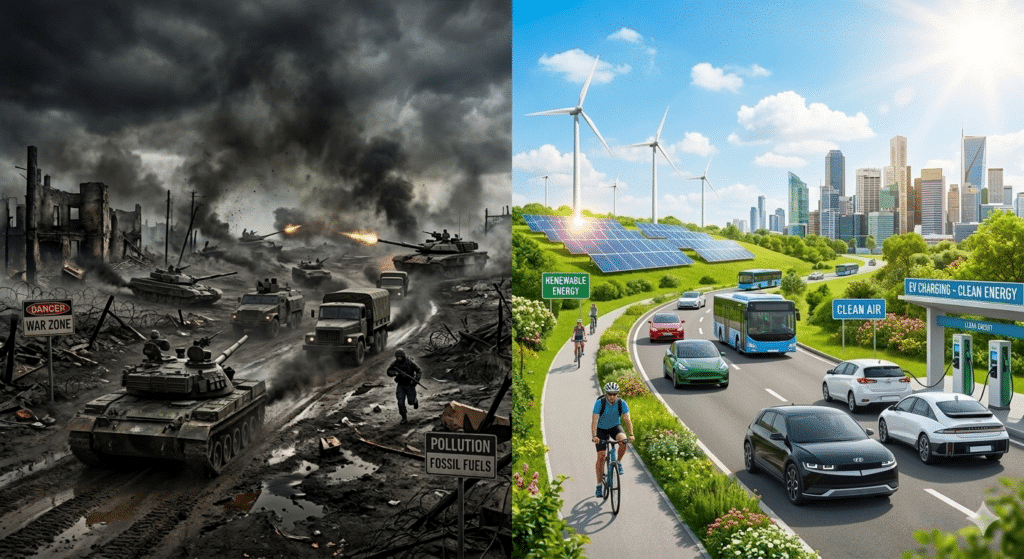
Every time a driver charges an EV instead of filling a tank with imported fuel, energy spending stays within the local economy. That money supports domestic energy production, local jobs, grid improvements, and renewable energy development. Expanding EV charging networks also creates employment in manufacturing, construction, engineering, and maintenance, while giving local governments new sources of tax revenue and infrastructure investment.
The case is clear. EVs and renewable energy are the strongest tools any nation has for protecting its economy, strengthening its defenses, and ensuring its energy future remains in its own hands.
Americans have important choices in November 2026, to vote for and support opponents of the administration in the midterm elections. November 3 is the last day to vote in-person or return a ballot by 8:00 p.m. Vote early and make sure your friends, family and others in your circle vote. Contact government representatives today and let them know you oppose the new fuel economy standards.
Staying in last place in the global EV race is not an option for America. Not unless you want less jobs, less economic growth, as we increasingly support dying, outdated, more expensive to own, polluting gas vehicle technology.
EVinfo.net urges America’s voters, don’t support the administration’s horrible policies which makes human caused climate change worse, and creates more pollution, greater health risks, and higher driver costs. Join EVinfo.net in supporting smart policy and smart lawmakers that support EVs and renewable energy.

Electric Vehicle Marketing Consultant, Writer and Editor. Publisher EVinfo.net.
Services