Flexdrive By Lyft Opens 80,000-Square-Foot Nashville Autonomous EV Depot
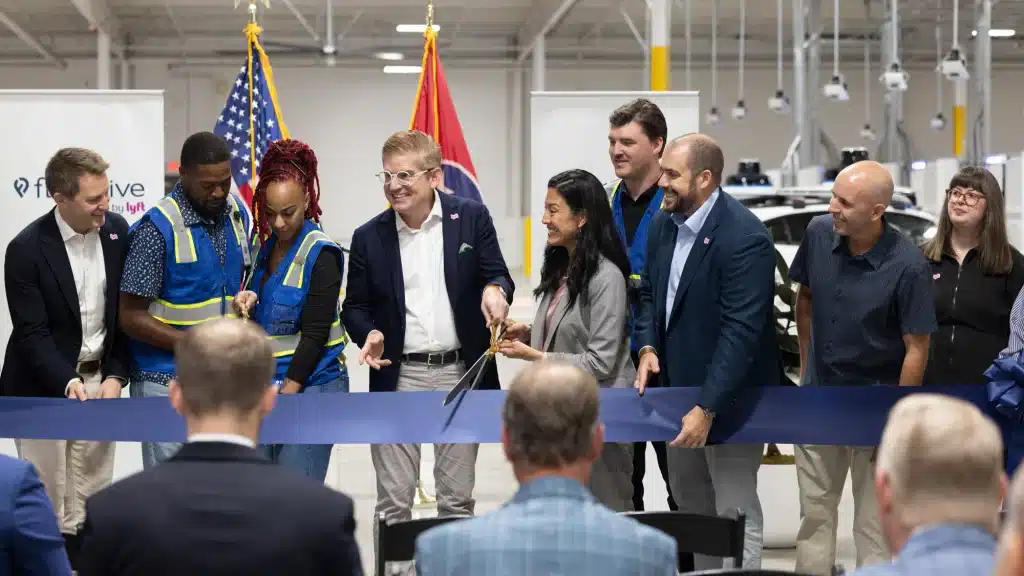
Lyft’s partnership with Waymo in Nashville has expanded with the opening of a new 80,000-square-foot Flexdrive depot designed to support Waymo’s fully electric autonomous vehicle (AV) operations. Lyft announced the news on October 2, 2026.
The facility combines Flexdrive’s decade of fleet management experience with Waymo’s autonomous driving expertise to service, charge, and maintain autonomous vehicles. Flexdrive has officially opened the depot and plans to welcome Waymo vehicles beginning October 12, 2026. Waymo rides are also now available through the Lyft app in Nashville.
The depot features fast-charging infrastructure with dozens of chargers capable of supporting hundreds of autonomous vehicles, maintenance bays equipped for high-voltage repairs, and secure parts storage. Lyft said support from Nashville helped make the investment possible and accelerate development of the facility.
More than 70 full-time positions are expected to be created at the facility this year, including technicians, fleet operations managers and associates, repair coordinators, and maintenance specialists. Lyft said the operation could create hundreds of jobs in the coming years.
Flexdrive is prioritizing full-time, in-house positions and is giving current and former Lyft drivers priority for interviews. The company said former drivers bring valuable experience in customer service and understanding rider expectations.
Employees will work on facility safety protocols, sensor calibration, technician workflows, vehicle systems, and fleet operations. Flexdrive provides on-the-job training for many positions, reducing entry requirements for a majority of the available roles. Full-time employees receive comprehensive benefits beginning on their first day.
Lyft said developing and upskilling employees internally has been central to Flexdrive’s fleet management approach for a decade. The company intends to use the Nashville hiring model as it establishes additional Flexdrive depots in other cities.
As the Nashville Waymo fleet expands, Flexdrive expects the team supporting the vehicles to grow as well. The depot will keep Waymo vehicles charged, maintained, and available for riders, allowing each vehicle to spend more time operating on the road.
Lyft is also exploring additional locations as demand grows. The company said expanding its footprint could help reduce rider wait times and limit congestion on Nashville’s roads.
According to Lyft, autonomous vehicles could become another component of urban transportation alongside human-driven rideshare, public transit, biking, and other shared mobility services. The company said AVs could expand transportation access for people who cannot drive, reduce reliance on personal vehicle ownership, and contribute to Nashville’s broader mobility ecosystem.
The company said facilities such as the new Nashville depot, along with specialized teams and continued investment, will be necessary to support the expansion of autonomous transportation.
EVinfo.net’s Take: AVs Are Accelerating EV Adoption
Autonomous vehicles (AVs) are expanding rapidly across North America, and that growth is creating another important pathway for electric vehicle (EV) adoption.
Waymo, Lyft, and other mobility companies are putting more autonomous vehicles on the road, while fleet operators are building the charging and maintenance infrastructure needed to support them. Because many AV fleets are designed around electric vehicles, every expansion can add more EVs to urban transportation.
The connection is significant. AV fleets operate intensively, making fuel and maintenance costs major considerations. EVs offer lower energy and maintenance costs, while their ability to charge at dedicated depots makes them particularly well suited to high-utilization fleet operations.
The growth of AVs also gives more people an opportunity to experience electric transportation without purchasing an EV themselves. Riders can become familiar with the quiet operation, smooth acceleration, regenerative braking, and convenience of electric vehicles simply by using an autonomous ride service.
As AV deployment keeps growing fast, the technology could therefore help normalize EVs while simultaneously creating demand for more charging infrastructure, fleet services, and electric vehicles.
North America’s transportation transition is increasingly becoming interconnected. The faster AV fleets grow, the more opportunities there are to put EVs into everyday service and demonstrate their benefits to millions of riders.

Electric Vehicle Marketing Consultant, Writer and Editor. Publisher EVinfo.net.
Services