China’s 5-Minute Charging Leaves the U.S. in the Slow Lane
In 2024, China accounted for more than 70 percent of global electric vehicle (EV) manufacturing, according to the International Energy Agency. That dominance is no accident. Chinese carmakers like BYD and Geely have surged ahead not just in volume but in both technology and cost, outpacing U.S. automakers in the race to electrify transportation. This spring, two major Chinese companies announced breakthroughs in battery technology that could enable vehicles to drive hundreds of miles on a five-minute charge.
As journalist Claire Brown asked in her August 19, 2025 New York Times piece, “Why Can’t the U.S. Build 5-Minute EV Chargers?” It’s a question that highlights the growing gap between America’s ambitions and China’s execution.
The Technology Gap
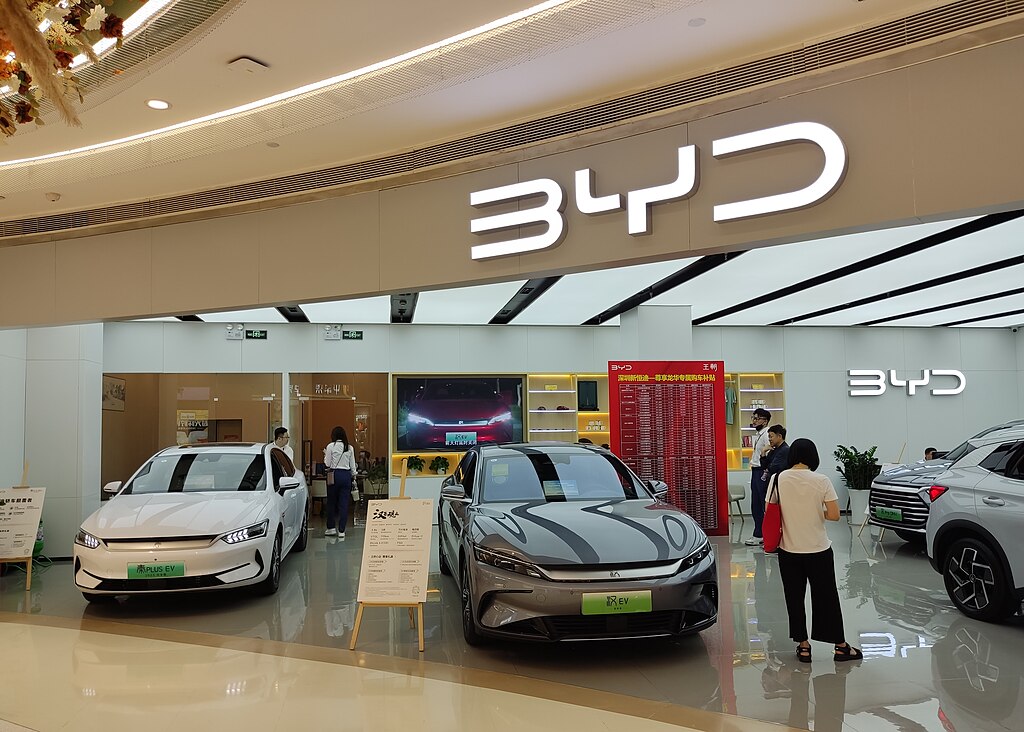
At the center of the story is BYD, now the world’s largest EV maker. The company has developed a battery capable of charging at 1,000 kilowatts, one megawatt, enough to deliver roughly 250 miles of range in just five minutes. To put that in perspective, most U.S. EVs peak at 400 kilowatts or less. That’s a threefold leap in charging speed, and one that analysts say could fundamentally reshape consumer perceptions.
Range anxiety, the fear of being stranded without power, remains one of the top barriers to EV adoption in the U.S. A charge time equivalent to a gas station fill-up could all but eliminate that concern. And BYD’s technology isn’t just fast, it’s relatively affordable: EVs are priced around $37,000 in China, a far cry from the $60,000-plus that many Americans associate with advanced electric cars.
Yet American buyers won’t be getting access to five-minute charging anytime soon. High tariffs keep Chinese-made vehicles out of the U.S. in significant numbers, while domestic automakers have yet to match BYD’s combination of speed, efficiency, and cost.
The Infrastructure Advantage
Even if the cars were available, they would still require chargers capable of delivering megawatt-scale power. And this is where China’s approach to infrastructure has given it another decisive edge.
In China, the government treats EV charging stations as essential infrastructure, much like highways or power lines. That means projects can plug directly into high-voltage grids, bypassing the bureaucratic delays that often stall utility upgrades in the U.S. As Bill Russo of Automobility Limited told the NYT: “Things just have a straighter-line path to getting done.”
BYD has already pledged to build 4,000 “megawatt flash charging” stations across China to support its new vehicles. Meanwhile, Europe may see the first rollout of Chinese megawatt chargers later this year, thanks to fewer regulatory barriers and growing partnerships with firms like Ionity.
The U.S., by contrast, has struggled to scale even its existing charging network. A Biden-era push to accelerate charging infrastructure was paused in January under the current administration, before being reinstated only this month. The Transportation Department has promised to streamline funding for states, and private ventures like IONNA are expanding, but the gap remains daunting.

Policy and Market Dynamics
One of the biggest obstacles facing the U.S. is policy consistency. While China poured billions into charging infrastructure before a viable EV market even existed, the U.S. has moved hesitantly, lurching between administrations with different priorities.
This lack of certainty has left domestic automakers reluctant to fully commit. Without strong policies to push combustion engines toward obsolescence, there is little incentive for U.S. car companies to match China’s pace of investment in batteries, patents, or high-speed charging.
China’s upfront gamble, investing in infrastructure before demand, has paid off. Today, the country has more fast-charging stations than the rest of the world combined, creating an ecosystem where EV adoption feels seamless rather than aspirational.
China Enjoying Clean Air and Lower Costs
China’s citizens in its big cities are now enjoying the clean and quiet EV revolution. With over 50% EV adoption in Chinese cities, pollution from gas vehicles is disappearing. The Chinese people are breathing healthier clean air while saving costs on ownership, as EVs are the most cost-effective vehicles over time. The loud, distracting and offensive noise from gas engines is giving way to the relaxing, quiet hum of EVs. The increased EV adoption in China is also mitigating the harmful effects of global human-caused climate change.
What’s at Stake
The consequences extend far beyond consumer convenience. If Chinese companies retain a dominant position in both vehicle manufacturing and charging infrastructure, they could control the standards and supply chains that shape the global market for decades. Europe appears poised to embrace Chinese megawatt charging, while the U.S. risks falling behind not just in production but in the very technologies that define the next era of mobility.
Five-minute charging could be the inflection point that makes electric cars irresistible to mainstream drivers. But unless U.S. automakers and policymakers move quickly, American consumers may be the last to benefit from this breakthrough.
As Russo told the NYT, China’s success is the result of bold, early investment: “They knew without the investment in infrastructure, there would never be a market.” That foresight may prove to be the defining competitive advantage of the electric transportation age.

EVinfo.net’s Take: The US Must Step up EV Support
If you are considering buying an EV, there has never been a better time than right now. The federal tax credits for purchasing electric vehicles (EVs) are scheduled to expire on September 30, 2025. This includes both the new EV tax credit (up to $7,500) and the used EV tax credit (up to $4,000).
The US government’s cuts to EV support came at the worst possible time. We were already decades behind China in EV volume, technology and cost, as the Times article points out.
We must take EVs more seriously. Time after time, in study after study, BEVs (battery electric vehicles) have been proven superior to hybrids and ICE (internal combustion engine vehicles.) EVs are the most eco-friendly vehicle, as well as the most cost-effective over time.
Remaining in last place is not an option. America was once a global leader in the automotive industry, we can be again. It just will take a firm commitment to the absolutely undeniable fact that our transportation future is electric.
The time is now. We cannot afford to wait any longer.

Electric Vehicle Marketing Consultant, Writer and Editor. Publisher EVinfo.net.
Services