Rivian Breaks Ground on Georgia EV Plant, Boosting State Economy
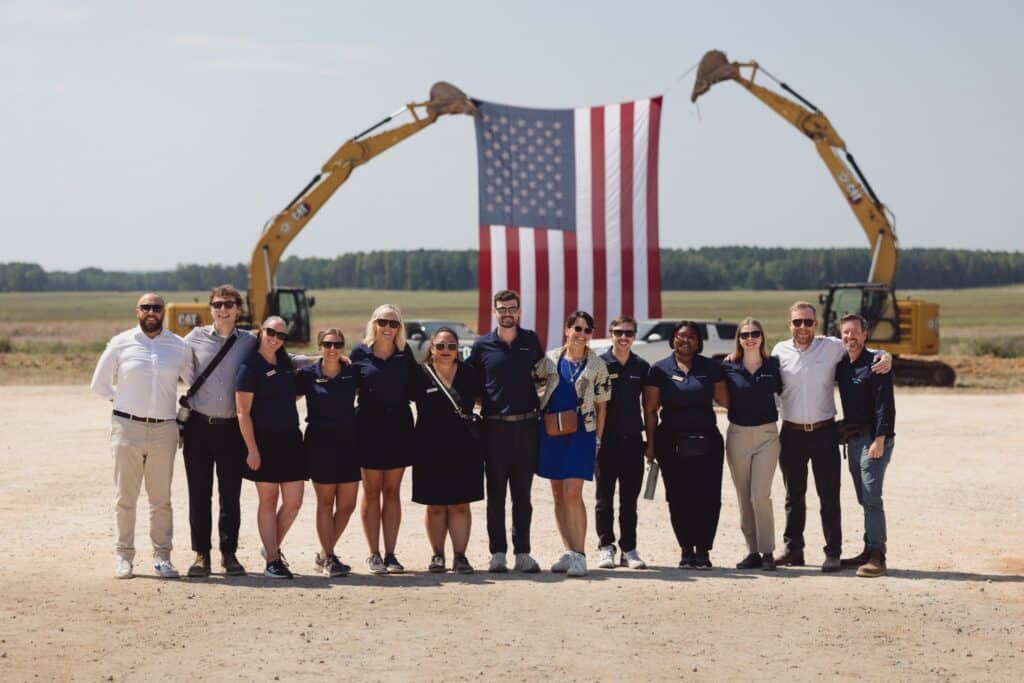
On September 16, 2025, Rivian officially broke ground on its new manufacturing facility outside Social Circle, Georgia, joined by state and local officials to celebrate the milestone. The site represents one of the largest economic development projects in Georgia’s history, expected to generate thousands of jobs and bring Rivian’s next generation of electric vehicles to market.
The plant will serve as the future home of Rivian’s midsize R2 SUV and R3 crossover. Construction will begin in 2026, with customer vehicle production slated for 2028. When fully built out, the facility will have the capacity to produce up to 400,000 vehicles annually.
The economic impact is significant. By 2030, Rivian anticipates employing 7,500 people directly at the plant, alongside 2,000 construction jobs during the build. An additional 8,000 indirect jobs are expected across suppliers, vendors, and small businesses in Jasper, Morgan, Newton, Walton Counties, and beyond. In total, more than 15,000 jobs tied to the project could generate over $1 billion in annual labor income, according to an IMPLAN analysis.
But Rivian is doing more than building vehicles, it’s building community. The company is partnering with Georgia’s universities, technical colleges, and regional institutions to ensure a skilled local workforce, while also hosting events to connect with its future neighbors. Just days before the groundbreaking, Rivian welcomed nearly 1,000 community members to the Stanton Springs Plant site for a festival of local businesses, entertainment, and family activities.
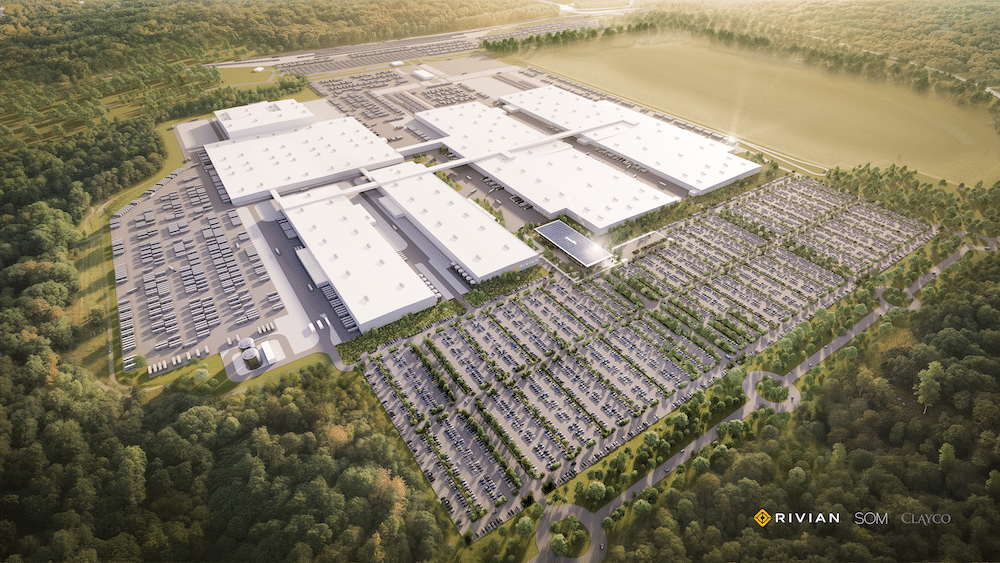
The nearly 2,000-acre site is also designed with sustainability and experience in mind. Plans include modern construction techniques, advanced environmental management, and even recreational amenities like walking trails and a Rivian experience trail for employees and customers.
This project isn’t just about manufacturing cars, it’s about shaping a long-term vision for clean mobility, economic opportunity, and community connection in Georgia.
Georgia’s two forward-thinking, well-respected Democratic Senators, Jon Ossoff and Raphael Warnock, have both provided significant support in bringing EV jobs such as Rivian’s and others, to the state.
“We are cementing Rivian’s future at our Georgia plant, helping ensure America maintains its technology leadership and excellence in automobile manufacturing,” said Rivian Founder and CEO RJ Scaringe. “Our Georgia facility will support our global expansion and provide the scale necessary to get millions of future drivers in our incredible all-electric vehicles, both in the United States and overseas.”
“This is about scale,” Scaringe said in an interview with the Wall St. Journal (WSJ). “We’re making amazing cars today in Illinois—soon on a much bigger scale in Georgia.”
The $5 billion factory represents Rivian’s all-in bet to move beyond its current niche of upscale pickups and SUVs priced above $70,000. With the new Georgia facility, Rivian aims to become a high-volume automaker producing more affordable models like the midsize R2 SUV and the compact R3 crossover. Scaringe said the R3, in particular, will unlock an entirely new market segment thanks to its lower price point.
Rivian’s expansion runs counter to broader industry trends. U.S. automakers are scaling back EV production in response to an EV sales growth slowdown and anti-EV federal policies, including the expiration of a $7,500 EV tax credit this month. But Scaringe dismissed the policy headwinds, saying to WSJ: “I didn’t start this company and plan to scale the business because of that credit. We’re deeply convicted on the products and the technology.”
EV expert Loren McDonald, Chief Analyst at Paren, agrees that the loss of the credit will not have a lasting negative impact on EV sales in the US over the long term.
“2026 is very likely going to be a bit of a challenging year for BEVs — but with a number of exciting new models coming to market later in the year and the following year — 2027 should be a record year in the US for EV sales,” said McDonald, among other comments.
For Rivian, the new site comes as the company cuts costs, trims jobs, and braces for lost revenue from regulatory credit changes. Yet analysts argue the timing is critical. “Rivian continues to push forward when other competitors are pulling back, which we think will be beneficial in the long run,” Ben Kallo of Robert W. Baird told WSJ.
By 2028, Rivian expects the R2 and R3 to roll off the Georgia assembly lines. If successful, the plant will mark Rivian’s evolution from a startup selling premium EVs to a mass-market player competing head-on in the global auto industry.

Electric Vehicle Marketing Consultant, Writer and Editor. Publisher EVinfo.net.
Services