The Low-Cost, Refreshed 2027 Chevrolet Bolt EUV is Coming
The popular Chevy Bolt electric vehicle (EV) is planning a comeback after taking a few years off for a refresh. Even though it wrapped up production at the end of 2023, GM’s compact EV left such a strong impression on drivers that its return feels inevitable, and now, official. The Bolt carried GM’s EV sales for years thanks to its affordability and practicality, even if its aging hardware held it back toward the end. When GM announced it was canceling the model, customers were vocal in their frustration, and the company eventually reversed course. Now, the Bolt is being reimagined for a new era, and it promises to be more competitive than ever.
The original Bolt EV, which debuted in 2016, stood apart by targeting everyday drivers rather than luxury buyers. It was never a flashy performance car, it was a compact, practical hatchback that offered solid range at a price ordinary people could afford. Its larger sibling, the Bolt EUV, added space and crossover appeal to broaden its audience. Both were powered by a 65-kWh battery pack, offering 259 miles for the EV and 247 miles for the EUV.
With deals bringing the cost down to around $20,000 after incentives, the Bolt found a loyal fan base. But the vehicle’s slow 55-kW DC fast charging was outdated, and GM ultimately phased it out, citing profitability issues. Still, CEO Mary Barra acknowledged that the Bolt’s strong brand recognition and customer demand made its comeback the right call.
The next-generation Bolt will focus exclusively on the EUV body style, reflecting Americans’ shift toward crossovers and away from small hatchbacks. GM has confirmed that it won’t be an all-new design, but a heavily updated version of the existing model with the benefit of Ultium-based components. By leveraging shared motors, batteries, and electronics from its broader EV lineup, GM can keep costs low while improving range, safety, and technology. Features like Super Cruise hands-free driving will help bring the Bolt into alignment with consumer expectations for modern EVs.
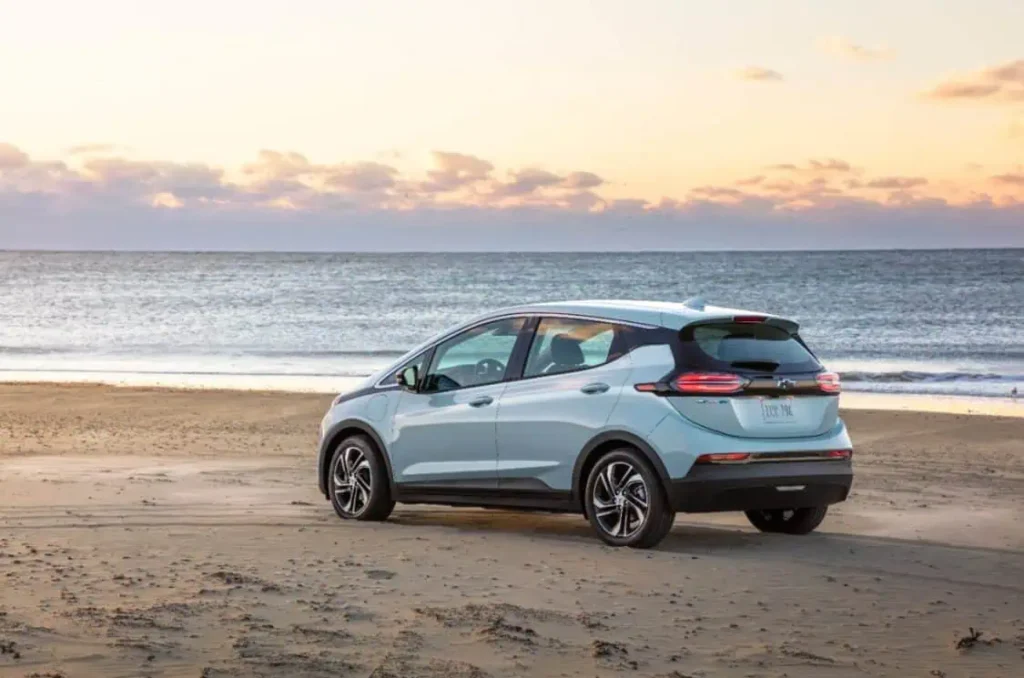
What’s particularly interesting is GM’s positioning of the Bolt as a “family” of affordable EVs. The automaker has signaled that after the relaunch, more Bolt-branded models will follow, including one priced below the roughly $30,000 entry point of the 2027 Bolt EUV. This approach underscores GM’s commitment to offering EVs that mainstream buyers can realistically consider, even as it develops premium models like the Blazer EV and Silverado EV.
While GM hasn’t revealed full specs, the next Bolt EUV will introduce a lithium-iron-phosphate (LFP) battery pack, initially imported from CATL in China before transitioning to domestic production through GM’s joint venture with LG Energy Solution. LFP batteries generally offer lower energy density but are less expensive and more durable, making them well-suited for affordable EVs. Early estimates suggest a range of around 270 miles, enough to outpace the outgoing Bolt while remaining cost-conscious. Crucially, the new Bolt will also come standard with a NACS charging port.

Pricing remains one of the most anticipated details, but GM executives have hinted the Bolt will remain close to its predecessor’s sub-$30,000 positioning. At Investor Day, GM President Mark Reuss emphasized the company’s ability to make the new Bolt profitable while keeping it affordable, a balancing act that is critical for mass-market EV adoption.
Production is set to begin in late 2026 at GM’s Kansas plant, with the Bolt EUV launching as a 2027 model. GM has already adjusted its production plans to account for a temporary decrease in demand due to the loss of EV tax credits, opting for a more measured rollout. Still, the timing positions the Bolt to compete against a wave of new affordable EVs, including the Kia EV3, Ford’s upcoming budget-friendly pickup, and other sub-$30,000 entries.
Chevy’s Bolt Named 2023 Fleet Car of the Year, as Historic First EV to Win the Award
In 2023, the 20th Annual Fleet Car of the Year award witnessed a momentous occasion as the all-electric Chevrolet Bolt EV won the prestigious title. This is the first instance where an electric vehicle has won this competition, marking a pivotal milestone in the advancement of sustainable electric fleet vehicles.
The compact dimensions of the Chevrolet Bolt EV make it an ideal choice for delivery fleets, necessitating easy navigation through busy city streets and accommodating tight parking spaces. In November 2022, Domino’s made a significant announcement for EV adoption in fleets. The company stated that it would be operating the country’s largest electric pizza delivery fleet, with over 1,100 Chevrolet Bolt EVs being introduced across their various stores in North America.

The Bolt’s story has always been about accessibility. It wasn’t the fastest or flashiest EV, but it gave thousands of drivers their first electric experience at a price they could manage. Its comeback is not just a win for loyal fans, it’s a statement that affordable EVs remain central to GM’s future. If the next Bolt EUV can deliver on range, tech, and charging while sticking close to its budget-friendly roots, it has the potential to reclaim its spot as the people’s EV and once again punch above its weight in a crowded field.

Electric Vehicle Marketing Consultant, Writer and Editor. Publisher EVinfo.net.
Services