Nissan Australia Installs ‘First-Of-Its Kind’ 120 Kwh BESS Using Retired EV Batteries
In December 2025, Nissan Australia announced it has completed a new on site renewable energy project at its Melbourne production facility, installing a 100 kW rooftop solar system alongside a first of its kind 120 kWh battery energy storage system (BESS) that repurposes retired electric vehicle batteries. The system supplies part of the facility’s power needs and supports two newly installed EV chargers included in the project.
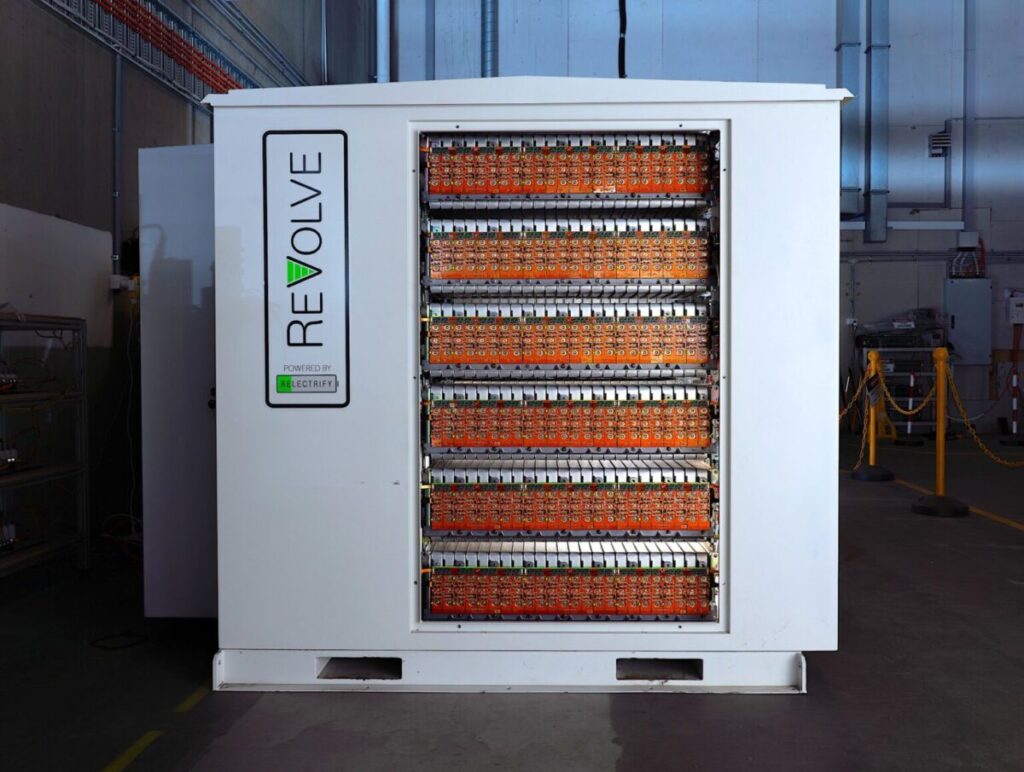
Known as the Nissan Node project, the initiative was delivered in partnership with Melbourne based battery technology company Relectrify. At its core is a 36 kW / 120 kWh battery energy storage system built using nine second life Nissan Leaf battery packs.
Relectrify’s technology is based on cell level control that integrates battery management and inverter functions. According to the company, this approach extends battery cycle life and lowers energy storage costs, making it viable to reuse high quality batteries at the end of their automotive life.
The company said its ReVolve energy storage product, which combines this cell level control architecture with second life EV batteries, can deliver up to a 30 percent increase in battery lifetime while reducing electronics costs by 30 percent. Relectrify Chief Executive Officer Jeff Renaud said the collaboration with Nissan positions Australian innovation at the forefront of the global shift toward carbon neutrality and a circular economy.
Nissan Oceania Managing Director Andrew Humberstone said the project is expected to cut annual carbon emissions by 259 tonnes and reduce energy consumption by 128 MWh per year, while showcasing the future potential of end of life EV batteries.
“This is not only an exciting project, but a meaningful step forward for second life EV battery applications,” Humberstone said. “As an early pioneer of electric vehicles globally and in Australia, Nissan can demonstrate leadership in advancing second life battery initiatives.”
Relectrify is First to Be Certified for On-Grid Deployment in Australia
In 2023, Relectrify claimed a global first after the International Electrotechnical Commission (IEC) certified its 36 kW/120 kWh modular battery energy storage system as compliant with international technology standards and grid connection codes. The certification marks a major milestone for the Melbourne-based company. It is also the first stationary battery energy storage system using second-life EV batteries to be certified for on-grid deployment in Australia, addressing both sustainability and cost challenges facing the energy storage sector.
The certified system is Relectrify’s ReVolve battery energy storage product, which repurposes second-life Nissan Leaf electric vehicle battery packs. At the core of the system is Relectrify’s patented cell-level control technology, which integrates battery management and inverter functions into a single hardware solution. Unlike conventional systems that rely on separate battery management systems and inverters, Relectrify’s hybrid approach directly controls individual battery cells to produce grid-compliant alternating current straight from the battery pack.
According to the company, this is the first time a commercial and industrial-scale energy storage product using cell-level control has been certified under internationally recognized IEC standards.
Relectrify said the certification validates the safety, performance, and reliability of its technology under global standards, significantly reducing barriers to market entry. Co-founder and CEO Valentin Muenzel noted that the approvals clear the path for the company to supply grid-interactive energy storage solutions in rapidly growing markets, particularly in Europe and the United States, where demand for flexible, sustainable storage is accelerating.
EVinfo.net’s Take: EV Battery Repurposing is Just Getting Started and Will Have Tremendous Positive Impact for the Environment
In July, we posted Repurposing EV Batteries for Second-Life Stationary Storage, covering an overview of this brand-new, exciting industry.
With the meteoric rise of AI, data centers, EV charging, and other energy needs, North America and the globe will need a lot more energy storage. Global data center power demand is expected to almost double by 2030 amid the rapid growth of data centers in the US and Europe, according to S&P Global.
It’s clear that clean renewable energy (solar, hydro and wind, not nuclear) will need to be vastly supported and encouraged to fill these needs. Dirty fossil fuel plants and dangerous nuclear are not the answers.
EV battery repurposing is part of that equation, as older EVs reach the end of their useful battery lives every year. These numbers will keep increasing as EV adoption accelerates.
EVs made up about 25% of global car sales in 2025. In the U.S., they only made up 10%, due to backward government policies.
Repurposing Makes EVs Even Cleaner, Already the Most Eco-Friendly Vehicle
In August, we reported that choosing a more electrified vehicle will reduce drivers’ planet-harming greenhouse gas emissions regardless of where they live in the contiguous United States, according to a new study from the University of Michigan. Compact sedans powered by electricity proved to be the lowest emitters at just 81 grams of carbon dioxide equivalent per mile, or less than one fifth of a gas pickup.
The University of Michigan study was just one out of many similar studies, proving that battery electric vehicles are not only the most cost efffective vehicle, but the most eco friendly vehicle as well.
However, many of these studies don’t include battery repurposing, because it is so brand-new. As these studies incorporate more data from impressive projects like Nissan Australia and Relectrify, BEVs will be proven to be even cleaner than previously shown.

Electric Vehicle Marketing Consultant, Writer and Editor. Publisher EVinfo.net.
Services