Chinese EVs Slipping Into CA Through Mexico, Lawmakers Working to Close Border Loophole
A growing number of low-cost Chinese vehicles are reportedly entering California through Mexico, triggering new concerns in Washington over trade policy, vehicle safety standards, and national security.
In border cities such as Tijuana, dealerships are increasingly filled with Chinese-built EVs, hybrids, and SUVs priced far below comparable vehicles in the United States. Brands including BYD, MG Motor, and Chery are gaining visibility near the U.S.-Mexico border, with some vehicles reportedly appearing on Southern California roads under temporary cross-border driving rules.
The issue has drawn bipartisan attention in Congress. Politicians announced plans to introduce legislation aimed at restricting Chinese-connected vehicles and components from operating on American roads.
Lawmakers argue modern vehicles function as rolling data collection systems, continuously gathering information on location, infrastructure, and driver behavior. Some officials fear Chinese-made vehicles could potentially transmit sensitive mapping and surveillance data back to China.
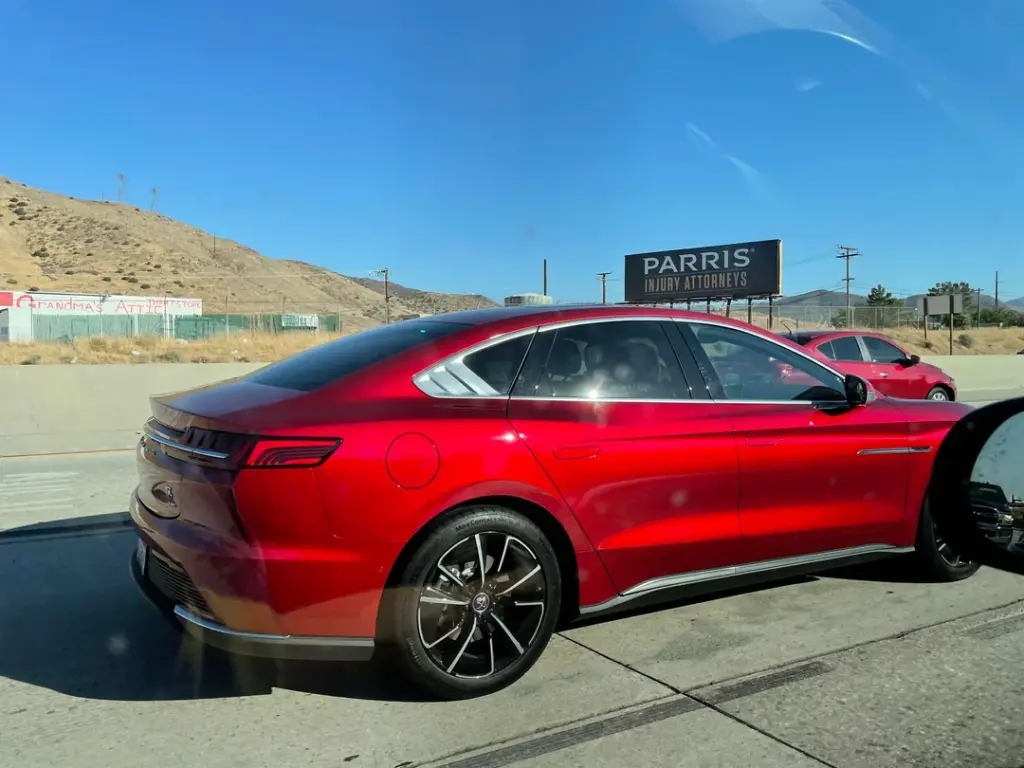
Under current rules, U.S. Customs and Border Protection allows foreign-registered vehicles to temporarily enter the country from Mexico or Canada for personal use, work, or tourism without formally importing the vehicles into U.S. commerce. Because these vehicles are not officially imported, they are not required to meet all U.S. safety or emissions regulations.
Federal agencies including the National Highway Traffic Safety Administration and California authorities have indicated they do not actively track these temporary-entry vehicles once they are operating in the state.
Some lawmakers say the loophole creates broader economic and security concerns. Elissa Slotkin warned that Chinese automakers are rapidly expanding globally through heavily subsidized low-cost EVs that could undercut U.S. manufacturers.
Supporters of Chinese EV access argue the vehicles provide affordable transportation at a time when many Americans face high vehicle prices and rising fuel costs. Critics, however, argue the long-term risks surrounding data security, industrial competition, and dependence on foreign automotive technology outweigh the short-term consumer benefits.
The debate highlights the growing global tension surrounding Chinese EV expansion as automakers from China rapidly gain market share across Europe, Latin America, Southeast Asia, and now parts of North America.
EVinfo.net’s Take: There’s No Threat of Chinese EVs Sending Spy Data Back to China
Concerns about Chinese electric vehicles secretly functioning as large-scale spy platforms inside the United States are becoming a growing political talking point, but many cybersecurity and technology observers argue the narrative is often exaggerated and disconnected from how modern intelligence gathering actually works.
Several U.S. lawmakers have warned that Chinese-made EVs could collect mapping, infrastructure, or driver data through onboard software and internet-connected systems. Modern vehicles absolutely gather enormous amounts of information. EVs from nearly every major automaker collect location data, camera feeds, driving behavior, charging information, and connectivity data through sensors, mobile apps, cloud systems, and wireless communications.
But the idea that China would rely on obvious, easily discoverable “spy software” hidden inside consumer vehicles to conduct sensitive intelligence operations raises serious practical questions.
Modern vehicles sold internationally already undergo extensive cybersecurity reviews, software analysis, telecommunications testing, and regulatory scrutiny. Security researchers, independent hackers, governments, and automotive engineers constantly analyze connected vehicle systems. Any intentionally malicious large-scale spyware architecture embedded directly into mass-market vehicles would face a high probability of eventual discovery.
More importantly, sophisticated intelligence agencies generally do not rely on such visible, politically explosive methods when far easier alternatives already exist.
Smartphones, social media platforms, consumer apps, public surveillance cameras, commercial data brokers, hacked databases, phishing campaigns, compromised cloud accounts, and ordinary cyber intrusions already provide enormous quantities of behavioral and location data worldwide. Intelligence gathering today is largely built around exploiting existing digital ecosystems rather than deploying highly conspicuous tools that could trigger international backlash if exposed.
Even U.S.-made vehicles already collect vast amounts of user data. Automakers across the industry routinely gather telemetry, driving patterns, voice commands, infotainment usage, and precise GPS history. Many privacy advocates argue the broader issue is not uniquely Chinese vehicles, but the entire connected-car industry and the weak privacy protections surrounding automotive data collection globally.
There is also an economic dimension to the debate. Chinese automakers such as BYD, Geely Auto, and Chery are rapidly gaining global market share by producing lower-cost EVs with competitive technology. Some analysts believe national security concerns are becoming intertwined with broader fears about industrial competition and the declining competitiveness of Western automakers in affordable EV segments.
None of this means cybersecurity risks should be ignored. Connected vehicles from any country can potentially be vulnerable to hacking, software exploitation, or unauthorized data collection. Strong cybersecurity standards, transparency requirements, and consumer privacy protections remain important regardless of where vehicles are manufactured.
But framing Chinese EVs primarily as rolling espionage devices may oversimplify a far more complex reality. In a world already saturated with smartphones, connected devices, cloud platforms, and commercial surveillance systems, intelligence agencies have many easier and less visible ways to collect information than hiding obvious spyware inside consumer electric cars.
The politicians should stop working on this ridiculous waste of time bill, and focus on making America’s automotive industry competitive globally. Every move this administration has made hurts the US automotive industry and loses jobs. The layoffs have already begun. On May 11, GM laid off about 500 to 600 employees in Austin, Texas, and Warren, Michigan, due to federal government mistakes.

Electric Vehicle Marketing Consultant, Writer and Editor. Publisher EVinfo.net.
Services