EV Sales in Australia Hit New High in May 2026, Home Solar and Batteries Set New Records
On June 3, 2026, the Australian Broadcasting Corporation (ABC) reported that Australia’s electric vehicle market is experiencing unprecedented growth, with EVs accounting for one in every five new vehicle sales in May. The shift reflects changing consumer preferences, rising awareness of energy security, and growing interest in lower-emission transportation options.
Alternative powertrains are becoming increasingly popular across the country. In May, 46 percent of all new vehicles sold were either battery-electric vehicles (EVs), hybrid electric vehicles (HEVs), or plug-in hybrid electric vehicles (PHEVs). Even Australia’s traditionally dominant SUV segment is undergoing a transformation. Sales of petrol-powered SUVs fell by 31 percent, while diesel SUV sales dropped by 41 percent. In contrast, plug-in hybrid SUV sales surged by an impressive 377 percent.
According to Federal Chamber of Automotive Industries Chief Executive Tony Weber, consumer preferences in the SUV market are evolving rapidly. He emphasized that expanding charging infrastructure will be critical as EV adoption continues to accelerate across Australia.
A major factor behind the increase in EV sales is the arrival of more affordable models from Chinese automakers such as BYD. The company has gained significant market share through competitive pricing, advanced technology, and strong control over its supply chain. This week, BYD’s vehicle carrier made its first visit to Australia, delivering nearly 5,000 vehicles to Melbourne. The shipment marks the beginning of a larger plan to send approximately 30,000 vehicles to Australia over the coming months.
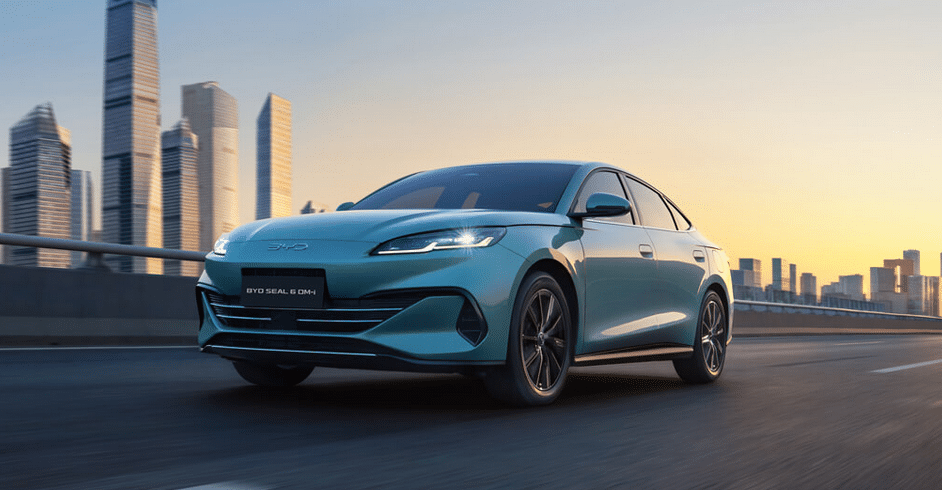
BYD placed second for Australian new car deliveries in the month of May, with 8,211 customers buying BYD vehicles. This saw BYD rise to third place year to date, with 33,454 deliveries in 2026 YTD, a 120% increase versus 2025 YTD.
BYD Chief Operating Officer Stephen Collins noted that demand for EVs increased significantly following the outbreak of conflict involving Iran earlier this year. Concerns about fuel supplies and oil price volatility prompted many consumers to consider electric vehicles as an alternative. While demand has since moderated, Collins said interest in EVs remains strong.
Since entering the Australian market in 2022, BYD has sold approximately 120,000 vehicles, including both electric and conventional models, and has expanded its dealer network to more than 100 locations nationwide.
The growing presence of Chinese automakers has also sparked discussions about cybersecurity and data privacy. Experts acknowledge legitimate concerns regarding connected vehicle technology, but many argue these issues apply broadly across the automotive industry rather than being unique to Chinese manufacturers. Researchers suggest Australia should focus on comprehensive standards governing data storage, software access, telematics, procurement requirements, and audit processes for all connected vehicles.
Australia’s intelligence agencies have also raised awareness about potential security risks associated with connected vehicles, advising public officials to exercise caution when discussing sensitive matters inside any vehicle equipped with advanced digital systems.
Although the recent EV sales surge was partially driven by higher fuel prices following disruptions to global oil markets, fuel costs have since eased due to government measures, strategic fuel reserve releases, and diversification away from Middle Eastern energy supplies. Analysts believe lower fuel prices could reduce short-term urgency among some consumers, but they are unlikely to reverse the long-term transition toward electrified transportation.
Energy security remains a key consideration. The vulnerability of Australia’s transport sector to imported fuel, shipping bottlenecks, and geopolitical events has highlighted the advantages of locally powered electric transportation.
On March 26, 2026, Energy Terminal reported that fuel shortages across Australia intensified due to the war in Iran, as more than 500 service stations ran out of at least one type of fuel and dozens ran completely dry.
As a result, many industry observers view the growth of EVs as part of a broader shift toward greater energy independence and national security. EVs and renewable energy are the strongest tools any nation has for protecting its economy, strengthening its defenses, and ensuring its energy future remains in its own hands.
Industry leaders continue to stress the importance of charging infrastructure investment. Electric Vehicle Council Chief Executive Julie Delvecchio said the arrival of thousands of new EVs demonstrates how quickly the market is changing and called for continued support from both federal and state governments to expand charging networks.

Meanwhile, Australia’s best-selling automotive brand, Toyota, continues to pursue a multi-pathway strategy that includes hybrids, battery-electric vehicles, and other low-emission technologies. Toyota reported growing demand for both EVs and hybrids, noting that hybrids accounted for roughly half of its Australian sales in 2025. The company maintains that factors such as reliability, innovation, service quality, warranty coverage, and resale value remain critical components of customer purchasing decisions.
The global EV market continues to face challenges. Several major automakers have reduced EV production targets amid softer demand in some regions, while Chinese manufacturers face intense domestic competition and declining government support. BYD itself reported a significant decline in first-quarter profits as competition intensified in China. These pressures are making international markets such as Australia increasingly important for future growth.
Despite ongoing challenges, automakers are continuing to invest heavily in products, dealer networks, and charging infrastructure. Australia’s latest sales figures suggest that consumer interest in electrified transportation remains strong and that the country’s automotive market is steadily moving toward a more electric future.
Abundance of Solar Means Electricity Retailers Will Have to Offer Three Hours a Day of Free Electricity to All Customers, Including Renters
On May 30, 2026, the Guardian reported household batteries are becoming a major force in transforming electricity systems, with Australia emerging as one of the world’s leading markets for residential energy storage. Driven by falling battery costs, widespread rooftop solar adoption, and government incentives, battery installations have accelerated rapidly, helping households reduce electricity bills while supporting the transition to cleaner energy. The country is one of the global leaders in domestic solar power, with panels on one in three homes.
Australia has added more than 415,000 household batteries since mid-2025, aided by a federal rebate program that covers approximately 30% of battery costs. The growing adoption of home batteries allows households to store excess solar energy generated during the day and use it during the evening when electricity demand and prices are typically higher.
Batteries are increasingly reducing the need for gas-fired power plants, roughly one unit for every 25 Australian homes. During recent summer months, gas generation declined significantly as stored solar energy from batteries supplied power during peak demand periods. Energy experts argue that batteries are reshaping electricity markets by providing a lower-cost alternative to traditional gas peaker plants.
Beyond lowering household energy costs, residential batteries are helping create a more flexible and resilient electricity grid. By storing and releasing energy when needed, batteries enable greater integration of renewable energy sources and help smooth fluctuations in electricity supply and demand. This allows households to play a more active role in the energy system, acting as both consumers and providers of electricity.
Battery storage also helps address one of the biggest challenges associated with renewable energy: intermittency. By storing solar energy for use after sunset or during periods of high demand, batteries reduce reliance on fossil-fuel-based generation and support lower greenhouse gas emissions.
The government has attempted to make use of the surplus solar power, by announcing a “solar sharer” programme under which electricity retailers will have to offer three hours a day of free electricity to all customers, including renters.
While challenges remain, including improving access for lower-income households and developing long-duration energy storage solutions, the rapid growth of residential batteries demonstrates their potential to lower electricity costs, reduce fossil fuel dependence, strengthen grid reliability, and accelerate the transition to a cleaner and more sustainable energy system.

Electric Vehicle Marketing Consultant, Writer and Editor. Publisher EVinfo.net.
Services