U.S. Gas Prices Rose Above $4 Per Gallon Again, So Why Are Americans Not Buying EVs?
With the Iran conflict escalating once again over the past week, gasoline prices are again averaging more than $4.00 per gallon nationwide according to AAA. The Strait of Hormuz, a critical international waterway responsible for roughly 20% of the world’s oil shipments is again effectively closed. It would seem like this the perfect moment for Americans to embrace electric vehicles.
However, according to the International Energy Agency (IEA), an organization that works with governments and industry to promote a secure and sustainable energy future, electric vehicle sales in the United States totaled approximately 1.5 million units in 2025, a slight decline compared to 2024. The slowdown was largely driven by significant policy changes that reduced support for EV adoption.
Early in 2025, Executive Order 14154 directed federal agencies to roll back programs supporting electric vehicles, including initiatives tied to consumer incentives and fuel economy regulations. Later, in July 2025, the One Big Beautiful Bill Act (OBBBA) removed financial penalties for automakers that failed to meet existing fuel economy standards, reducing the pressure on manufacturers to prioritize EV sales in the U.S. market. The legislation also ended federal tax credits for new and used electric vehicle purchases after September 2025.
These changes had a substantial impact on the market. EV sales during the fourth quarter of 2025 fell 45% compared to the same period in 2024, erasing much of the momentum generated earlier in the year. During the first three quarters of 2025, EV sales had risen by nearly 15% year over year, aided in part by consumers accelerating purchases before the expiration of federal tax incentives.
While electric vehicles accounted for only about 6% to 7% of new vehicle sales during the fourth quarter, they still represented roughly 10% of total U.S. vehicle sales for the year as a whole, only slightly below their share in 2024. Despite the policy headwinds and year-end slowdown, EVs maintained a significant presence in the American automotive market.
On July 10 2026, Cox Automotive said that according to Kelley Blue Book estimates, 247,226 EVs were sold in the second quarter of 2026, up 14.7% from the revised Q1 total. However, Q2 volume was down sharply year over year for a third consecutive quarter, declining by 20.5% from the same period in 2025.
The decline remains significant, but Q2 sales decline was an improvement over Q1, when sales fell 27.3%, and much better than Q4 2025, when sales were down sharply as expected, off by more than 36% year over year. The sales performance in Q2 suggests the market may be stabilizing after the correction.
At the same time, Car and Driver reports that several automakers, from Acura to Volvo and more, have recently canceled, delayed, or discontinued certain EV models.
The reality is that the transition to electric transportation is still in its early stages, and several legitimate concerns remain.
One of the biggest barriers is cost. New electric vehicles still carry a higher average purchase price than comparable gasoline-powered vehicles, and consumers generally have fewer model choices compared to traditional gas and hybrid vehicles. The affordability challenge became even greater after the federal government eliminated EV tax credits.
Charging infrastructure remains another major concern. Consumers frequently cite the lack of convenient and reliable public charging, particularly in rural areas, as a reason for delaying an EV purchase. Charging times, while improving, are still longer than refueling a gasoline vehicle. The charging industry also remains fragmented, often requiring drivers to download multiple apps and create numerous accounts.
Payment issues persist because many charging stations still do not offer simple credit card payment options, for example Tesla. For apartment residents and people who rely on street parking, home charging can be difficult or impossible.
Lifestyle considerations also influence purchasing decisions. Some Americans worry that current EVs are not ideal for frequent long-distance travel, towing heavy loads, or operating in extremely cold climates where battery range can be reduced. Concerns about battery degradation, expensive battery repairs, and long-term battery lifespan continue to affect consumer confidence as well.
EVinfo.net’s Take: The American EV Experience is Improving Across the Board, According to Our Research
Research and reporting conducted by EVinfo.net over the last four years indicates that nearly all of the challenges slowing EV adoption are gradually improving. New EV sales are seeming to recover, and used EV sales are booming and continue to grow every month. CarGurus Data said used EV sales rose 17 percent year-over-year in April. Cox Automotive reported used EV sales reached 42,923 units in May, up 5.5% month over month and 24.7% year over year, with used EV market share holding at 2.8%.
Public charging infrastructure continues to expand across the United States, with thousands of new charging ports added every year.
Loren McDonald, CEO, Chief Analyst at Chargeonomics, and Former Chief Analyst at Paren, reported improvements in Paren’s the State of the EV Charging Industry Q2 2026 report. The report said that the 4,382 new ports added in Q2 2026 was 10% lower than the 4,865 added in Q2 2025, however EVinfo.net is not concerned about an EV charging slowdown, as all indications show that EV charging will continue to grow in the U.S., so fluctuations like this are expected.
McDonald said: “For EV drivers, the positive story is that deployment continues to keep pace with growth in vehicles in operation, as reflected in strong session growth while utilization remains relatively flat.”
EV prices are becoming more competitive, with vehicles such as the Slate electric pickup demonstrating that lower-cost electric transportation is possible. Slate is developing an affordable electric truck with a starting price of $24,950.
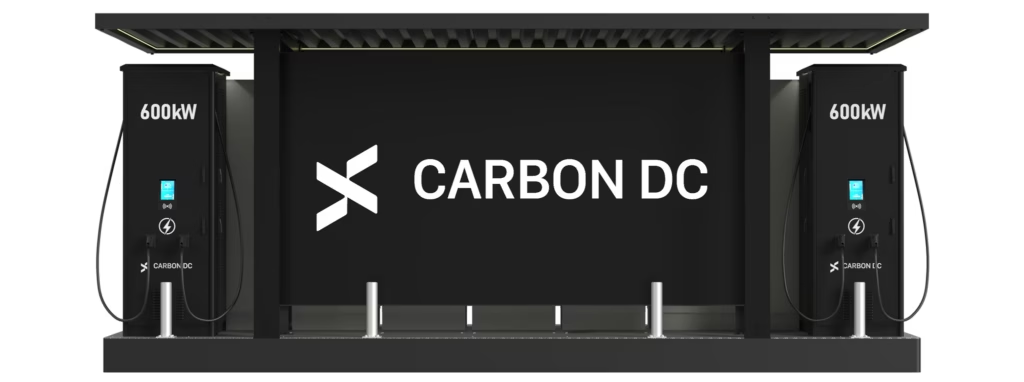
Rural communities are seeing increased charging investment. One example is PowerStation Charging, powered 100% by solar power. The company’s first operational site is located at Rasor Road along Interstate 15 between Los Angeles and Las Vegas, and the company announced it is offering free charging until July 31, 2026.
PowerStation Charging uses Carbon DC’s CarbonCore, a unified DC charge controller and energy management system featuring 600 kWh of integrated battery storage, scalable for peak shaving, backup power, and utility incentive programs. It delivers 15 kW to 600 kW of dynamic DC charging power, automatically adjusting output to meet vehicle demand while preventing panel overload and reducing wasted energy. The system also includes active thermal management and UL-certified safety controls to ensure reliable, safe operation in demanding environments.
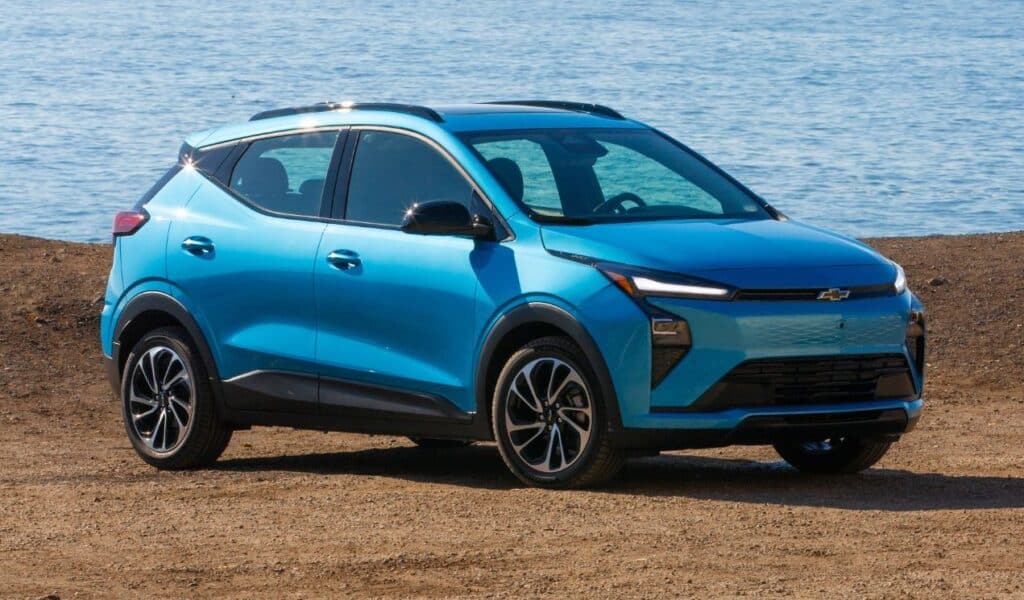
Charging speeds continue to improve as automakers and charging providers deploy faster technology. In December 25, 2025, EV Charging Stations reported that the new 2027 Chevrolet Bolt is able to charge more than twice as fast as previous Bolt models, based on their studies.
Multifamily charging is also growing rapidly, particularly in states such as California, where numerous incentive programs help property owners install charging equipment.
Curbside charging solutions are expanding in urban environments thanks to impressive innovators such as it’s electric, making EV ownership more practical for city residents without dedicated parking. In May, EVinfo.net reported that it’s electric and the city of Philadelphia partnered on the city’s first curbside EV charging network, up to 1,000 chargers.
Great companies like SWTCH are deploying charging infrastructure at apartment communities across North America. In April, EVinfo.net reported on the launch of SWTCH Tap™, a new capability within the SWTCH Cortex platform that lets drivers start a charging session with a single smartphone tap — even when a cellular signal is unavailable.
Charging reliability is improving, thanks to bold companies like Autel Energy and EVSTAR. Autel Energy North America recently introduced the Autel Cable Protection Program, a new service designed to help EV charging operators reduce downtime and protect their charging infrastructure investment.
EVSTAR offers insurance-backed extended service contracts for EV charging infrastructure, underwritten by AIG Warranty. Rather than keeping all warranty obligations on an OEM’s books, the covered layer of risk is transferred to a licensed insurance carrier.
Battery technology is improving as well. Research from battery analytics company Recurrent suggests that modern EV batteries often last significantly longer than many consumers assume, helping alleviate concerns about long-term ownership. Digital Trends reported on the original July 4 story by the Wall Street Journal.
The report highlighted Richard Symons, a UK-based used EV dealer whose five-year-old Tesla Model 3 has already covered 247,000 miles while still completing long-distance journeys. His experience reflects what researchers and industry analysts are increasingly seeing across newer generations of electric vehicles, that battery degradation is occurring much more slowly than many buyers originally feared.
There are also many ways Americans can become more informed about electric transportation. Educational organizations such as Veloz provide resources that help consumers understand EV ownership. Veloz sponsors ElectricForAll.org, which serves as an EV education and awareness website for consumers.
On the website, current and future EV owners can get the facts about going electric, shop and compare new and used EVs, calculate savings, find location-specific vehicle and charging incentives for ZIP codes across the United States and discover home charging options all in one place.
The Electric Vehicle Association regularly hosts ride-and-drive events that allow people to experience EVs firsthand. EVinfo.net reported that the New Jersey chapter of the Electric Vehicle Association (EVA) joined the New Jersey Sierra Club for the Montclair Fourth of July Parade, as one example.
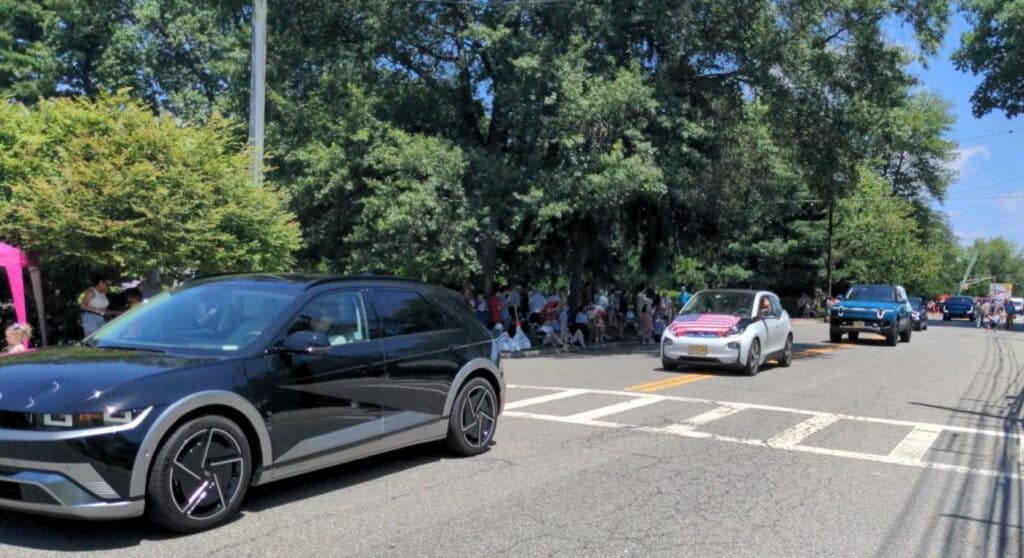
Talking with friends, neighbors, coworkers, and family members who already own EVs can also provide valuable real-world insight for those interested in learning more about EVs.
Consumer satisfaction remains one of the strongest arguments for electrification. Now in its third year, CDK’s EV Ownership Study continues to find that battery electric vehicle owners remain overwhelmingly satisfied with their decision to switch from gasoline-powered transportation. An impressive 90% of owners said they plan to purchase another EV, up from 82% in 2025.
Public awareness is also growing as influencers, celebrities, and industry advocates increasingly discuss the benefits of electric vehicles and renewable energy. One example is Michelle Harris, whose program Alive & Well TV explores practical approaches to sustainable living, wellness, renewable energy, and electric transportation.

For business leaders, industry events such as the EV Charging Summit & Expo provide opportunities to learn how EV charging can attract customers, increase dwell time, and generate new revenue streams. The next event is March 1, 2027 in Las Vegas.
Major retailers such as Walmart have recognized this potential and have made headlines by rapidly expanding EV charging installations across their locations.
The United States still faces significant challenges on the road to transportation electrification. Yet despite temporary setbacks, the long-term trends remain clear: charging infrastructure is growing, technology is improving, costs are gradually declining, and consumer satisfaction remains high. As energy security concerns and fuel price volatility continue to affect drivers, electric vehicles remain one of the most promising solutions for reducing dependence on oil while creating a cleaner and more resilient transportation system.

Electric Vehicle Marketing Consultant, Writer and Editor. Publisher EVinfo.net.
Services