Debunking 11 Common Electric Vehicle Myths
Electric vehicles have moved from a niche technology to an increasingly common part of the automotive market, but misconceptions about EVs remain widespread. Some concerns are based on legitimate questions about cost, charging, batteries and cold-weather performance. Others are based on outdated information or comparisons that leave out important context. Here are 11 common EV myths and the facts behind them.
1. Myth: Electric Vehicles Are Too Expensive
In 2026, EV sticker prices are generally higher than those of comparable gasoline vehicles, particularly at the premium end of the market. However, purchase price is only one part of the cost of ownership. EVs generally have lower fueling and maintenance costs because electricity mostly costs less than gasoline for equivalent driving, while electric powertrains eliminate many conventional maintenance items. Used EVs can also provide a lower-cost entry point for consumers who do not need a new vehicle.
The market is also expanding into more affordable segments. As battery technology improves and production volumes increase, automakers are bringing more reasonably priced EVs to market. One example is Kia’s 2027 EV3, one of the most affordable electric vehicles in the U.S., starting at just $29,890.
The question is therefore not simply whether an EV costs more to buy, but how its total cost of ownership compares with a gasoline vehicle.
2. Myth: EVs Don’t Have Enough Range
Range anxiety was much more understandable when early mass-market EVs could travel only around 70 to 100 miles many years ago. Today’s EVs are considerably different. Coltura says most new electric cars can travel roughly 200 to 350 miles on a full charge as of 2026, while some long-range EVs go farther. The current highest-range EV is the Lucid Air Grand Touring Sedan, at 512 miles.
More importantly, the average American does not drive hundreds of miles every day. More than 98% of on-road passenger trips are less than 75 miles, according to EPA data. For most daily driving, an EV can therefore have substantially more range than necessary.
3. Myth: Charging EVs Is Too Difficult and Takes Too Long
Charging is different from filling a gasoline tank, but different does not necessarily mean more difficult.
Most EV owners with home charging can plug in overnight and start the next day with a full or nearly full battery. A standard 120-volt outlet can slowly charge an EV, while a Level 2 charger provides considerably faster charging. On a standard Level 2 home charger (240V), replenishing your EV battery from 20% to 80% typically takes about 4 to 6 hours depending on your vehicle’s acceptance rate and charger amperage.
Public DC fast chargers can add substantial range in 20-40 minutes during longer trips.
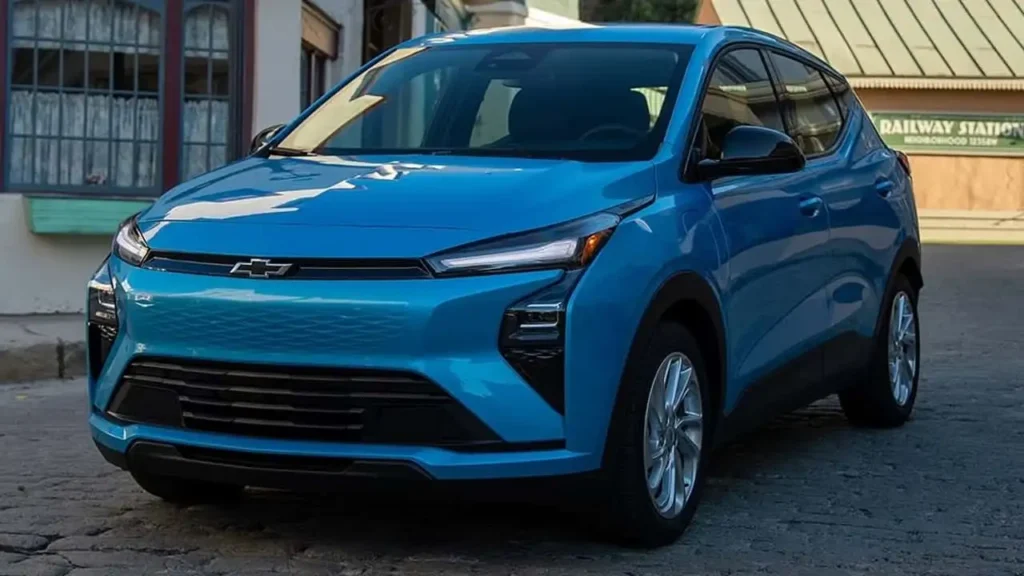
Charging time of newer EV models is typically shorter than previous models. One striking example is the 2027 Chevy Bolt. EV Charging Stations reported that the 2027 Chevrolet Bolt will be able to charge more than twice as fast as previous Bolt models, based on their studies.
Charging can take longer than filling a gasoline tank, but EV drivers generally don’t need to wait beside the vehicle while it charges. For daily use, charging can become something that happens while the vehicle is parked at home, work or another destination.
4. Myth: Electric Vehicles Aren’t Actually Better for the Environment
EVs are not environmentally impact-free. Manufacturing batteries requires energy and raw materials, and charging an EV with electricity generated from fossil fuels produces upstream emissions. However, that does not mean EVs are worse for the environment than gasoline cars.
A large number of studies say EVs typically have lower lifetime greenhouse gas emissions than comparable gasoline vehicles, even after accounting for battery manufacturing and electricity generation.
One example is a study led by researchers at MIT and published in Environmental Research Letters, which found that EVs reduce emissions by 40% to 60% compared to gasoline vehicles in most areas of the country.
Because EVs have no tailpipe emissions, their environmental advantage becomes greater as electricity generation shifts toward renewable sources.
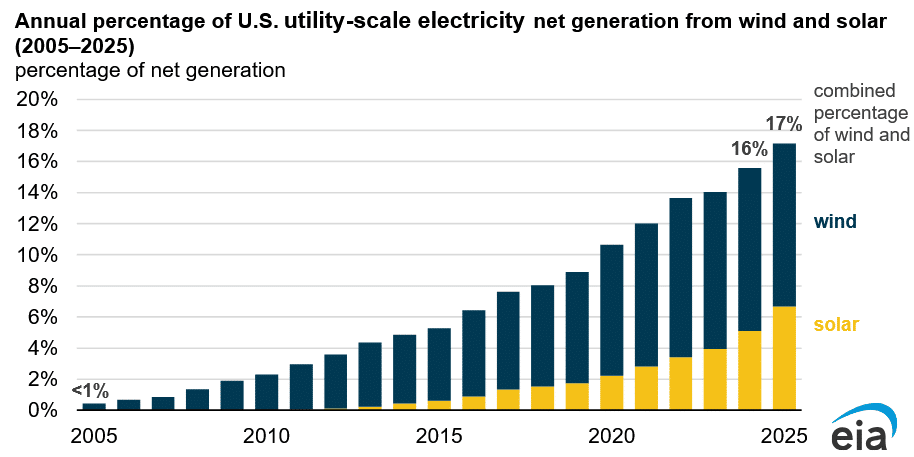
Renewable energy production in the United States is expanding at a record pace, driven heavily by utility-scale solar and wind deployment. Wind and solar generated a record 17% of U.S. electricity in 2025, reported the U.S. Energy Information Administration (EIA).
5. Myth: EV Batteries Don’t Last Long and Are Expensive to Replace
Battery degradation is real, but the idea that EV batteries routinely need replacement after only a few years is outdated. Geotab’s April 2026 analysis of over 22,700 electric vehicles, covering 21 different vehicle models, confirms that overall, modern EV batteries are built to last beyond a typical vehicle’s service life.
Like engines, batteries eventually wear out, but modern battery management systems are designed to protect battery health. Battery warranties also provide protection against premature degradation or failure. Many warranties follow the Vehicle Identification Number (VIN), so therefore protect all subsequent buyers of the vehicle after it is sold as a used vehicle.
Beginning with the 2027 model year, the EPA will require battery systems in EVs and PHEVs to carry an eight-year/80,000-mile warranty.
A complete battery replacement can be expensive, but it is misleading to treat that possibility as something that happens frequently. In reality, battery replacements are very rare.
Solutions exist for consumers to check battery health before buying a used EV. In the United States, Recurrent offers health reports for owners, buyers, sellers and dealers. AVILOO offers health reports for dealers.
AVILOO and Lectrium announced an important new partnership in 2025, integrating rapid, independent EV battery diagnostics directly into U.S. dealership Vehicle Detail Pages. This is the best way for buyers to immediately see battery health before buying.
EVinfo.net recommends that when buying, ask the seller for a battery health report before making your decision, to be best informed about possible battery issues.
6. Myth: The Electricity Grid Can’t Handle a Large Number of EVs
Millions of EVs would increase electricity demand, but that does not mean the grid is incapable of handling them. EV adoption occurs slowly enough to give the grid time to adjust and add capacity as needed.
The more important issue is when and where vehicles charge. Managed charging can shift charging toward periods when electricity demand is lower, reducing pressure on the grid.
EVs can also become a grid resource rather than simply a new source of demand. Smart charging can shift charging times for utilities, giving flexibility during peak periods. Vehicle-to-grid (V2G) technology allows connected vehicles to provide electricity or grid services when needed, transforming vehicles into a valuable power source. Only a small number of EVs in the U.S. currently support V2G, however indications are that all future models will support it at some point.
The transition requires investment in generation, distribution and charging infrastructure, but that is an infrastructure challenge, not proof that widespread EV adoption is impossible.
7. Myth: EVs Catch Fire More Than Gas Cars
EV fires receive enormous attention because lithium-ion battery fires can behave differently from conventional vehicle fires and can be difficult for emergency responders to manage. But that does not establish that EVs are inherently more likely to catch fire. In fact, EVs catch fire far less often than gas-powered cars.
NHTSA states that it does not believe electric vehicles present a greater risk of post-crash fire than gasoline-powered vehicles. Both types of vehicles have fire risks, and damaged high-voltage batteries require specific safety procedures.
That distinction matters. EV battery fires are a legitimate safety concern that manufacturers and emergency responders must address, but the blanket claim that EVs simply catch fire more often than gasoline cars is not supported by federal safety guidance.

8. Myth: EVs Are Heavy and Tearing Up Our Roads
Many EVs are heavier than comparable gasoline vehicles because battery packs are heavy. That is a legitimate engineering consideration, particularly for large electric trucks and SUVs. However, saying EVs are “tearing up our roads” dramatically oversimplifies how road damage occurs.
Road wear depends on many factors, including vehicle weight, axle loads, traffic volume, road construction and climate. Heavy commercial trucks place far greater loads on pavement than ordinary passenger cars. EVs can contribute to road wear through their weight, but it is inaccurate to portray every electric car as uniquely destructive to roads.
9. Myth: EVs Can’t Handle Cold Weather
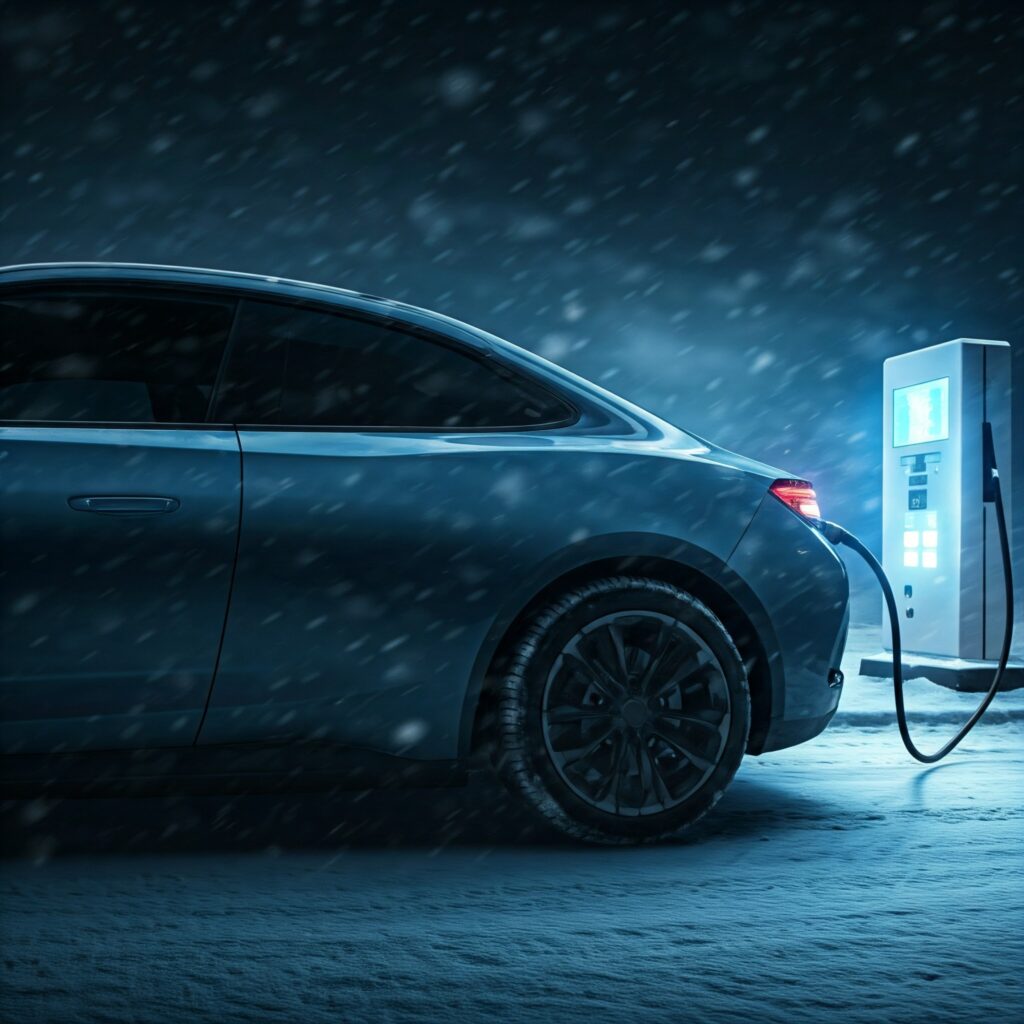
Cold weather can reduce EV range and charging performance, but EVs absolutely can operate in cold climates. Low temperatures affect vehicle batteries, and preconditioning the vehicle while it is plugged in can help minimize the impact.
Cold-weather range loss is a real disadvantage that EV owners need to understand. Heating the cabin and battery consumes energy, and extreme temperatures can significantly reduce range. However, gasoline vehicles also become less efficient in cold weather. Modern EVs use battery thermal management, preconditioning and, in some cases, heat pumps to mitigate the effects.
10. Myth: EVs Need Too Much Maintenance
The opposite is closer to the truth. EVs have far fewer moving parts than gasoline powertrains and do not require engine oil, spark plugs, fuel filters or many other components associated with internal combustion engines.
All-electric vehicles require less maintenance because their motors and associated electronics require little regular maintenance, while regenerative braking can significantly reduce brake wear. EVs still need tires, suspension components, wiper blades, cabin filters and other conventional maintenance, but maintenance costs are much lower than gas vehicles.
11. Myth: EVs Are Slow
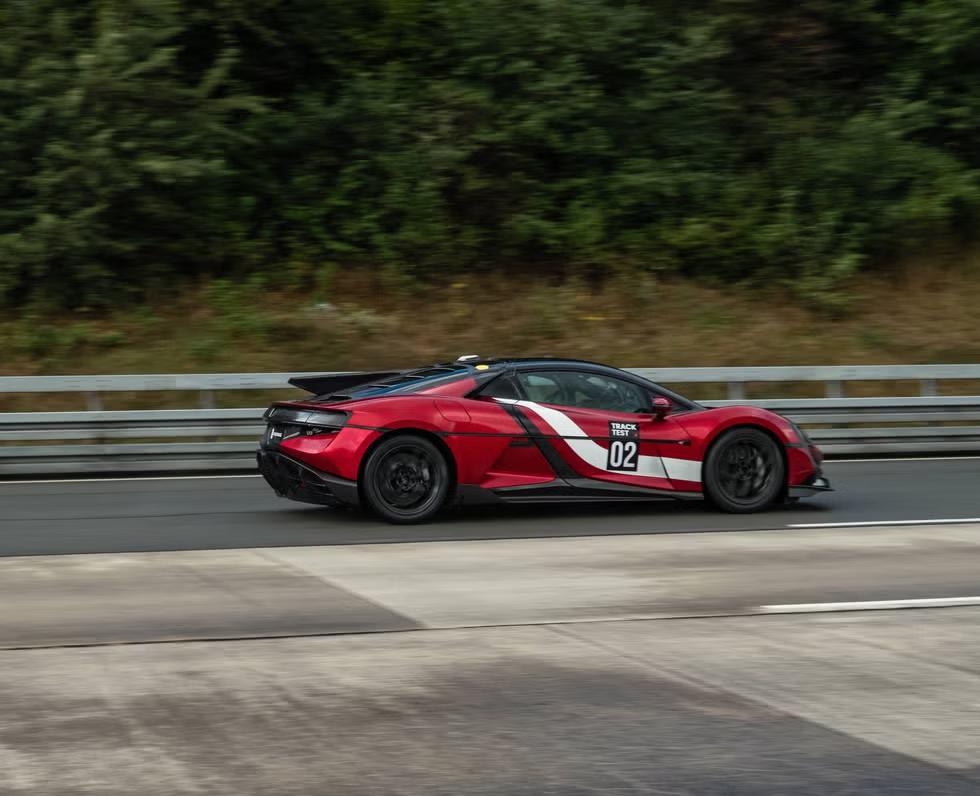
This myth may have been reasonable decades ago, but it certainly doesn’t describe modern EVs. Electric motors produce maximum torque almost immediately, allowing many EVs to accelerate extremely quickly.
On September 22, 2025, the Yangwang U9 Xtreme EV officially reached a staggering 308.4 miles per hour, making it the fastest production car in the world and edging out the gas-powered Bugatti Chiron Super Sport, which topped out at 304.5 mph.
Performance varies by vehicle, just as it does with gasoline cars. An inexpensive EV isn’t necessarily a performance car, but the electric powertrain itself is capable of extraordinary acceleration. Instant torque is actually one of the fundamental advantages of electric propulsion.
Challenges Remain
The reality is that EVs are not perfect, and legitimate challenges remain. Batteries are heavy, cold weather can reduce range, charging infrastructure still needs to improve, and some EVs remain expensive. But those facts are very different from the exaggerated claims that EVs can’t travel far enough, can’t survive winter, constantly need new batteries, will destroy the power grid or are inherently unsafe.
The electric vehicle industry is still evolving, and future improvements in batteries, charging, manufacturing and grid management will address many of today’s limitations. Consumers are better served by evaluating EVs based on measurable performance, total ownership costs and individual driving needs rather than outdated myths.

Electric Vehicle Marketing Consultant, Writer and Editor. Publisher EVinfo.net.
Services